Good morning:
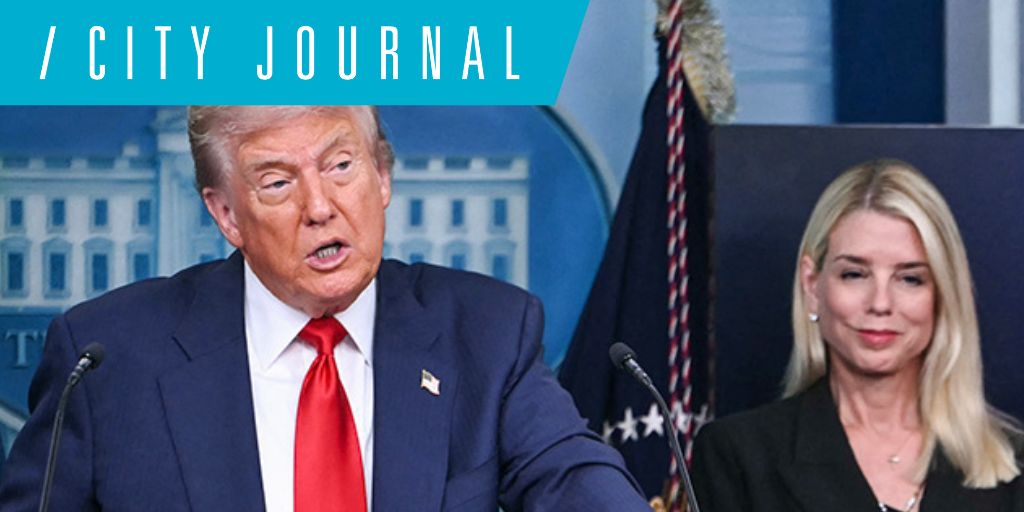
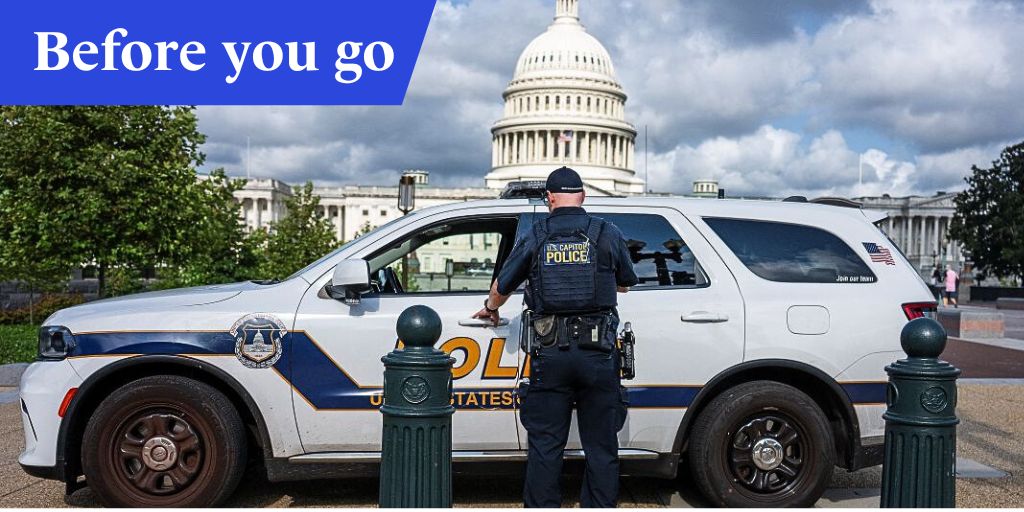
On Monday, President Donald Trump appeared with several members of his cabinet to announce he was federalizing the Washington, D.C., police force and deploying 800 National Guard troops to crack down on violent crime in the capital city.
Washington Mayor Muriel Bowser described the move as “unsettling” but admitted that President Trump has the authority to act under the “plain language” of the city’s home rule charter.
Homicides, carjackings, and robberies are a longstanding problem in Washington, particularly in the city’s least affluent neighborhoods. But no one is immune. Secret Service agents have fired on carjackers multiple times in recent years, including while outside former Treasury Secretary Janet Yellen’s home and while protecting former President Joe Biden’s granddaughter. In April, DHS Secretary Kristi Noem’s purse was snatched. In July, a 21-year-old living in Washington for his congressional summer internship was gunned down by a stray bullet. And, last week, a former Department of Government Efficiency (DOGE) employee was assaulted by a large group of teenagers in an attempted carjacking.
The main objection from the president’s critics is that violent crime is going down in Washington and, therefore, there is no need for the president to intervene and direct federal law enforcement officers to the city’s streets. In the Boston Globe, Thomas W. Smith fellow Heather Mac Donald responds to that by urging us not to define deviancy down. Flash mobs, vicious pedestrian assaults, and mass looting—not to mention the nearly 10 violent crimes, six robberies, and three assaults with a dangerous weapon that occur daily in a city of only 700,000—are part of the fabric of Washington, but they shouldn't have to be.
In The Atlantic, fellow Charles Fain Lehman writes that D.C. residents are deeply troubled by violence and anti-social deviancy, and Washington still has a higher homicide rate than the rates in New York City, Philadelphia, Atlanta, and even Chicago. There is no reason why the capital of the United States should be among the nation’s most dangerous cities.
Taking over the Metropolitan Police Department is only one way among many that the federal government may rightfully respond, director of cities John Ketcham and Charles Fain Lehman write for City Journal. The “home-rule” arrangement gives the federal government significant oversight powers. Congress and the president should consider all their options, including adding presidentially appointed seats to the D.C. Council; directing police to target juvenile crime and gang activity, both of which are pervasive; and reviewing and vetoing pernicious local legislation.
The Trump administration’s Justice Department is also continuing to crack down on ideological and racial discrimination at elite universities. In City Journal, MI’s director of higher education policy, John D. Sailer, praises a new DOJ memo that lists several common practices constituting illegal discrimination. Sailer’s extensive reporting on university race-based hiring practices proves that universities have embraced nearly every practice the DOJ asserts is illegal.
Elsewhere at MI, senior fellow Abigail Shrier warns in The Free Press that Illinois’s new mandatory mental-health screenings for public school children will not only result in a dangerously high number of false-positive diagnoses, but they will also encourage suggestible children to fall into the slippery mental-health pipeline and pathologize perfectly normal emotions.
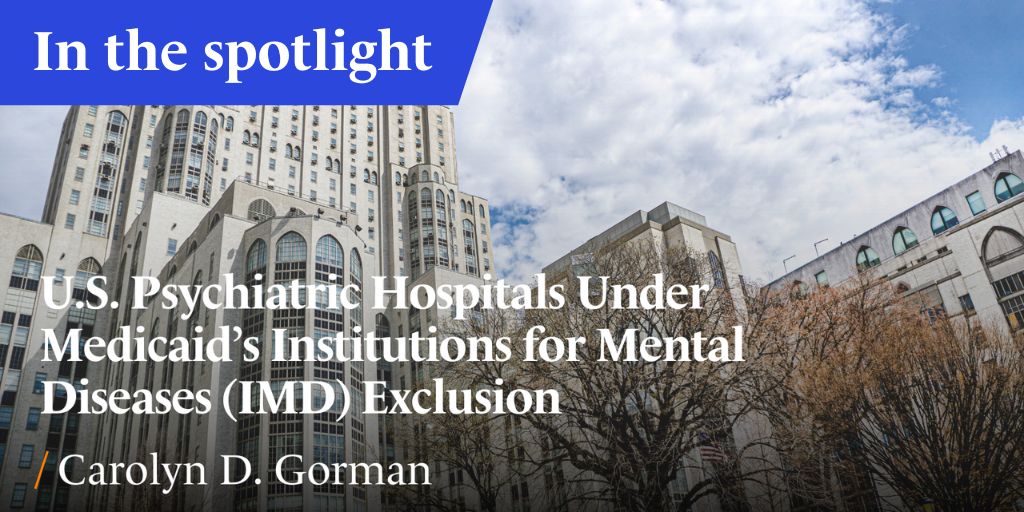
Finally, the MI Research team published a new report by Paulson policy analyst Carolyn D. Gorman on the shortage of psychiatric beds in U.S. hospitals. This is a consequence of the Medicaid’s “institutions for mental diseases” (IMD) exclusion, which bars federal funding for psychiatric treatment in large facilities. Repealing the IMD exclusion is a necessary step in getting individuals suffering from serious mental illness off the streets and into the care they need.
Continue reading for all these insights and more. Kelsey Bloom Editorial Director |
|
|
U.S. Psychiatric Hospitals Under Medicaid’s Institutions for Mental Diseases (IMD) Exclusion By Carolyn D. Gorman | Manhattan Institute
For decades, the U.S. has faced a worsening shortage of inpatient psychiatric care. The number of public psychiatric beds—those most likely to serve Medicaid recipients—has fallen by 97% since the mid-20th century, leaving people with serious mental illness increasingly likely to end up in crowded ERs, jails, or homeless encampments. One major reason: Medicaid’s “institutions for mental diseases” (IMD) exclusion, which since 1965 has barred federal funding for inpatient psychiatric treatment in facilities with more than 16 beds. Originally intended to prevent states from shifting the cost of large state hospitals to Washington, the rule now serves as a major barrier to expanding psychiatric hospital capacity.
In a new Manhattan Institute report, Carolyn D. Gorman analyzes national data on freestanding psychiatric hospitals and finds that modest reforms to the IMD exclusion won’t solve the problem.
Gorman calls for a full repeal of the IMD exclusion. If that’s not politically feasible, she proposes redefining IMDs as facilities with more than 108 beds, making over 20,000 beds Medicaid-eligible—expanding access, relieving ER boarding, and reducing the criminalization of untreated mental illness, all at a lower cost than many expect. |
|
|
Trump Is Right to Send the National Guard to Washington
By Heather Mac Donald | Boston Globe
“Trump’s rhetoric undoubtedly strikes the elite ear as hyperbolic and gauche. After a member of the Department of Government Efficiency was assaulted by a large group of teenagers on Aug. 3, Trump posted that juveniles in Washington were ‘randomly attacking, mugging, maiming, and shooting innocent citizens, at the same time knowing that they will be almost immediately released.’ One is not supposed to speak that way, yet Trump’s post describes a reality. Adolescent carjackers and robbers rack up long rap sheets while serving little to no prison time. ...
“The National Guard does not threaten the rights and safety of D.C. residents; criminals do. Had city officials felt more urgency about their most fundamental obligation — safeguarding law and order — they would not be facing a temporary takeover of their public safety duties.” |
|
|
Stop Asking Kids If They’re Depressed
By Abigail Shrier | The Free Press “Illinois governor JB Pritzker signed into law mandatory annual mental-health screenings for all public school children in third through twelfth grades. ...
“Handing a mental diagnosis to a child or teen—even if accurate—is an enormously consequential event. It can change the way a young person sees himself, create limitations for what he believes he can achieve, encourage treatment dependency on a therapist, and empty out his sense of agency—that he can, on his own, achieve his goals and improve his life. And unlike the alleged benefits of mental health screeners, there is solid evidence on the harms produced by receiving a mental diagnosis, harms that are pure tragedy in the case of misdiagnosis.”
|
|
|
The Justice Department’s Welcome Crackdown on Universities
By John D. Sailer | City Journal
“On July 29, the Department of Justice sent a letter to all federal grant recipients reaffirming a longstanding principle of American civil rights law: discrimination is unlawful. The nine-page memo, signed by Attorney General Pamela Bondi, lists several hiring practices that constitute illegal discrimination—many of them ubiquitous in higher education.
For example, “one practice that the DOJ lists as unlawful is ‘[p]referential treatment.’ ... It’s an open secret that universities have long engaged in preferential treatment. The examples are endless. One faculty job rubric that I acquired from UT San Antonio, for instance, listed ‘female/URM’ (underrepresented minority) as a scoring category. ...
“The memo lists other potential proxies, such as policies that reward candidates for their ‘cultural competence,’ ‘lived experience,’ or ‘cross-cultural skills.’ These criteria become illegal when ‘they are implemented with the intent to advantage or disadvantage individuals based on protected characteristics.’ ” |
How to Bring Safety to the District of Columbia
By John Ketcham & Charles Fain Lehman | City Journal
“For most of American history, Congress exercised its constitutional prerogative to govern D.C. through standing committees dedicated to overseeing its affairs. ... Finally, in 1973, Congress passed the District of Columbia Home Rule Act, delegating its authority to today’s local government.
“This home-rule arrangement grants Congress and the president significant federal oversight powers that, until now, have gone largely unused. ... The federal government should exercise a firmer hand, just as states sometimes preempt local governments when they fail to address statewide priorities. At the very least, Congress should expand the capacity of the criminal justice system. ... “Another avenue for Congress is to exercise its power to review local legislation more frequently. ... Congress exercised this power just two years ago when it blocked a rewrite of the criminal code, and it could use a heavier hand in similar cases in the future. ... Finally, and perhaps most radically, Congress could give the federal government greater influence by adding presidentially appointed seats to the D.C. Council.” |
|
|
Trump Is Right That D.C. Has a Serious Crime Problem
By Charles Fain Lehman | The Atlantic “The reality is more complicated than either the president or the mayor depict. Bowser is right that violence has declined. But the nation’s capital really does have a long-standing and profound violence problem that will not improve without deliberate intervention. ...
“D.C.’s homicide rate in 2024—roughly 26.4 homicides for every 100,000 residents—is lower than in both 2023 and its peak in the 1990s. But, according to data compiled by the Council on Criminal Justice, it’s still nearly seven times higher than New York City’s rate (3.8 per 100,000). D.C.’s rate is also worse than that of Philadelphia, Atlanta, and even Chicago. In fact, it’s closer to that of infamously crime-ridden cities like Memphis and Detroit than it is to some other important metropoles’.”
|
|
|
For more information and media requests, please contact
communications@manhattan.institute.
Are you interested in supporting the Manhattan Institute’s public-interest research and journalism? As a 501(c)(3) nonprofit, donations in support of MI and its scholars’ work are fully tax-deductible as provided by law. |
|
|
Photo Credits: adamkaz/E+/Getty Images; Noah Berger/AP Photo; Anadolu/Getty Images; Wong Yu Liang/Getty Images; Catherine McQueen/Getty Images; Probal Rashid/LightRocket/Getty Images |
|
|
The Manhattan Institute works to keep America and its great cities prosperous, safe, and free. Manhattan Institute 52 Vanderbilt Ave. 3 floor New York, New York 10017
Want to change how you receive these emails?
Unsubscribe | Subscription Preferences
Copyright © 2025 Manhattan Institute, All rights reserved. |
|
|
|