Good morning:
In this week’s newsletter, senior fellow Douglas Murray warns Americans that the response to the assassination of Charlie Kirk reveals the political left is in a dangerous “gray zone of political violence: not fully condoning it, but not fully condemning it, either.” He writes in City Journal that left-wing figures who have engaged in political violence in the past find a network of sympathetic institutions that allow them to remain prominent symbols of resistance, offer them paid speaking gigs, and protect them through gainful employment. There is no such network on the right.
These institutions matter because of the precedents they set for what is acceptable behavior. Legal fellow Tal Fortgang connects the “Broken Windows” theory of policing—that signs of disorder signal a lack of law enforcement, which invites greater violations of the law—to how conservative speakers like Charlie Kirk and organizations like Turning Point USA have been treated on university campuses for at least a decade. Conservative speakers are routinely shouted down, heckled, intimidated, and forced to prepare extra security. Fortgang writes for the Civitas Institute that these acts of opposition were never acceptable, but they were nevertheless accepted. Eventually, the anti-conservative demonstrations and disorder grew to deadly proportions.
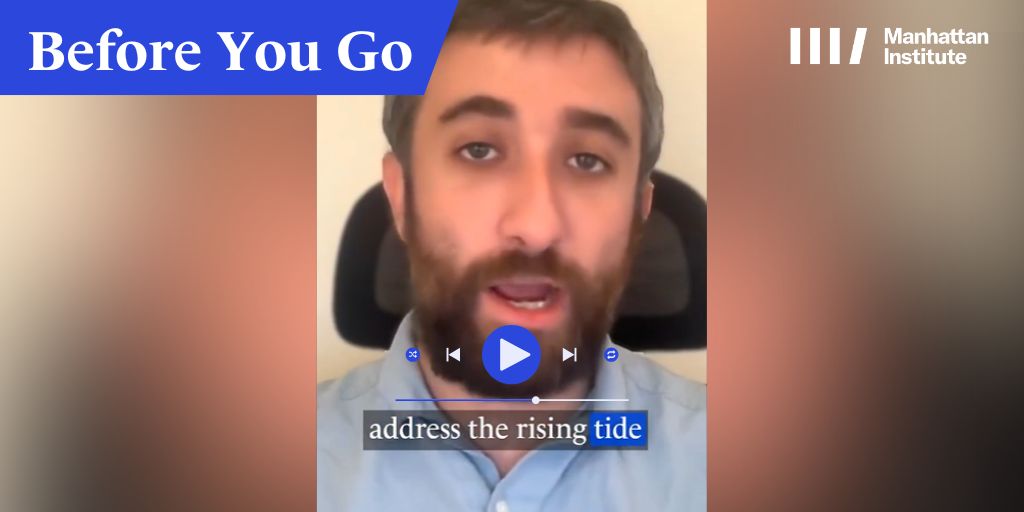
How to put an end to this politically motivated violence? In a new video for MI, fellow Charles Fain Lehman lays out his findings on that question, drawing on his recent co-authored piece for The Atlantic.
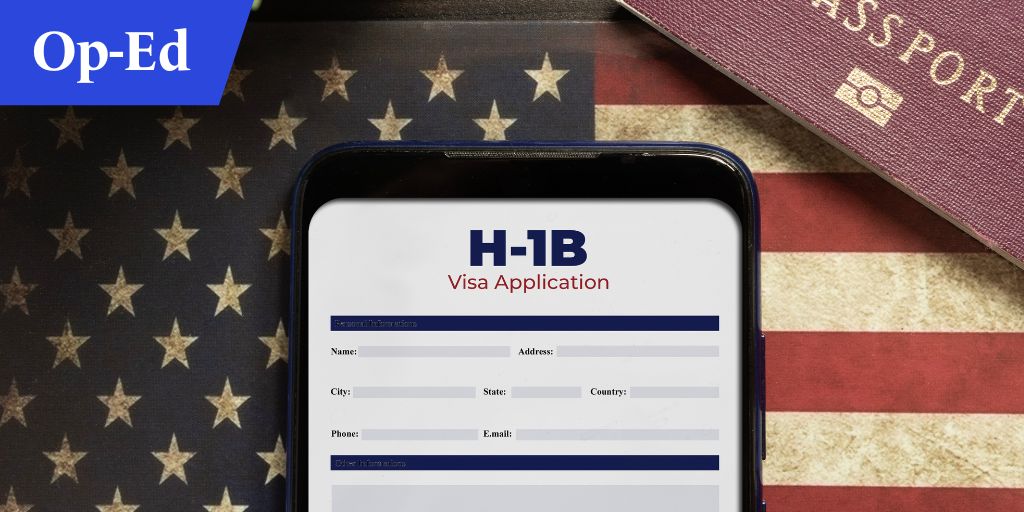
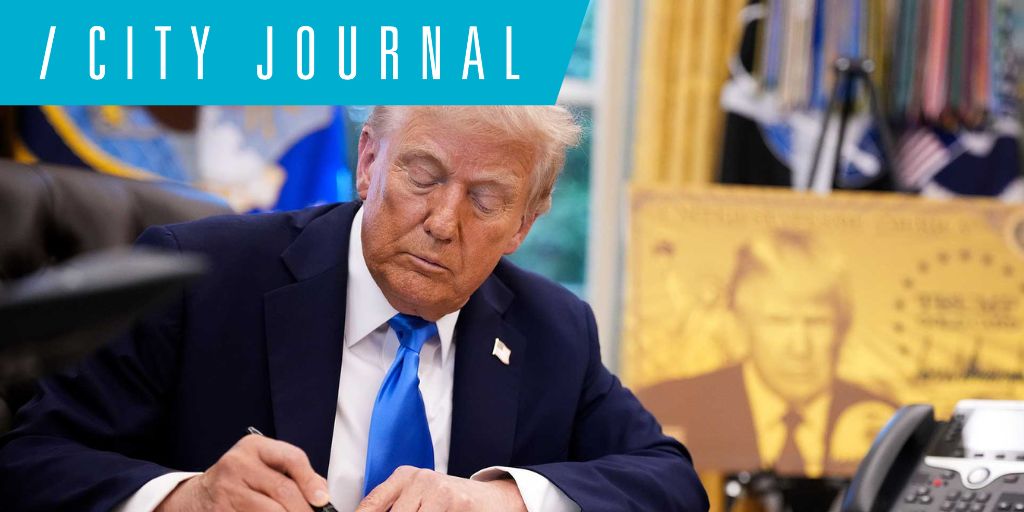
Late last week, President Trump announced a new $100,000 annual fee for H-1B visa applications, the program for specialized foreign workers to the United States. The White House argued the program has long been exploited by employers, resulting in the displacement of American workers and “creating an economic and national security threat to the nation.”
Despite those good intentions, MI scholars highlighted the law of unintended consequences when it comes to that immigration policy. In City Journal, analyst Santiago Vidal Calvo and fellow Daniel Di Martino warn the high fee will hurt Americans in the long run, by closing off access to the world’s entrepreneurs and increasing the U.S. budget deficit.
In the Wall Street Journal, senior fellow Jason Riley highlights the poor national math scores recorded in student progress reports from the Department of Education, and warns that many young Americans are not prepared to fill the ranks of the top STEM jobs at the top technology companies. If those employers can’t bring qualified workers to the U.S., Riley warns, perhaps the company will relocate.
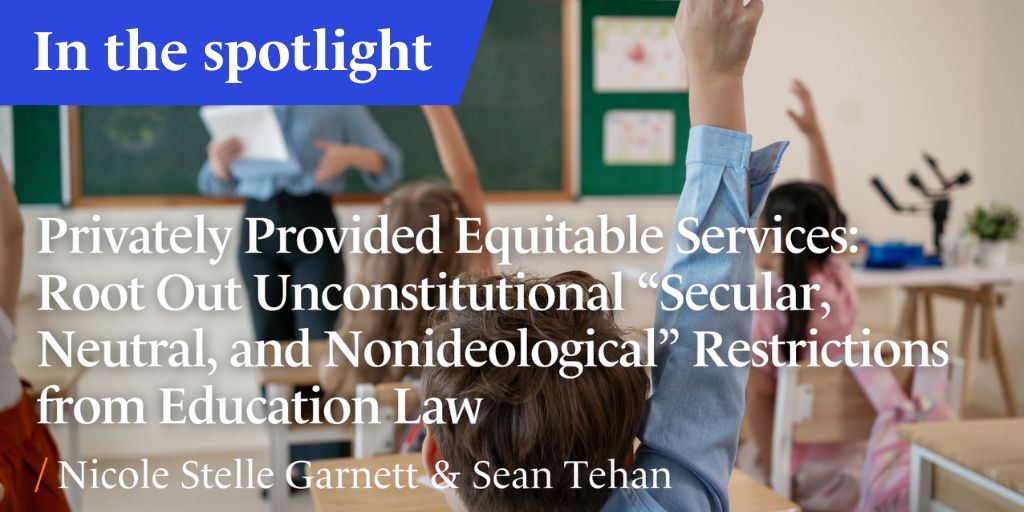
Finally, MI senior fellow Nicole Stelle Garnett and her co-author Sean Tehan released a new paper this week on unconstitutional discrimination against religious providers in American education law. They explain why the “secular, neutral, and nonideological” restriction spread through the U.S. Code conflicts with the First Amendment’s religious nondiscrimination mandate. They also offer model federal legislation to help Congress clarify that the Free Exercise and the Establishment Clauses require government neutrality toward religion in both direct-aid and indirect-aid programs.
Continue reading for all these insights and more. Kelsey Bloom Editorial Director |
|
|
Privately Provided Equitable Services: Root Out Unconstitutional “Secular, Neutral, and Nonideological” Restrictions from Education Law
By Nicole Stelle Garnett & Sean Tehan | Manhattan Institute
Three recent Supreme Court cases—Trinity Lutheran (2017), Espinoza (2020), and Carson v. Makin (2022)—make clear that, read together, the Establishment Clause and the Free Exercise Clause require government neutrality, not hostility, toward religion. In practice, this means that the government may not exclude private organizations from public benefit programs because they are religious or because they engage in religious conduct. Nor may it require them to refrain from engaging in religious conduct, such as religious instruction, as a condition of participating in a public benefit program.
Despite these rulings, federal education law is peppered with dated and unconstitutional “secular, neutral, and nonideological” requirements when it comes to public benefit programs, a phrase which originated in a now-overturned Supreme Court opinion.
In a new issue brief, senior fellow Nicole Stelle Garnett and co-author Sean Tehan recommend that Education Secretary Linda McMahon immediately cease enforcing “secular, neutral, and nonideological” restrictions for private contractors serving private school students, and that Congress remove the discriminatory language from federal law. The report includes model legislation to help Congress achieve that end. |
|
|
The Broken Windows in American Higher Education
By Tal Fortgang | Civitas Institute
“The pattern that culminated in Kirk’s murder reinforces the truism that institutions shape the culture in which individuals act. A college that tolerates harassment signals to students that harassment is within the bounds of acceptable behavior. A university that treats vandalism as minor signals that property rights are not worth defending. Over time, students learn that certain rules are not enforced. That knowledge alters their expectations, but more importantly, it molds their character. It frames the moral universe they inhabit. ...
“Rules, whether imposed by law or Office of Student Life, are formative. They teach us what is expected of us. A well-run institution does not simply prohibit extremes of behavior. It inculcates habits of self-control, restraint, and mutual respect. When administrators fail to enforce the rules, institutions fail in their formative role.” |
|
|
Failing Schools Are Why We Need H-1B Visas
By Jason L. Riley | Wall Street Journal
“In 2018 only 8% of U.S. test-takers scored in the top tier in mathematics, compared with 15% in Canada, 18% in Japan and 29% in Hong Kong. Today’s students will populate tomorrow’s labor force, and employers who rely on workers with math, science and engineering backgrounds have been complaining for decades that too many Americans are uninterested or ill-prepared to fill these jobs. ...
“If Mr. Trump wants to motivate our education establishment to produce the types of workers that employers are pining for, that’s all well and good. But don’t expect companies to pause hiring and risk losing market share while schools get their act together. If businesses that rely on foreign workers are denied access to them, they may well opt to relocate to jurisdictions that allow them to hire whom they want to compete globally. The reality the Trump administration ignores is that the U.S. isn’t their only option.”
|
|
|
Living in the Gray Zone of Political Violence
By Douglas Murray | City Journal
“It can be a distinct advantage to enter the arena of public debate with an undertow of violence on your side. From Irish Republican to radical leftist to Palestinian terrorism, the advantage lies not only in intimidating opponents but also in gaining political leverage by posing as the ‘moderate,’ barely managing to hold back the men and women of violence. This is a mobster trick, at best, and it’s something I’ve witnessed many times from many political and religious directions in numerous countries. Its basic premise: ‘Agree to my demands—otherwise, I can’t promise that my friends won’t take a different route.’
“The question is not whether men of violence exist, what political direction they come from, or who finds violence useful to their cause. The question is whether the mainstream of society can hold to a single standard when violence enters the fray. Can it condemn violence without qualification, or will it recognize, and even indulge, the temporary advantages that a touch of violence can bring?” |
Trump’s H-1B Visa Fee Will Hurt America in the Long Run
By Santiago Vidal Calvo & Daniel Di Martino | City Journal
“Perhaps the greatest disadvantage to the United States from this fee is counterintuitive: the $100,000 visa fee may actually cost the federal government billions in revenue. In aggregate, H‑1B workers pay about $85 billion in federal income taxes every year. In addition, they contribute over $27 billion each year to Social Security and Medicare via payroll taxes. As a result, each additional H‑1B worker ultimately reduces the U.S. budget deficit by over $800,000. If cap-exempt H-1B visa issuance falls even moderately, the fee will increase the budget deficit.
“None of this is to argue that the H-1B program doesn’t have problems. Critics are right to be concerned that too many H‑1B visas are going to middle-income jobs instead of the ‘best and brightest.’ But the solution is to allocate H‑1B visas by wage rather than by lottery. Instead of handing out the visas at random, as it currently does, the federal government could auction them off.”
|
|
|
“Here's the bottom line: Don't tolerate disorder. Deny legitimacy to violence, and those who abet it.” |
|
|
For more information and media requests, please contact
communications@manhattan.institute.
Are you interested in supporting the Manhattan Institute’s public-interest research and journalism? As a 501(c)(3) nonprofit, donations in support of MI and its scholars’ work are fully tax-deductible as provided by law. |
|
|
Photo Credits: adamkaz/E+/Getty Images; Noah Berger/AP Photo; Anadolu/Getty Images; Wong Yu Liang/Getty Images; Catherine McQueen/Getty Images; Probal Rashid/LightRocket/Getty Images |
|
|
The Manhattan Institute works to keep America and its great cities prosperous, safe, and free. Manhattan Institute 52 Vanderbilt Ave. 3 floor New York, New York 10017
Want to change how you receive these emails?
Unsubscribe | Subscription Preferences
Copyright © 2025 Manhattan Institute, All rights reserved. |
|
|
|