Good morning:
Over the weekend, New York Mayor Eric Adams announced that he is ending his third-party bid for re-election and dropping out of the mayoral race.
In a nearly nine-minute video filmed from the foot of the carpeted stairs of Gracie Mansion, Adams said he hoped New Yorkers “will see that despite the headlines and the innuendo, I always put you before me.”
John Ketcham, MI’s director of Cities, writes in the New York Post that Adams had a record of important accomplishments despite obstacles from both the state—including bail and discovery reforms that have crippled the state’s criminal justice system—and his own party. Despite being “a commonsense leader in nonsensical times,” Adams made major mistakes along the way, including remaining loyal to subordinates and advisors who contributed to a cloud of corruption around him.
As a former police captain, Adams appealed to voters who wanted leaders to address the declining public safety and quality of life issues that worried New Yorkers, but he managed the crises he faced poorly. Adams’s withdrawal from the race is a warning to New Yorkers “that we can do worse—and we very likely might,” writes senior fellow Nicole Gelinas in City Journal.
Adams’s personal flaws make way for the likely mayoralty of Assemblyman Zohran Mamdani. He may be one of the few self-described “democratic socialists” in Albany, but a progressive bloc of lawmakers in state government is promoting a significant number of socialist policies that would transform New York state. In a new report, fellow Ken Girardin outlines for New Yorkers the scope of the proposals.
Elsewhere at MI, policy analyst Neetu Arnold writes in the Wall Street Journal about nationwide “Grow Your Own” teacher initiatives that pressure schools to make race-conscious hiring and retention decisions. And, in City Journal, fellow Danyela Souza Egorov defends New York City charter schools from the unfair charge that they siphon off much-needed funds from the NYC public school system.
Finally, criminal justice scholar Joshua Crawford warns that policymakers should not be swayed by the false fiscal promises of reducing prison populations at the margins. In a new Manhattan Institute issue brief, Crawford warns that smaller prison populations will not yield significant savings for taxpayers and if those cuts drive higher crime and increased disorder, then the social and economic costs of those cuts dwarf the modest savings.
Continue reading for all these insights and more. Kelsey Bloom Editorial Director |
|
|
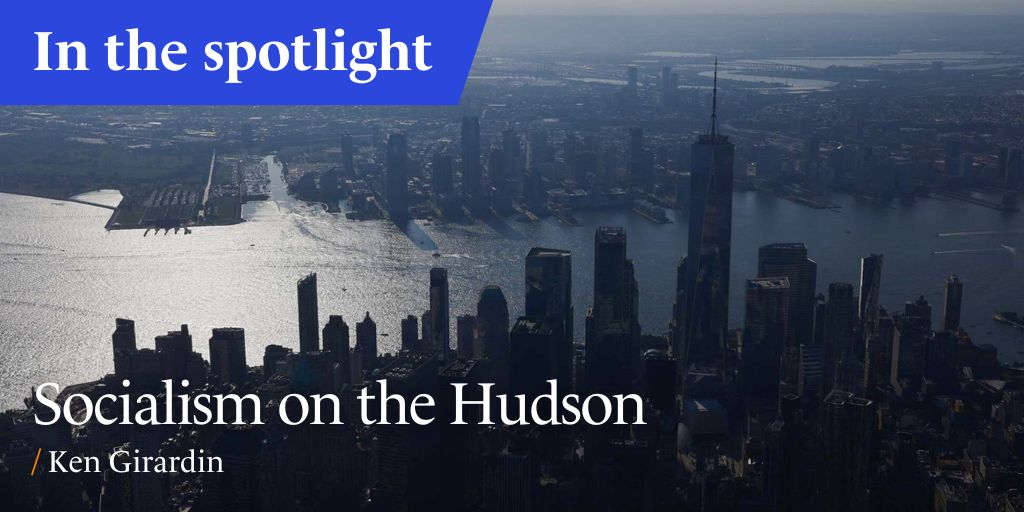
Socialism on the Hudson
By Ken Girardin | Manhattan Institute
Assemblyman Zohran Mamdani’s upset victory in the Democratic primary means that New York City is poised, for the first time in a century, to elect its next mayor from among the ranks of the state legislature. Although there are few self-described “democratic socialists” holding elected office in Albany, a growing bloc of progressive lawmakers is advancing policies that are safely described as socialist. Taken together, these policies would significantly expand state control across major sectors of New York’s economy and radically transform the state.
In a new Manhattan Institute report, fellow Ken Girardin identifies the most consequential proposals that align with a socialist agenda. Key initiatives include: - A state-run single-payer health system,
- Aggressive rent regulation,
- A $5 billion social housing authority with land seizure powers,
- Fare-free public transit,
- Universal child care,
- Tuition-free college, and
- Expanded state ownership in energy and banking.
These measures often lack cost estimates and would sharply increase taxes, discourage private investment, and strain public finances.
New York State government has the power to make sweeping interventions in the private economy and to heavily regulate, if not displace, the private actors in entire sectors. With the likely election of a democratic socialist mayor, it is more important than ever that New Yorkers can properly scrutinize proposals that would expand the role of state government in nearly every aspect of their lives. |
|
|
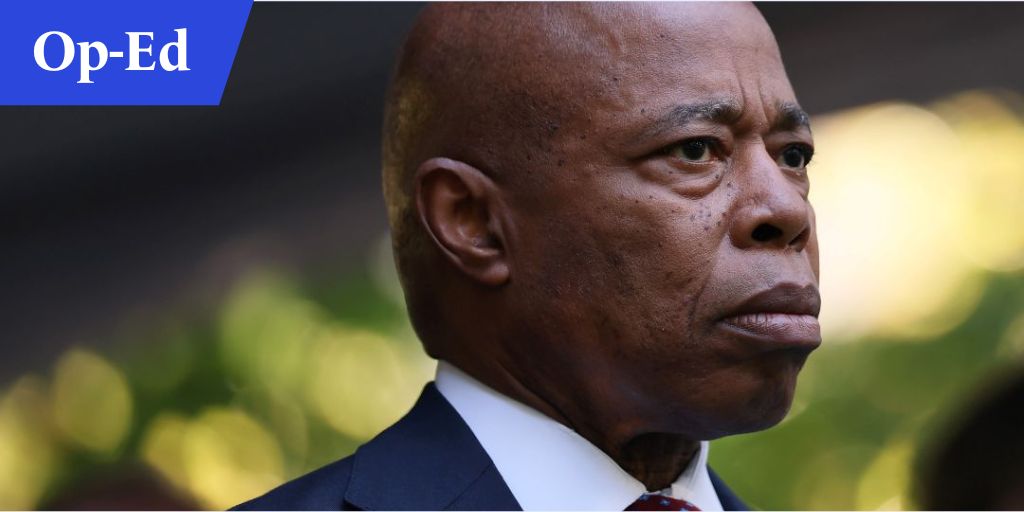
Eric Adams Spoke Truth to Democrat Party Power, and Was Punished for It
By John Ketcham | New York Post
Mayor Eric Adams’s “exit is the first major step towards consolidating the opposition against 33-year-old socialist Zohran Mamdani. Though much of the mayor’s recent attention has centered around his corruption charges and those of his close associates, his legacy should also consider his record of important accomplishments — for which he hasn’t always received credit. ...
“Despite a rocky start to his administration, Adams has managed to reduce homicides and shootings to near record lows. ... On housing, the most significant issue of this mayoral race, Adams’s City of Yes for Housing Opportunity plan is the most important change to the city’s land-use rules since 1961. ... And Adams had to contend with an unprecedented migrant crisis and the end of the COVID-19 pandemic. ... Adams knew that the crisis was destabilizing his mayoralty, and he wasn’t afraid to say that it would ‘destroy New York City.’ His fellow Democrats lashed out at his pointed but fair criticisms of Biden’s open-border policies.”
|
|
|
‘Grow Your Own’ Means ‘Discriminate by Race’ By Neetu Arnold | Wall Street Journal
“Teacher recruitment has a racial discrimination problem. ... Many schools consider race when awarding scholarships and debt relief under so-called Grow Your Own teacher initiatives. Grow Your Own programs are marketed as solutions to teacher turnover in hard-to-staff schools, recruiting future teachers—typically high school students—from the surrounding community. ... The bipartisan effort is supposed to reduce barriers to entry in the teaching profession, but some proponents want to use it to promote racial diversity. ...
“Advocates of race-conscious Grow Your Own programs often cite studies suggesting that minority students perform better when taught by teachers of the same race. But the gains are small and don’t justify undermining antidiscrimination law. More important, schools haven’t adequately tried nondiscriminatory methods to improve student achievement and teacher retention.” |
|
|
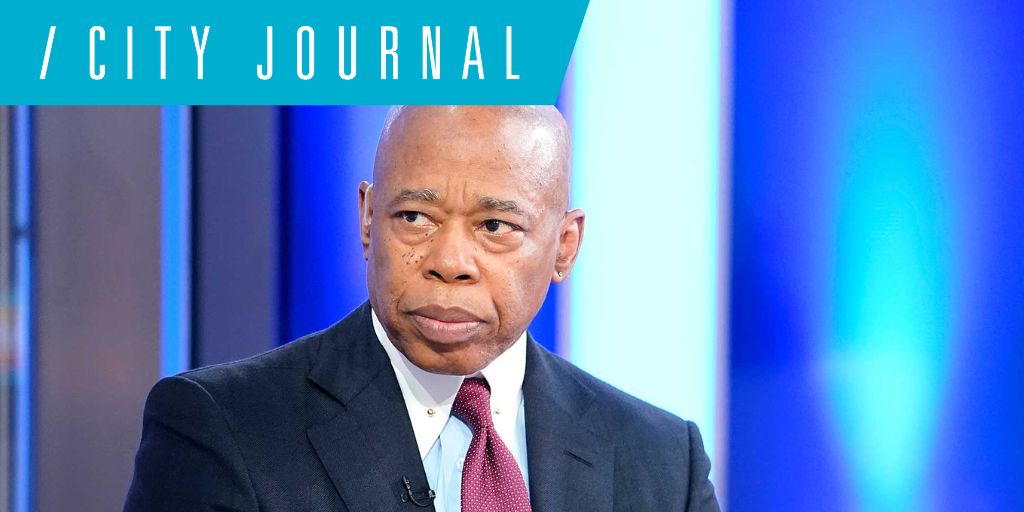
Eric Adams’s Mixed Legacy By Nicole Gelinas | City Journal
“Adams’s dropout speech ... oddly reminded New Yorkers of why they had voted for him in 2021, or, at least, had rooted for him after he won. Adams is authentic, likeable, and guided by a core set of admirable values and beliefs. But in governing, he could never get out of his own way, neither taking much outside advice on policy nor dropping his personal habits of petty corruption. Adams wasn’t a terrible mayor, but he could have been a genuinely good one—and his great fault is that he has opened the way for a worse successor. ...
“Voters knew that Adams had long brushed close to low-grade corruption, but he also came closest to addressing the declining public safety and quality of life that worried New Yorkers. So voters hoped for the best: that on the big stage, he would govern the city, and himself, against temptation. He didn’t: he surrounded himself with deputy mayors and key commissioners who weren’t much interested in cultivating reputations for honesty.” |
New York Charter Schools Aren’t Stealing Public Schools’ Dollars
By Danyela Souza Egorov | City Journal
“Earlier this month, more than 15,000 families from 200 charter schools across New York City marched on the Brooklyn Bridge to support charters. They asked, among other things, that the state lift its cap on the number of charter schools; that charters get equitable funding; and that charters be allowed to share space in existing public school facilities. ...
“Elected officials often explain their reluctance to lift the cap by citing the persistent argument that charter schools take resources away from New York City public district schools. ... The problem with this view is that the pie of public school dollars isn’t fixed—it keeps growing. Charters now enroll 15 percent of the city’s student population. Yet, this expansion has not negatively affected the New York City Department of Education (DOE) budget.” |
|
|
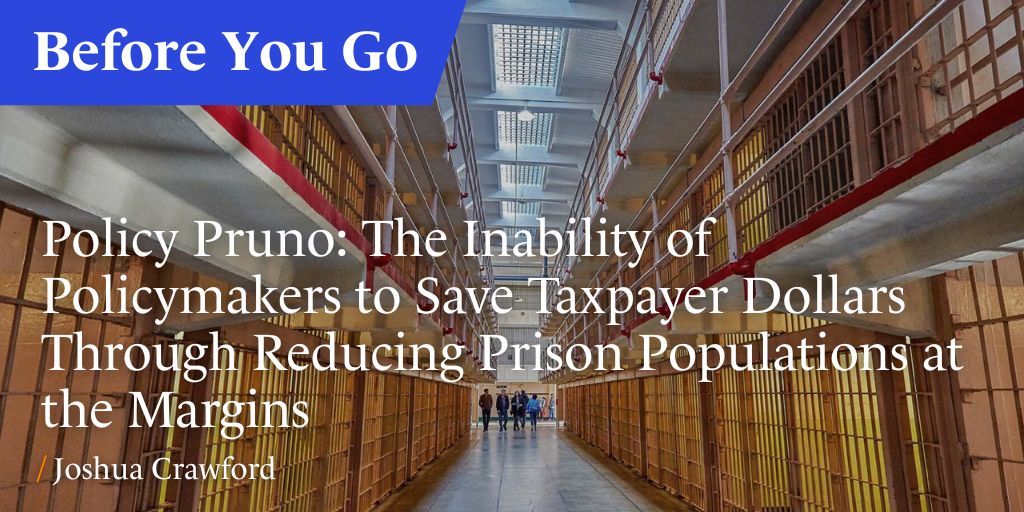
Policy Pruno: The Inability of Policymakers to Save Taxpayer Dollars Through Reducing Prison Populations at the Margins By Joshua Crawford | Manhattan Institute
One of the most common arguments for decarceration is that smaller prison populations will yield significant taxpayer savings. But as Joshua Crawford shows in a new Manhattan Institute issue brief, the numbers tell a different story.
Between 2010 and 2023, state prison populations fell by nearly a quarter. Yet corrections spending rose almost 28%. Because most prison costs are fixed—salaries, maintenance, utilities—marginal reductions in inmates do little to reduce budgets. Illinois and Michigan estimates show that cutting 1,000 prisoners saves less than a quarter of one percent of corrections spending.
Crawford’s analysis shows this trend holds even in states where prison populations dropped sharply, such as New York and Massachusetts. Reformers might argue the reductions weren’t large enough—but cuts big enough to deliver real savings would require releasing many violent or repeat offenders. And if deep cuts drive higher crime, the social and economic costs—estimated in the trillions annually—would dwarf any modest savings.
Crawford concludes that policymakers should abandon the illusion of easy taxpayer savings and focus debates on what criminal-justice reform can realistically achieve. |
|
|
For more information and media requests, please contact
communications@manhattan.institute.
Are you interested in supporting the Manhattan Institute’s public-interest research and journalism? As a 501(c)(3) nonprofit, donations in support of MI and its scholars’ work are fully tax-deductible as provided by law. |
|
|
Photo Credits: adamkaz/E+/Getty Images; Noah Berger/AP Photo; Anadolu/Getty Images; Wong Yu Liang/Getty Images; Catherine McQueen/Getty Images; Probal Rashid/LightRocket/Getty Images |
|
|
The Manhattan Institute works to keep America and its great cities prosperous, safe, and free. Manhattan Institute 52 Vanderbilt Ave. 3 floor New York, New York 10017
Want to change how you receive these emails?
Unsubscribe | Subscription Preferences
Copyright © 2025 Manhattan Institute, All rights reserved. |
|
|
|