Good morning:
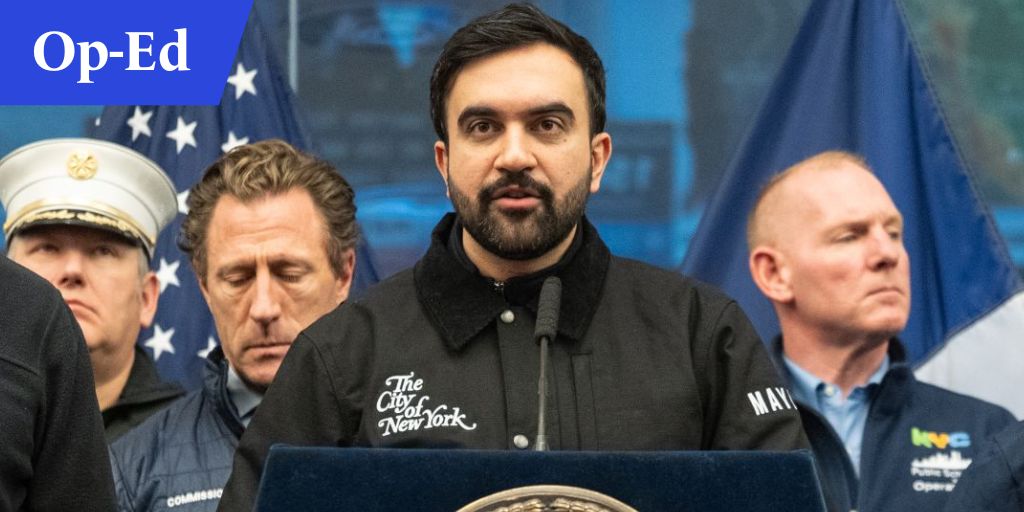
Last week, New York City Mayor Zohran Mamdani released a $127 billion preliminary budget proposal. To help close a projected $5.4 billion revenue shortfall over the coming two fiscal years, Mamdani is relying on a 9.5% increase in city property taxes, drawing down $1.2 billion from NYC’s “rainy day” fund, and using $229 million from the Retiree Health Benefit Trust.
The democratic socialist mayor’s plan would put immense pressure on working- and middle-class homeowners in the city, but he seems to hope, writes senior fellow Nicole Gelinas, that the threatened increase in property taxes will strongarm Governor Kathy Hochul “into supporting his proposed tax increases on seven-figure earners and large corporations instead.” In City Journal, Gelinas shows how the fun-and-free sheen is wearing off the new mayor and is being replaced by gloom-and-doom theater.
To have any hope of making good on his multibillion-dollar campaign promises for free buses, universal child care, hundreds of thousands of additional affordable-housing units and more, Mamdani needs to focus on growing the economy and tax base by making the city more attractive to large firms and high earners, director of Cities John Ketcham writes in the New York Post. Collecting revenue isn’t the problem—unnecessary city spending is.
The problem is likely to get worse before it gets better, suggests senior fellow Christopher F. Rufo in City Journal. The Left is moving away from race, sex, and culture issues in favor of economic ones. Mamdani copycats, like James Talarico in Texas and Graham Platner in Maine, are using frustration about inflation, housing, education, and issues under the “affordability” umbrella to stoke class resentment and conflict. Eventually, financial woes like unsustainable debt and uncontrolled printing will come to a head. The Right needs to develop a coherent response before it does.
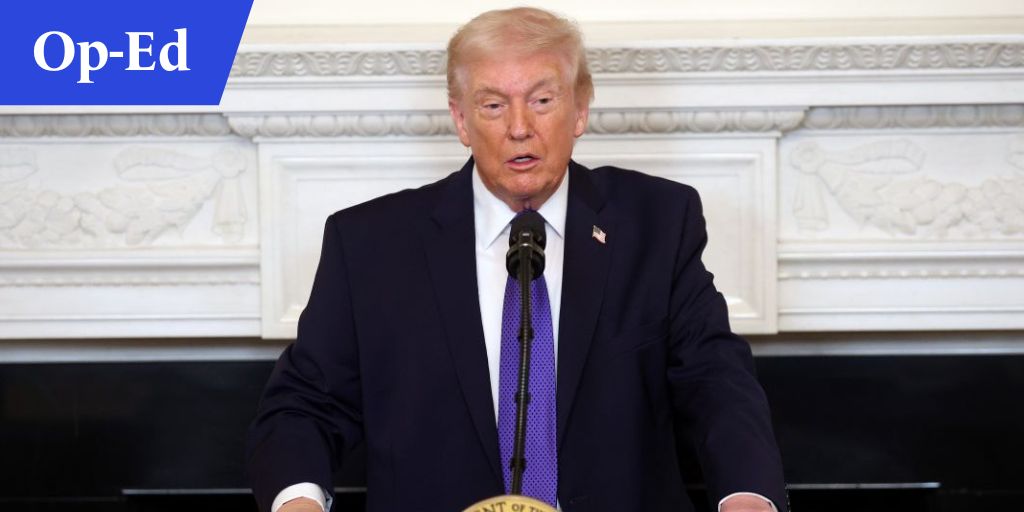
Elsewhere in this newsletter, director of Constitutional Studies Ilya Shapiro weighs in on the Supreme Court’s decision on President Trump’s tariff policy. The ruling is narrow, Shapiro writes in the New York Post. The court did not say the president lacks authority to impose tariffs, only that the law used in this case does not authorize these particular tariffs.
Finally, we released new research this week by Renu Mukherjee on Chicago’s selective enrollment high schools. The current mayor of Chicago is threatening to close the city's selective public schools because of their supposed underrepresentation of Hispanic and black students, but Mukherjee shows that these schools close the achievement gap for such students, have been and are supported by parents in these groups, and are actually cheaper than regular public schools.
Continue reading for all these insights and more. Kelsey Bloom Editorial Director |
|
|
Selective Success: A Comparative Analysis of Chicago’s Selective Enrollment and Public High Schools
By Renu Mukherjee | Manhattan Institute
For years, progressive activists and teachers’ unions have claimed that selective enrollment high schools discriminate against minorities, drain resources from public schools, and deepen educational inequality. In a new Manhattan Institute issue brief on Chicago’s selective enrollment high schools, Renu Mukherjee shows why these claims don’t hold up.
Drawing on Illinois Board of Education data, Mukherjee finds that selective enrollment schools are both diverse and high performing. Nearly 70% of students are black or Hispanic, and at least one-third are low-income. Achievement gaps in ACT English and math—between black and white, Hispanic and white, and low- and non-low-income students—are dramatically smaller in the city’s top selective schools than across Chicago Public Schools (CPS) overall. Meanwhile, CPS spends an average of $3,285 more per student in nonselective schools than in the top eight selective schools—while producing worse results.
Far from entrenching inequity, Mukherjee argues, selective enrollment schools function as lifelines for academically gifted students—especially those from disadvantaged backgrounds—and should be strengthened, not dismantled. |
|
|
How Mamdani’s Tax-Hike Mania Could Make His Budget Gap Grow BIGGER
By John Ketcham | New York Post “Mayor Zohran Mamdani has painted himself as the unfortunate victim of a historic budget crisis, but he really should be counting his lucky stars.
“New York City has a big spending problem, but not a revenue problem. Yet that could change soon — warning signs are already flashing. “Mamdani isn’t confronting an external economic shock like a recession, 9/11, the financial crisis or COVID-19. Wall Street is doing fine; the taxes on its stellar bonuses made $5 billion of the city’s budget gap disappear overnight. “As much as the mayor would hate to admit it, he needs Wall Street more than it needs him. ... If Mamdani doesn’t knock off the tax-hike nonsense and start getting the basics right, the next downturn won’t just expose the city’s economic fragility — it will define his administration.” |
|
|
Trump Has Lost the Tariff Battle but Not the Tariff War
By Ilya Shapiro | New York Post
“The Supreme Court’s tariff decision landed about where conventional wisdom said it would: The justices ruled 6–3 that the International Emergency Economic Powers Act simply doesn’t give the president the sweeping authority the Trump administration claimed. That’s not a political rebuke. It’s a legal one, and a narrow one at that.
“Chief Justice John Roberts put the bottom line plainly: ‘We hold that IEEPA does not authorize the President to impose tariffs.’ “That’s it. Not that tariffs are unconstitutional. Not that Trump’s trade agenda is illegitimate. Just that this particular statute doesn’t do the work the administration wanted it to do. “The core of the majority’s reasoning is straightforward and, frankly, hard to argue with. Article I gives Congress the power to tax, and tariffs are taxes.” |
|
|
Tax the Rich—Or Mamdani Will Tax You All
By Nicole Gelinas | City Journal
“During last year’s mayoral campaign, Zohran K. Mamdani came off as an economic and fiscal fabulist, but at least he seemed politically astute. He was the only candidate who focused on rising costs, and he was authentic and fun. So the 34-year-old mayor’s first budget season has been jarring. The no-pain, free-stuff optimist has turned into a doomsayer who grimly warns that he may have to raise taxes on working- and middle-class New Yorkers, and that even such a tax hike may not be enough to pay for his promises. ...
“Mamdani won office with a simplistic, relentlessly consistent single-issue message—cheaper or free stuff—to voters unhappy with the other choices on offer. Now, he must get across a complex, multiple-contingency message to numerous interest groups with competing priorities—and then get those interest groups to follow a complex chain of elected-official accountability. ... “Mamdani attained power through one set of empty gimmicks. He might now dissipate that power through a different set of empty gimmicks.” |
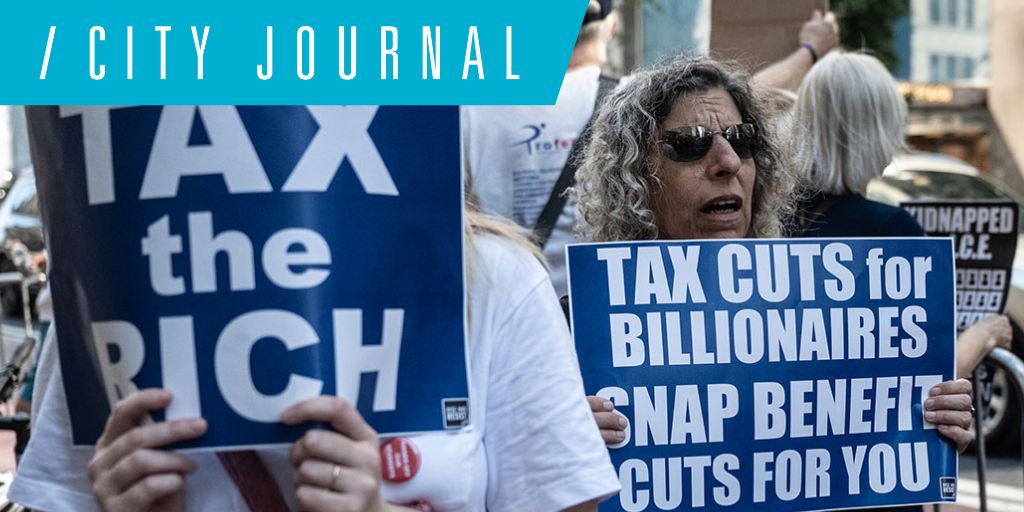
Class Warfare Returns By Christopher F. Rufo | City Journal “The Left’s focus permanently rotates between race, sex, and class. The activist Left drives the movement along one axis. Then, as Americans tire of those arguments, activists shift to the next axis, retreating from unpopular positions and rewarding the next interest group. Everyone gets his or her turn. ... “New York City mayoral candidate Zohran Mamdani was the first on the scene. He quietly toned down his race and gender rhetoric ... in favor of Leninist agitation about the ‘billionaire class’ and the ‘warmth of collectivism.’ His victory spawned class-warrior copycats. ...
“Progressives in California have proposed seizing 5 percent of the total assets of every billionaire under the state’s jurisdiction. Democrats in my home state of Washington have introduced a 9.9 percent tax on income over $1 million, though the state constitution prohibits a graduated income tax. Price controls are even making a comeback.
“This new offensive has found the Right unprepared.” |
|
|
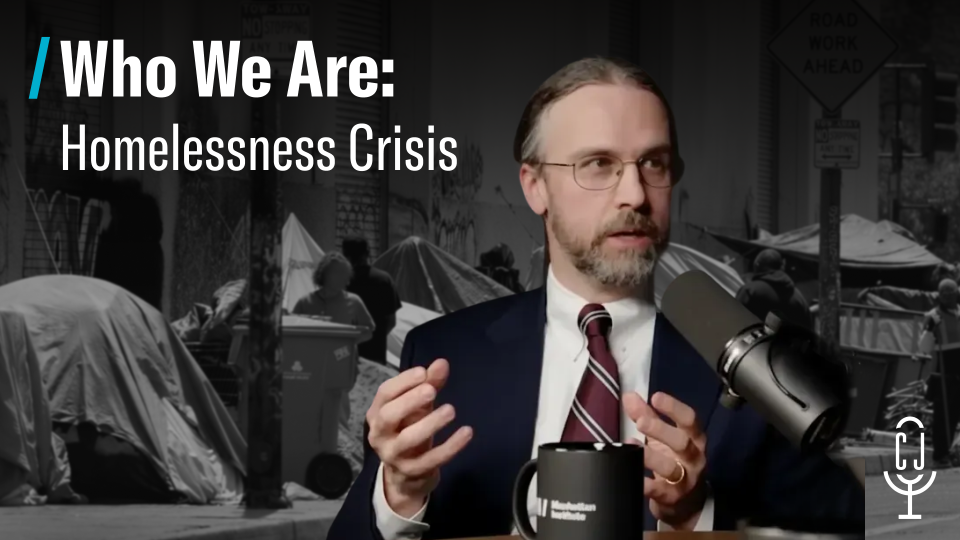
Who We Are: Homelessness Crisis By Manhattan Institute
Stephen Eide and Rafael Mangual sit down for a hard-hitting conversation on homelessness, mental illness, and the policies shaping America’s cities. The discussion explores the breakdown of family support systems, the limits of government intervention, and the thorny questions surrounding institutionalization and public safety.
Eide argues for a more realistic, balanced approach—one that confronts the realities of serious mental illness while pushing for practical, effective reforms. |
|
|
For more information and media requests, please contact
communications@manhattan.institute.
Are you interested in supporting the Manhattan Institute’s public-interest research and journalism? As a 501(c)(3) nonprofit, donations in support of MI and its scholars’ work are fully tax-deductible as provided by law. |
|
|
Photo Credits: adamkaz/E+/Getty Images; Noah Berger/AP Photo; Anadolu/Getty Images; Wong Yu Liang/Getty Images; Catherine McQueen/Getty Images; Probal Rashid/LightRocket/Getty Images |
|
|
The Manhattan Institute works to keep America and its great cities prosperous, safe, and free. Manhattan Institute 52 Vanderbilt Ave. 3 floor New York, New York 10017
Want to change how you receive these emails?
Unsubscribe | Subscription Preferences
Copyright © 2026 Manhattan Institute, All rights reserved. |
|
|
|