Good morning:
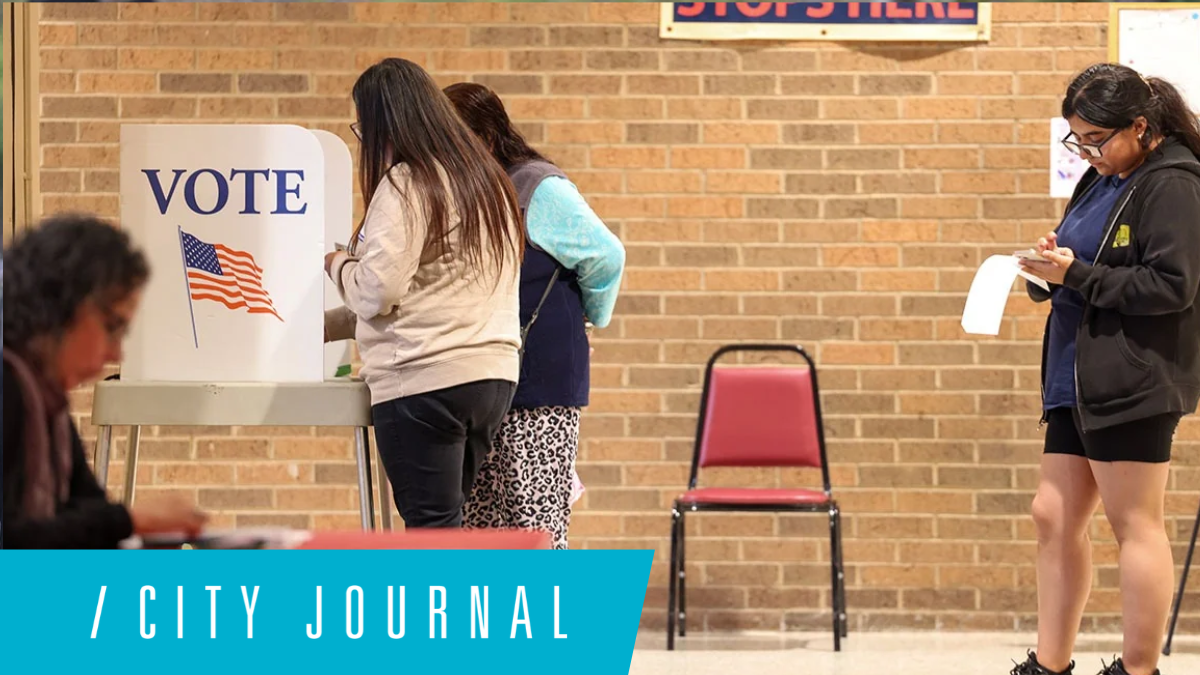
This week, we released the 2026 City Journal College Rankings, which score 115 of the country’s most prominent schools on over 90 measures, including academic rigor, ideological diversity, free speech, institutional neutrality, campus governance, and career outcomes. The results help to show why there is a crisis of confidence in American higher education. The average school received only 50 out of 100 points, with 87 of the schools scoring below 60. But they also reveal a growing divide between institutions pursuing meaningful reforms and those resisting change. By looking beyond traditional measures of prestige and selectivity, the rankings offer students and families a more comprehensive picture of what colleges actually have to offer.
MI scholars have continued to examine the meaning of historic Democratic victories in last week’s midterm elections. In Compact, Charles Fain Lehman takes on a tendency that he calls “Bo French-ism,” after the defeated Texas Republican candidate, which blames Republican losses solely on demographic change. This attitude, Lehman argues, excuses Republicans for governance failures. More importantly, it would undermine the multiracial coalition that propelled Donald Trump to victory in 2024. As recent elections demonstrate, voters of all races can—and do—change their political allegiances. To win again, Lehman argues, Republicans must abandon demographic fatalism, learn from their mistakes, and focus on persuading voters rather than merely energizing their base.
The election also was not a wholesale rebuke of conservative policies. As Sean Speer notes in City Journal, voters rejected Republican candidates but supported conservative ballot initiatives on taxation, criminal justice, and gender ideology. Republicans should recognize that conservative ideas remain popular despite the party’s electoral struggles, while Democrats should resist interpreting their victories as a mandate for a sweeping progressive agenda.
Also in City Journal, Jake Altman explores the coming challenges for the Democratic Socialists of America (DSA) following its impressive electoral gains. The DSA claimed 50 victories nationwide, including 6 new members of the House of Representatives. But there are looming tensions between the DSA’s radical activist base and its elected officials, who must appeal to broader electorates. Ideological infighting and resistance from moderate Democrats, Altman argues, could threaten its momentum.
In Bloomberg, Allison Schrager argues that tackling the affordability crisis—which drove the Democrats’ midterm victories—is not a job for the Federal Reserve. Inflation is not the primary driver of cost-of-living concerns. The problem is supply shortages in housing, energy, and health care. Aggressive interest-rate hikes could do more harm than good, while expanding government benefits would only stimulate demand. Instead, Schrager calls on Congress to embrace deregulation and market-oriented reforms that would expand supply—even if doing so means confronting powerful special interests.
Continue reading for all these insights and more. Nick Saffran Senior Editor Manhattan Institute |
|
|
|
The Left-YIMBY Bargain Comes to Albany: “State of Yes” Proposals Pair Housing Supply Reforms with New Burdens on Private Landlords
By Eric Kober | Manhattan Institute | Photo by Trebor Eckscher/iStock/Getty Images Plus via Getty Images
New York has a severe housing shortage. To address it, progressive state legislators have proposed “State of Yes,” a package of 32 bills aimed at addressing the crisis. The package has some promise, but it also imposes unnecessary burdens on private landlords that would undermine growth of housing supply.
In a new Manhattan Institute issue brief, senior fellow Eric Kober argues that the reform package embodies a fundamentally misguided “Left-YIMBY” approach, which offers pro-development reforms in exchange for ostensibly “pro-tenant” measures. Expanding housing supply, Kober argues, should be a goal in its own right. He calls for Governor Hochul to embrace the package’s most promising supply-side reforms without imposing new burdens on private landlords. |
Against Bo French-ism
By Charles Fain Lehman | Compact | Photo by SAUL LOEB / AFP via Getty Images “When you blame an election on the inexorable march of demographic change, you erase the poor policy choices that caused the electorate to swing wildly against the GOP in just two years. . . “As my Manhattan Institute colleague Jesse Arm has noted, the GOP’s activist class is for the first time to the right of its voters, much as the Democrats’ activists have long been to their voters’ left. It’s thus no coincidence that the same attitude prevails among influential parts of both parties: the way to win is to go whole hog on what they believe.” |
Conservative Ideas Outlast Trump’s Unpopularity
By Sean Speer | City Journal | Photo by Jonathan Aguilar/Milwaukee Neighborhood News Service/CatchLight via Getty Images
“These results tell a straightforward story of a partisan defeat but complicate the story of a progressive victory. Common-sense prescriptions on restraining taxes, enforcing criminal laws, and protecting female sports were strongly backed despite voters’ choices further up the ballot.
“The lesson, as politicians and pundits analyze the results, is to separate partisan conclusions from policy ones. Such an insight matters for the incoming Democratic Congress, which risks overinterpreting its mandate and advancing a legislative and policy agenda that’s far offside from where the American public is positioned.” |
For the DSA, Electoral Success Poses Its Own Dilemmas
By Jake Altman | City Journal | Photo by Finn Gomez/Getty Images
“At the same time, however, signs of awareness are emerging within DSA that its most radical factions and the public demands they place on elected members could backfire in a less favorable political climate, jeopardizing recent electoral gains and damaging the broader socialist project . . .
Expect growing friction both within the DSA and within the Democratic Party as internal tensions and the illusion of unity give way under the pressures of public scrutiny and political necessity.” |
The Affordability Crisis Isn’t About Inflation By Allison Schrager | Bloomberg | Photo by Kevin Dietsch/Getty Images
“The solutions to affordability don’t lie with the Fed and its blunt interest-rate tool; they lie with Congress, which has two years to engineer real relief before the ballot box is back in play. The economy does not have an inflation problem, but it does have an affordability problem. These are separate issues because high prices today are about too little supply.” |
|
|
China Wants to Beat Us to the Moon By James B. Meigs | Wall Street Journal | Photo by VCG/VCG via Getty Images
“If China gets there first, support for crewed missions could collapse even faster, especially if the new wave of antitech progressives takes charge in Washington. That would be a bigger disaster for American leadership than following China to a place we’ve already visited six times. Mr. Isaacman needs to stay focused on the long game: building a sustainable base on the moon, restoring NASA’s can-do spirit and avoiding political squabbles. That won’t be easy in this time of partisan upheaval. But the NASA administrator knows how to navigate turbulence.”
|
|
|
For more information and media requests, please contact
communications@manhattan.institute.
Are you interested in supporting the Manhattan Institute’s public-interest research and journalism? As a 501(c)(3) nonprofit, donations in support of MI and its scholars’ work are fully tax-deductible as provided by law. |
|
| |
The Manhattan Institute works to keep America and its great cities
prosperous, safe, and free. Manhattan Institute
52 Vanderbilt Ave. 3 floor New York, New York 10017
Copyright © 2026 Manhattan Institute, All rights reserved. |
|
|
|
|