Good morning:
This week, several slow-simmering controversies are coming to a boil.
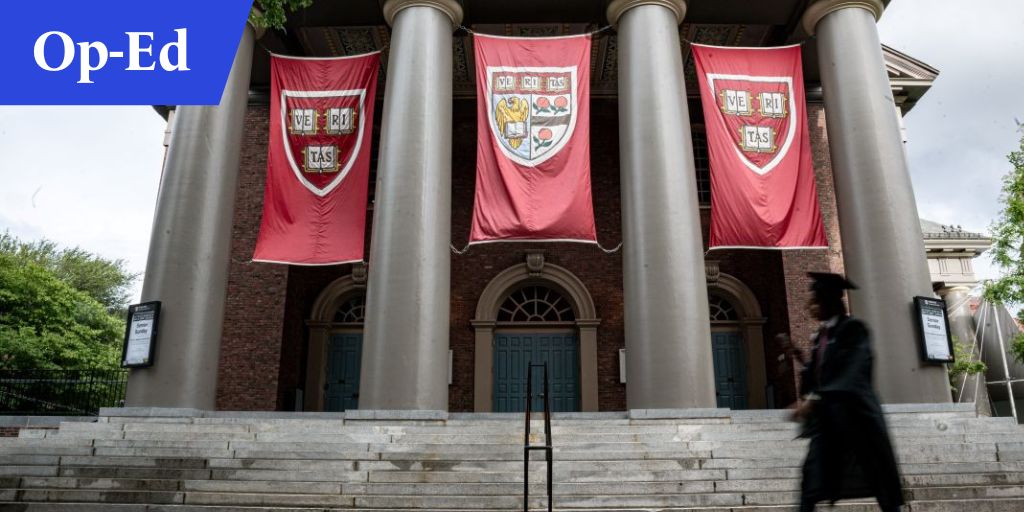
The recently released City Journal College Rankings could have told you the academic quality of a Harvard education is less than the branding suggests, but now the professors and administration openly admit it. In a new column for the Wall Street Journal, senior fellow Jason Riley digs into a new report by Harvard’s dean of undergraduate education on rampant grade inflation across the institution. But this is not a problem unique to Harvard. Graduate schools and other Ivy League institutions are engaged in a similar dilution of standards.
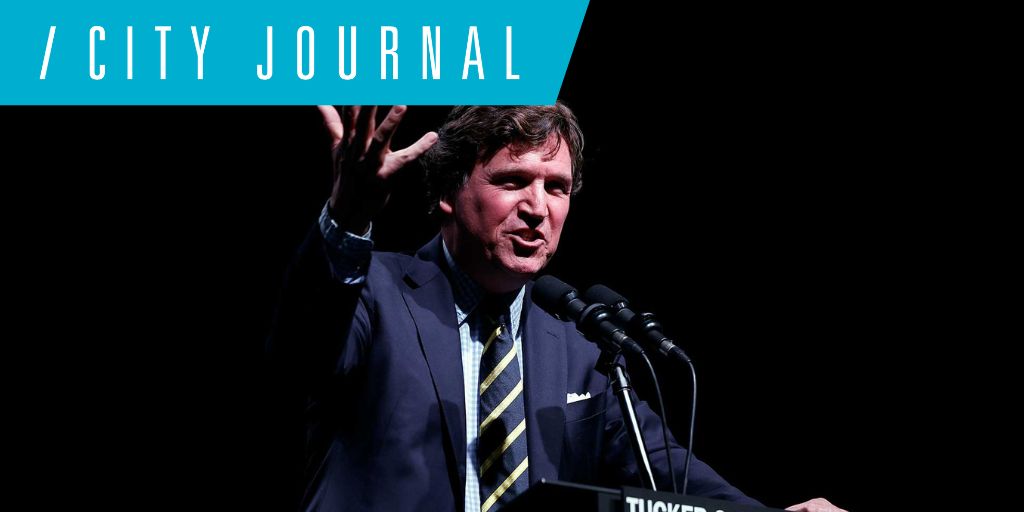
Another disappointing showing is Tucker Carlson’s new video series, The 9/11 Files. In a review of the five-part series for City Journal, senior fellow James B. Meigs writes that Carlson does not uncover any new physical evidence and focuses on vague, unsubstantiated claims. Unfortunately, the successful broadcaster employs the conspiratorial techniques he once laughed off, and follows the rabbit holes that can be safely dismissed.
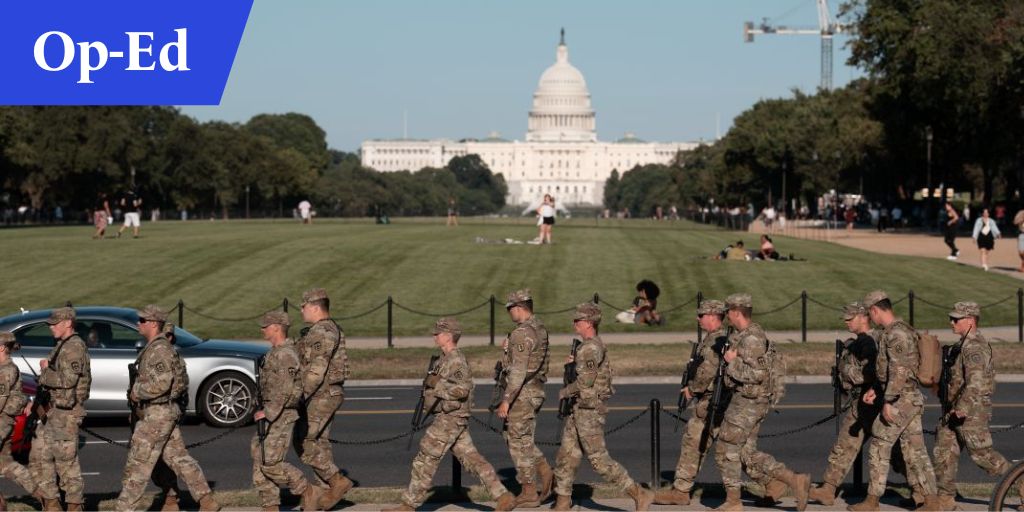
On the national politics front, fellow Charles Fain Lehman warns in the Free Press that the deployment of the National Guard could be effective for reducing crime in the long-term, but only if the federal government, cities, and states cooperate rather than being at odds with each other. With troops on the ground in Los Angeles, Memphis, Washington, D.C., Chicago, and Portland, it’s a problem lawmakers need to solve sooner rather than later.
And director of research Judge Glock lays out the history of impoundment, by which the president declines to spend all the money that Congress allocates to be spent, in City Journal. Glock argues that lawmakers can and should give the executive more explicit power to withhold funds when he can accomplish a congressional goal more cheaply than they anticipated, rather than force the spending of taxpayer dollars on wasteful or inadequate contracts and pork.
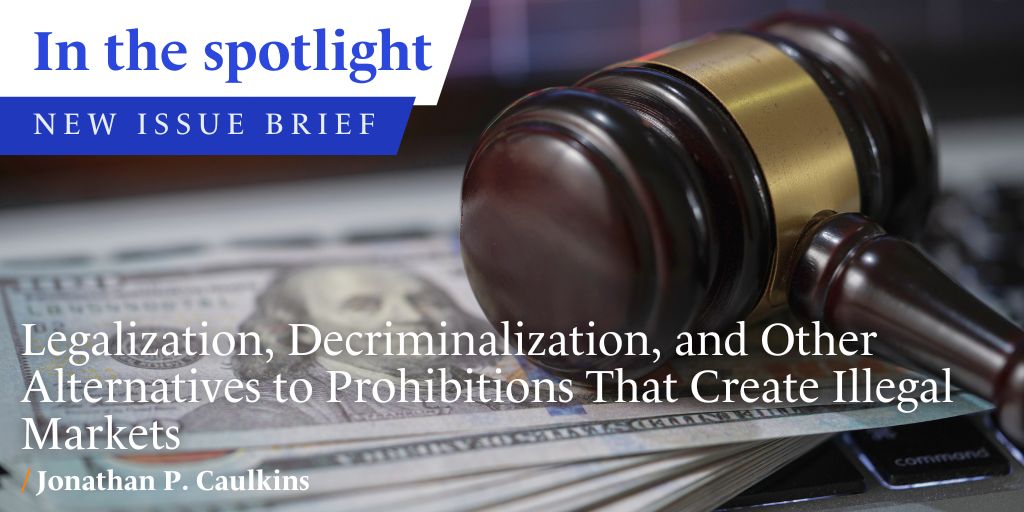
Finally, in a new report, Carnegie Mellon University professor Jonathan Caulkins studies a spectrum of government bans—beyond just drug and alcohol bans and into markets for prostitution, gambling, and other activities—to show that decriminalization, liberalization, and other types of prohibitions always have tradeoffs. Choosing wisely between prohibition and legalization is complicated because the consequences are uncertain.
Continue reading for all these insights and more. Kelsey Bloom Editorial Director |
|
|
Legalization, Decriminalization, and Other Alternatives to Prohibitions That Create Illegal Markets By Jonathan Caulkins | Manhattan Institute
In a new Manhattan Institute report, Jonathan Caulkins dispels several widely held myths about government prohibitions. By looking beyond the usual cases of drug and alcohol bans—and examining domains ranging from gambling and commercial sex to counterfeit goods and wildlife trafficking—Caulkins shows that governments rely on a spectrum of partial bans, decriminalization schemes, and regulated-legal models, each producing different market outcomes. He highlights several misconceptions: Legalization isn’t one thing. Who may sell, what may be sold, and how it’s regulated matter far more than the label.
• Decriminalization doesn’t shrink illegal markets. It reduces arrests for users but leaves supply—and its associated harms—intact.
• Illegal markets vary widely. Some are violent; many large ones, such as counterfeit goods, are not.
• Not all prohibitions fail. Many product bans reduce harm without generating significant illicit markets.
Because both bans and liberalizations carry unpredictable consequences, Caulkins proposes that governments adopt Illegal Market Impact Assessments (IMIAs)—modeled on Environmental Impact Statements—to evaluate likely market responses before changing the law. |
|
|
The Real Problem With Trump’s National Guard Deployments
By Charles Fain Lehman | The Free Press “The question of whether Trump’s deployments are legal is fiercely contested—and the Supreme Court is expected to have its say any day now. But another question deserves some attention too: Does deploying the National Guard actually work?
“As Trump tells it, these cities (mostly bright blue) are crime-ridden hellscapes. Local and state Democrats, meanwhile, darkly hint that the deployments are a prelude to jackbooted martial law. And both sides seem happy to cash in on the joy their bases get from the bashing.
“That’s a shame. Many of the cities Trump is targeting have real crime problems, and federal action—including, yes, the focused use of the National Guard—could help meaningfully. ... Unfortunately, Trump and Democrats alike are turning crime into just another culture war issue." |
|
|
How Do You Spell ‘Harvard’? With an Endless Supply of A’s
By Jason L. Riley | Wall Street Journal “You can always tell a Harvard man, the old saying goes, but you can’t tell him much. That includes, apparently, that he may not be as smart as his grades suggest.
“A recent internal Harvard report found that more than 60% of grades given to undergraduates in the 2024-25 academic year were A’s—up from about 25% two decades ago. The median grade-point average at graduation, which was 3.29 in 1985, is now 3.83. ... It’s possible that these outcomes stem from Harvard admitting smarter and more diligent applicants. But Dean of Undergraduate Education Amanda Claybaugh, who authored the 25-page report, found that rampant grade inflation provides a more credible explanation. ...
“Predictably, Harvard students were none too pleased with these findings. One person described the report as ‘soul-crushing.’ ... Another argued that stricter academic standards would be a threat to students’ mental health. Others insisted that grading was already too harsh.” |
|
|
Tucker Carlson Goes Full Truther By James B. Meigs | City Journal
“Effective conspiracy theorists need to be quick on their feet. To tell a persuasive story, they must focus our attention on the tiny number of facts that seem to support their theory, while ignoring the vast amount of evidence that contradicts it. ... Still, even the seemingly solid points supporting most conspiracy theories generally collapse under honest scrutiny. When that happens, the theorists rarely concede that their elaborate assumptions have been debunked. They simply jump to new, even shakier pieces of ‘evidence.’
“Tucker Carlson uses this device, and many more, in his slickly deceptive new video series, The 9/11 Files. Carlson is late to the 9/11 conspiracy party. In fact, in the past he employed his considerable rhetorical skills arguing against the so-called 9/11 Truth Movement, once calling its adherents ‘parasites.’ ... Things have changed.” |
The Power Not to Spend By Judge Glock | City Journal
“While Congress holds ultimate power of the purse, and some types of spending are mandatory, the president has the discretion to decide when certain appropriations are not needed. Every president has used this authority. Lawmakers can and should give the executive more explicit power to withhold funds when he can accomplish a congressional goal more cheaply. ...
“There are real costs to federal agencies spending money just to meet congressional deadlines. One of the worst-kept secrets in Washington is the ‘use-it-or-lose-it' mentality that afflicts agencies in September, the last month of the fiscal year, after which most appropriations get canceled. Spending on contracts in the last week of September is about five times higher than in other weeks of the year. Research shows that contracts from that period tend to perform worse than others.”
|
|
|
Tech and the City By Manhattan Institute “ The future of social media is AI generated. Recently, OpenAI launched Sora, an iOS app that lets you create AI generated videos and share them with friends, and it marks the start of a new era in social media.” |
|
|
For more information and media requests, please contact
communications@manhattan.institute.
Are you interested in supporting the Manhattan Institute’s public-interest research and journalism? As a 501(c)(3) nonprofit, donations in support of MI and its scholars’ work are fully tax-deductible as provided by law. |
|
|
Photo Credits: adamkaz/E+/Getty Images; Noah Berger/AP Photo; Anadolu/Getty Images; Wong Yu Liang/Getty Images; Catherine McQueen/Getty Images; Probal Rashid/LightRocket/Getty Images |
|
|
The Manhattan Institute works to keep America and its great cities prosperous, safe, and free. Manhattan Institute 52 Vanderbilt Ave. 3 floor New York, New York 10017
Want to change how you receive these emails?
Unsubscribe | Subscription Preferences
Copyright © 2025 Manhattan Institute, All rights reserved. |
|
|
|