Good morning:
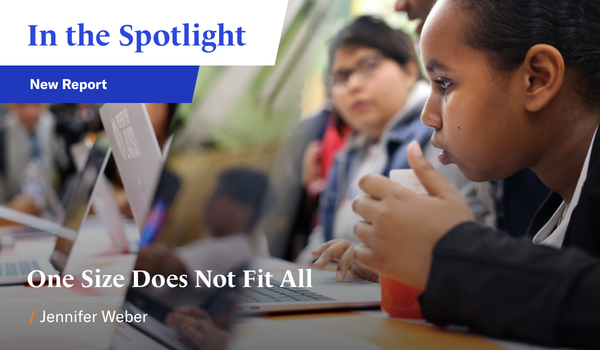
Today, the Manhattan Institute published a new paper by education fellow Jennifer Weber on developmentally appropriate AI in American classrooms. New technology has been a prominent feature of American education since the early twentieth century. But generative AI is fundamentally different from radio, television, or other edtech, because it allows for “cognitive offloading,” by which a student hands off his or her thinking to an external system. Under no circumstances should this be encouraged in lower elementary grades, but there is room for AI use to increase as the students’ cognitive abilities improve. Weber provides a step-by-step guide to incorporating AI in schools, broken down by grade.
Meanwhile, American adults are richer by almost every measure compared to Americans in the past but are increasingly unhappy and pessimistic. Is technology the problem? Social media? Rising expectations? Isolation? In a new column for Bloomberg, senior fellow Allison Schrager evaluates whether goods and services are so cheap that there are diminishing returns to our growing wealth. She also warns against heavy-handed policy responses to this dissatisfaction, which could make Americans “not only unhappy, but poorer too.”
For the New York Post, fellow Daniel Di Martino and investigative analyst Stu Smith pored over the new U.S. State Department report that alleges the Communist regime in Cuba has spent decades on a covert campaign to infiltrate the American political system through ideological influence. Cuba's foreign minister, Bruno Rodríguez Parrilla, rejected the report, calling it political propaganda. But Di Martino and Smith note that prominent leftist political figures in the United States have made recurring pilgrimages to Cuba and visiting the island seems like a rite of passage for the most committed of activists, including members of the Democratic Socialists of America (DSA).
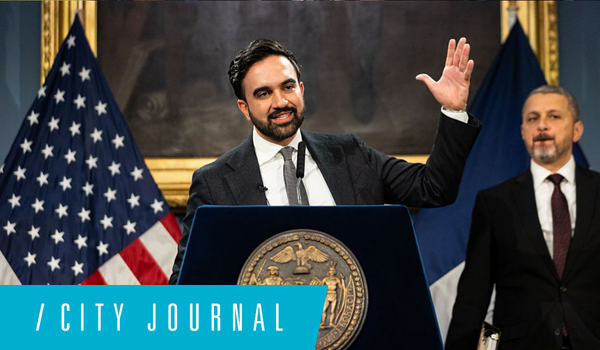
During Zohran Mamdani’s mayoral campaign, he satisfied the wishes of many DSA members when he vowed to arrest Israeli Prime Minister Benjamin Netanyahu. But in a recent video, Mamdani conceded that, while he still believes Netanyahu is a war criminal, the mayor does not have the authority to arrest the prime minister. Senior fellow Charles Fain Lehman reflects on that change in City Journal, warning that the incident reveals something about the politics of the Israel issue in the United States. Opposition to Israel is “a tool for ideological discipline of the center by the far Left,” Lehman writes. Indulging the fantasy of arresting Netanyahu today may bring demands for real action tomorrow.
On the other side of the country, senior fellow Christopher Rufo and senior investigative reporter Austen Hufford strolled down Skid Row for first-hand reporting on how so-called “harm reduction centers” enable the consumption of hard drugs and the deterioration of vulnerable lives. “What can I get you?” the attendant of a walk-up counter asked Rufo and Hufford, who obtained drug-testing strips, syringes, and crack pipes. Meanwhile, they report, the nonprofits that run the federally funded facility make money hand over fist.
Finally, vice president of External Affairs Jesse Arm and Karl Abramson conducted a new national survey on Americans’ views toward the welfare state, as well as the 2026 midterm elections and the upcoming 2028 presidential contest. Thirty years after Congress enacted President Bill Clinton’s welfare reform, its central principles are still broadly supported. Work requirements are supported by majorities of Republicans, independents, and Democrats. And Americans still generally view welfare assistance as something that should target those most in need and provide a basic standard of living rather than equalizing incomes.
Continue reading for all these insights and more. Kelsey Bloom Editorial Director |
|
|
|
One Size Does Not Fit All
By Jennifer Weber | Manhattan Institute | Photo by Christina House / Los Angeles Times via Getty Images
The introduction of emerging technologies in American education is nothing new. Radio, film, television, and applications were quickly adopted and used to varying degrees in classroom. But generative AI is fundamentally different. Previous education technologies still needed the student to be actively involved in their own education. By contrast, AI can solve mathematical formulas, write essays, and summarize texts. Students can sit passively and never learn, think, or challenge themselves. It encourages “cognitive offloading.”
That is why it is critical to establish developmentally appropriate AI policy at the state level, writes fellow Jennifer Weber in a new issue brief for the Manhattan Institute. Weber proposes a grade-band framework fitting for all states: AI should be teacher-facing only in grades K–2, limited to structured teacher-directed critique in grades 3–5, constrained and preceded by independent work in grades 6–8, and more expansive (though still guarded) in high school. Summative assessments should remain AI-free throughout.
Weber also calls for stronger data privacy protections, mandatory disclosure to parents, a statewide AI-tool registry, and a voluntary procurement consortium to protect under-resourced districts. The brief warns that students with weak foundational skills—disproportionately low-income and minority students—are most at risk of AI dependency. |
Cuba must pay for incubating far-left terror attacks and dissidents across the United States
By Daniel DiMartino and Stu Smith| New York Post Opinion | Photo by YAMIL LAGE / AFP via Getty Images “The State Department published a damning report documenting the Cuban communist regime’s nefarious activities in America. “Among the revelations: Cuba has been training over 10,000 American left-wing activists and funding dissent in this country. They have the ability to organize disruptive demonstrations at most military bases and immigration facilities at a day’s notice.
“The timing is eerie. Just this Tuesday, yet another anti-ICE terror attack occurred in Manhattan when a former U.S. Army soldier set gasoline on fire in front of the agency’s New York field office. This pyromaniac isn’t officially linked to Cuba, but his violent left-wing attack is precisely the type of thing Cuba is incubating in America. …
“It’s easy for DSA members and fellow travelers to funnel money to anti-American causes. … But it’s not easy to be a Cuban suffering from blackouts, lack of water, and food shortages caused by socialism.” |
|
| Americans Are Richer Than Ever. Why Are They So Angry? By Allison Schrager |Bloomberg Opinion | Photo by Cris Faga/NurPhoto via Getty Images “It is one of the great paradoxes of our time: Americans have never been richer — or more negative about the economy. More people are upper-middle class than ever, and even lower-income Americans are richer by almost every measure compared to previous generations. And yet more than three in five Americans say the economy is not working for them. …
“There are several possible explanations for why this might be. It could be that today’s America is already so rich that gains in income no longer pack the same punch. … This is a time of material abundance. Americans can get anything they want delivered to their door, sometimes the same day. Flat-screen TVs, dishwashers, airplane travel, and air-conditioning are no longer available only to the wealthy. Yet even for the affluent, some critical services — housing, childcare, education, cutting-edge medicine — are still very expensive. These costs can be especially burdensome to middle-class Americans who earn too much to get government assistance. Meanwhile, the inflation of the last few years has introduced more economic uncertainty into people’s lives.”
|
Mamdani and the Left’s Israel Fantasy
By Charles Fain Lehman | City Journal | Photo by Mostafa Bassim/Anadolu via Getty Images
“The only really interesting question is whether Zohran Mamdani believed his own hype. On the campaign trail, New York’s mayor promised repeatedly that he would arrest Benjamin Netanyahu if the Israeli prime minister came to the city. But on Tuesday, Mamdani admitted in a video what everyone else already knew: he has no power to enforce International Criminal Court warrants or any other international law, and he certainly cannot arrest a foreign dignitary.
“That this was obvious to most of us does not necessarily mean that it was obvious to the mayor. Mamdani has been an anti-Israel obsessive since he was in college. As mayor, he’s seized every opportunity to take swings at Zionists and Israel, managing to squeeze an attack on them into, for example, his half-hearted denunciation of a violent protest in front of a synagogue. And he seems to fancy himself more of a world leader than an American mayor—evident not just by his incoherent invocations of ‘international law’ but by his subordinate’s efforts to meet with at least one hostile foreign power. Much like the proverbial dog playing basketball, maybe Mamdani really believed that there was a loophole.”
|
|
|
A California-Funded Homeless Shelter Gave Us Meth Pipes
By Christopher F. Rufo and Austen Hufford | City Journal | Mikala Compton/The Austin American-Statesman via Getty Images
“As governor of California, Gavin Newsom has repeatedly supported ‘harm reduction’ policies, which enable drug use in the name of making it ‘safer.’ He created the state’s Harm Reduction Initiative, which funded ‘syringe services programs’ for ‘people who inject and smoke fentanyl and/or methamphetamines.’ His Department of Public Health has endorsed distributing syringes, glass pipes, and ‘[c]ontainers for mixing injectable drugs’ to drug users. Newsom argued earlier this year that harm-reduction tactics ‘increase the likelihood of people entering substance use treatment.’
“But do California’s harm-reduction programs encourage addicts to enter treatment? We visited the Skid Row Care Campus, a homeless-services site in Los Angeles County, to witness ‘harm reduction’ in action. We discovered that, instead of directing addicts to get clean, the taxpayer-funded program doles out free paraphernalia, enabling addicts to get high—no questions asked. … “In California, harm reduction facilitates drug abuse. The state’s leaders may think that it’s compassionate to let people waste away, smoking hard drugs and prodding themselves with needles. But these behaviors lead only to ruin, and, finally, death.” |
|
|
American Attitudes on Welfare, Waste, Crime, and the Political Environment
By Jesse Arm and Karl Abramson | Manhattan Institute | Photo by Jakub Porzycki/NurPhoto via Getty Images
“A new national survey conducted by the Manhattan Institute examines Americans’ attitudes toward the welfare state thirty years after President Bill Clinton’s landmark welfare reform … helps clarify a central question confronting American social policy: Do voters still support the principles that reshaped the nation's welfare system in the 1990s? Or has public opinion shifted toward a more universal and unconditional vision of government assistance? “The findings reveal a durable public consensus in favor of assistance that is targeted rather than universal, tied to work where appropriate, and focused on providing a basic standard of living rather than reducing income inequality. Voters also place a high priority on reducing waste, fraud, and abuse within government assistance programs.
“The survey reveals a significant generational divide, with younger voters consistently more supportive of universal benefits, unrestricted cash assistance, and universal basic income than older Americans, suggesting that many of the assumptions underpinning the modern welfare state are less firmly held by the rising generation.” |
|
|
A few more things ... “Americans are choking on Canadian wildfire smoke because our neighbors refuse to do proper forest management” by Shawn Regan in the New York Post
“Can This Man Stop the Mamdani Agenda” by Eliza Shapiro and Nicholas Fandos in The New York Times
"JFK on Israel in 1956 vs. Democrats Today" by Tal Fortgang and Stuart Halpern in The Washington Post
"Is ShotSpotter Racist? An Honest Conversation with SoundThinking CEO Ralph Clark" with Rafael A. Mangual and Ralph Clark for the City Journal Podcast
Come work with us! |
|
|
|
For more information and media requests, please contact
communications@manhattan.institute.
Are you interested in supporting the Manhattan Institute’s public-interest research and journalism? As a 501(c)(3) nonprofit, donations in support of MI and its scholars’ work are fully tax-deductible as provided by law. |
|
|
|
The Manhattan Institute works to keep America and its great cities
prosperous, safe, and free. Manhattan Institute
52 Vanderbilt Ave. 3 floor New York, New York 10017
Want to change how you receive these emails?
Unsubscribe | Subscription Preferences
Copyright © 2026 Manhattan Institute, All rights reserved. |
|
|
|
|