Good morning:
One week into the federal government shutdown, Democrats continue to argue that any funding bill passed by Congress must include an extension of expanded Affordable Care Act subsidies due to expire at the end of 2025. These subsidies were originally sold during the Covid pandemic as an emergency measure to help people struggling to afford their health insurance.
Meanwhile, many Republicans note that the subsidies do not lower the cost of health insurance; they just shift the cost to the federal government (in other words, to American taxpayers). Prior to the shutdown, Republicans proposed funding the government at existing levels through November 21. Democrats countered with funding through October 31, and included an extension of the Affordable Care Act subsidies.
One major point of contention in the healthcare funding debate is spending on unlawful immigrants through Medicaid programs. Do people in the country unlawfully receive these benefits?
In a column for the New York Post, senior fellow Chris Pope shows the math behind Republicans’ assertion that Democrats use federal funds and Medicaid subsidies to pay for the healthcare of unlawful immigrants. He finds that the state of California is raiding federal Medicaid coffers to fund its comprehensive health insurance for residents without legal status.
California may be only the beginning. “Six other states, including New York, provide comprehensive health benefits to illegal immigrant adults,” Pope writes, “although they have not yet been so brazen about claiming federal funds for the purpose.” The claim that federal funds are not used on unlawful immigrants is not true.
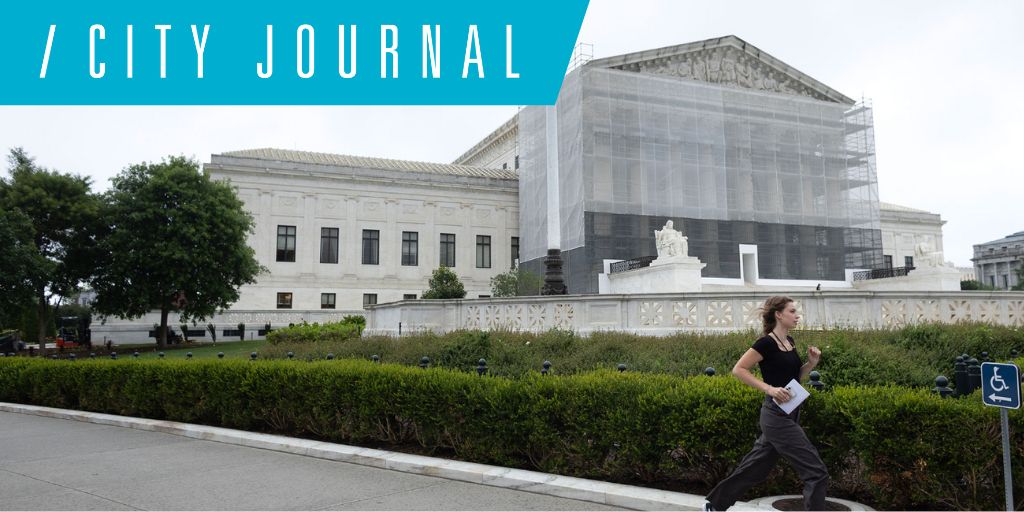
In other news this week, director of constitutional studies Ilya Shapiro highlights the most significant court cases the U.S. Supreme Court will hear this term, in City Journal. From cases on so-called “conversion therapy” to help patients struggling with gender dysphoria, to the limits (or not) of the president’s authority over semi-independent executive branch agencies, Court-watchers can look forward to an eventful term.
Also in City Journal, adjunct fellow and civil rights organizer Wai Wah Chin warns against embracing mayoral candidate Zohran Mamdani’s proposal to phase out the gifted and talented program in New York City schools. Instead of tamping down on the ambitions and potential of eager learners, the city should “find bright kids in every neighborhood, and elevate merit over discrimination and ideology.”
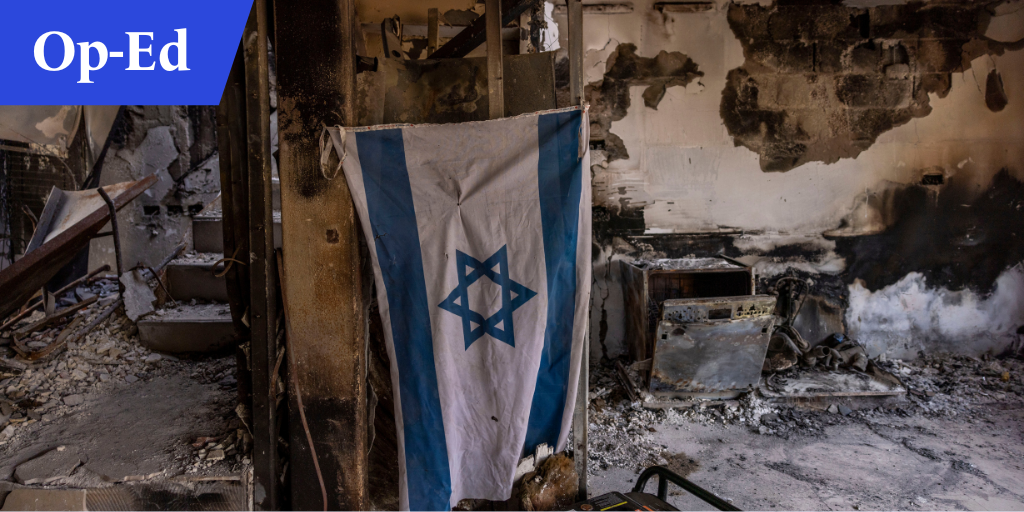
Tuesday this week marked the second anniversary of Hamas’s October 7 terrorist attack against Israel. In a column for The Free Press, senior fellow Douglas Murray considers the stakes of the war both within the Jewish state and without. Murray warns that “Israel has been winning its war. But in the wider war—the war for our civilization—we are losing.”
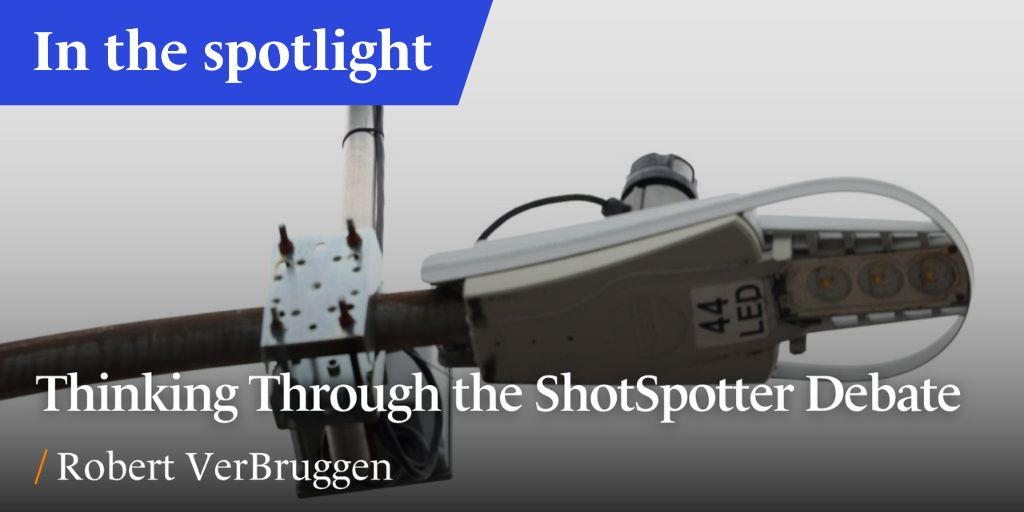
Finally, in a new report published today, fellow Robert VerBruggen offers a deep dive into gunshot-detection technology, which monitors neighborhoods for sounds likely to be gunshots and alerts police. VerBruggen finds that the tool delivers on its promise of getting police to shooting scenes faster, but it comes with tradeoffs that policymakers will have to consider before making the investment. Continue reading for all these insights and more. Kelsey Bloom Editorial Director |
|
|
Thinking Through the ShotSpotter
By Robert VerBruggen | Manhattan Institute
Gunshot-detection technology (GDT), such as ShotSpotter, has recently drawn ire from activists who claim that it is racially biased, inaccurate, and ineffective. In a new Manhattan Institute report, Robert VerBruggen reviews the evidence and finds that most of these criticisms are overstated. The key question, he argues, is not whether the technology works—but whether departments can use it effectively. ShotSpotter gets police to shooting scenes faster, helping them recover evidence—shell casings, guns, even victims—that might otherwise go unnoticed. Proven false alerts are rare, though many calls are “unconfirmed,” yielding no actionable evidence. VerBruggen also finds that sensors are concentrated in high-crime areas—often minority neighborhoods—because that’s where shootings occur, not because of racial bias. While studies show little measurable impact on overall crime or clearance rates, those effects may simply be too small to detect—and could still justify the modest cost, typically well under 1% of city police budgets. The takeaway: ShotSpotter isn’t a cure-all, but for well-staffed departments, it remains a valuable tool against gun violence. |
|
|
The War Israel Won—and the One the West Is Losing
By Douglas Murray | The Free Press “Many who are outside the Jewish community hear about ‘the war’ and think of Israel. But in fact, two wars have been raging over the past two years.
The first is the war that the state of Israel has been fighting against its enemies, including Iran and its proxies in the region. The second is the war that has been fought against Jews in the wider West. One of those conflicts is in the process of being won. The other feels like it is being lost. ...
“It is not necessary to rehearse the vast litany of insanity and anti-Jewish hatred that has been unleashed in the West since October 7. ... This is not the result of Jewish paranoia. It is a reflection of reality. It is a reaction to the fact that each of these countries has seamlessly slipped into a permissive attitude (at best) toward the world’s oldest hatred.” |
|
|
Funding Healthcare for Illegal Migrants in California
By Chris Pope | New York Post
“Vice President J.D. Vance tweeted: ‘Democrats are about to shut down the government because they demand we fund healthcare for illegal aliens.’ Democrats and the media bristled. That wasn’t true (they) protested. ... Liberal fact-checkers argued that Medicaid subsidies for emergency care were trivial, and did not count as health coverage. But their ‘fact checks’ are just semantics.
“From 2023 to 2024, Medicaid spending on ‘Emergency Services for Undocumented Aliens’ suddenly soared from $3.8 billion to $9.1 billion. ... The surge in this expenditure was entirely due to the state of California, where spending suddenly leaped from $1.6 billion to $6.4 billion. ... What happened? ....
“In 2024, California became the first state to offer comprehensive health insurance to all undocumented immigrants. ... This benefit was supposed to be paid for with state-only funds, but California has taken advantage of Medicaid’s open-ended payment structures to shift the cost to the federal government.” |
|
|
Sex, Politics, and Executive Power By Ilya Shapiro | City Journal “After an eventful summer of travel, teaching, and book tours, the Supreme Court justices are back—except it feels like they never left. ... This year, the justices kept us all busy with a constant stream of rulings on the emergency docket.
“Rested or not, the show must go on. Here’s a quick-and-dirty guide to cases to watch in the 2025–2026 Supreme Court term, grouped into three buckets: sex and gender identity, politics, and executive power.
“In Chiles v. Salazar, the Court will consider the constitutionality of a ban on certain forms of talk therapy for gender dysphoria. ... In Little v. Hecox and West Virginia v. B.P.J., the Court will take up state laws restricting girls’ sports to biological females. ... Bost v. Illinois State Board of Elections asks whether federal candidates can challenge state time, place, and manner regulations of federal elections under Article I’s Elections Clause. ... Finally, in Trump v. Slaughter, the Court will consider whether the president can remove members of the so-called ‘independent’ agencies only 'for cause’.”
|
Ending New York’s Gifted Programs Would Hurt Students
By Wai Wah Chin | City Journal
“Democratic Socialist mayoral candidate Zohran Mamdani has proposed phasing out the successful and popular Gifted and Talented (G&T) program in New York City elementary schools, starting with eliminating kindergarten admissions next fall. If implemented, his decision would drag New York City back to the failed policies of the de Blasio administration. ...
“The New York City Department of Education (DOE) performs dismally by every objective metric, from state assessment and NAEP scores to violent incidents and truancy. An end to G&T would only worsen these problems. Scrapping G&T entry at kindergarten, eventually leading to a full phase-out across all elementary grades, would deprive eager young learners of vital nurturing and stimulation, forcing them into one-size-fits-all classrooms—where boredom breeds disengagement—while doing nothing to improve educational outcomes for others.”
|
|
|
American Universities, Two Years After October 7
By Stu Smith, Neetu Arnold, Adam Lehodey, and Rafael A. Mangual | City Journal
What does a university’s response to terror reveal about its values and its influence on society? On the two-year anniversary of Hamas’s October 7 attacks on Israel, Stu Smith, Neetu Arnold, Adam Lehodey, and Rafael Mangual reflect on national and global reactions to the attacks, especially on American university campuses. Their conversation explores the ideological influence of faculty and campus activism that blurred the line between academic freedom and lawlessness. They also consider how federal funding and institutional incentives shape university behavior.
|
|
|
For more information and media requests, please contact
communications@manhattan.institute.
Are you interested in supporting the Manhattan Institute’s public-interest research and journalism? As a 501(c)(3) nonprofit, donations in support of MI and its scholars’ work are fully tax-deductible as provided by law. |
|
|
Photo Credits: adamkaz/E+/Getty Images; Noah Berger/AP Photo; Anadolu/Getty Images; Wong Yu Liang/Getty Images; Catherine McQueen/Getty Images; Probal Rashid/LightRocket/Getty Images |
|
|
The Manhattan Institute works to keep America and its great cities prosperous, safe, and free. Manhattan Institute 52 Vanderbilt Ave. 3 floor New York, New York 10017
Want to change how you receive these emails?
Unsubscribe | Subscription Preferences
Copyright © 2025 Manhattan Institute, All rights reserved. |
|
|
|