Building Family-Friendly Cities Principles for Reversing the Urban Family Exodus

Photo by Kena Betancur/Getty Images
Executive Summary
American cities are struggling to attract and retain young families. A growing number of parents are choosing to decamp for suburban and exurban communities, no longer confident that the country’s major cities offer the right combination of affordability, safety, and quality amenities. For those who remain in U.S. urban cores, an increasing number of potential parents are choosing to have fewer children or to forgo having kids altogether.
Declines in the number of young children living in many U.S. cities during the Covid-19 pandemic were staggering. New York City’s under-five population fell by 18% in just over three years. The number of young families in major cities like Chicago, Los Angeles, and San Francisco also fell dramatically through a combination of out-migration and declining fertility. Yet the pandemic-era urban family exodus was not new. Rather, it had its roots in big cities’ long-running policy failures, whose costs were becoming clear before the Covid-19 crisis.
Young families are leading indicators of a city’s health. Families are uniquely sensitive to issues like public safety and school quality and are the backbone of functional, tightly knit communities. Losing families in large numbers is a sign that a city is failing to provide the fundamental building blocks of urban life.
While the causes of the urban family exodus are complex and years in the making, leaders can take concrete steps to make their cities more friendly to families raising children. In what follows, we provide policy suggestions applicable to cities nationwide.
The Scale and Drivers of the Urban Family Exodus
Between early 2020 and mid-2024, the population of children under five years old declined by 7% in large urban counties, which is more than twice the nationwide rate of decline. In some of the country’s largest cities, declines in the number of young children during the pandemic and its aftermath were much larger. Since the spring of 2020, the number of young children has fallen about 19% in New York County; 16% in Cook County, Illinois; 15% in San Francisco; and 14% in Los Angeles County (Table 1). Though the under-five population in major cities stabilized in 2024, it is not rebounding from its massive pandemic-era decline.[1]
TABLE 1
Large Urban Counties with Fastest-Shrinking Age 0–4 Populations Since 2020 (April 2020–July 2024)
| County | Percent Change Since 2020 | Percent Change 2023–24 | Age 0–4 Population, 2024 |
| New York County, New York | –18.90% | –0.50% | 63K |
| Kings County, New York | –17.80% | –1.60% | 158K |
| City of St. Louis, Missouri | –17.50% | –3.60% | 15K |
| Queens County, New York | –17.00% | 0.00% | 119K |
| Cook County, Illinois | –15.60% | –1.60% | 262K |
| San Francisco County, California | –14.70% | 0.60% | 33K |
| Los Angeles County, California | –14.40% | –1.00% | 475K |
| Bronx County, New York | –14.40% | 0.40% | 88K |
| Hudson County, New Jersey | –14.10% | –1.30% | 43K |
| Orange County, California | –13.90% | –2.00% | 155K |
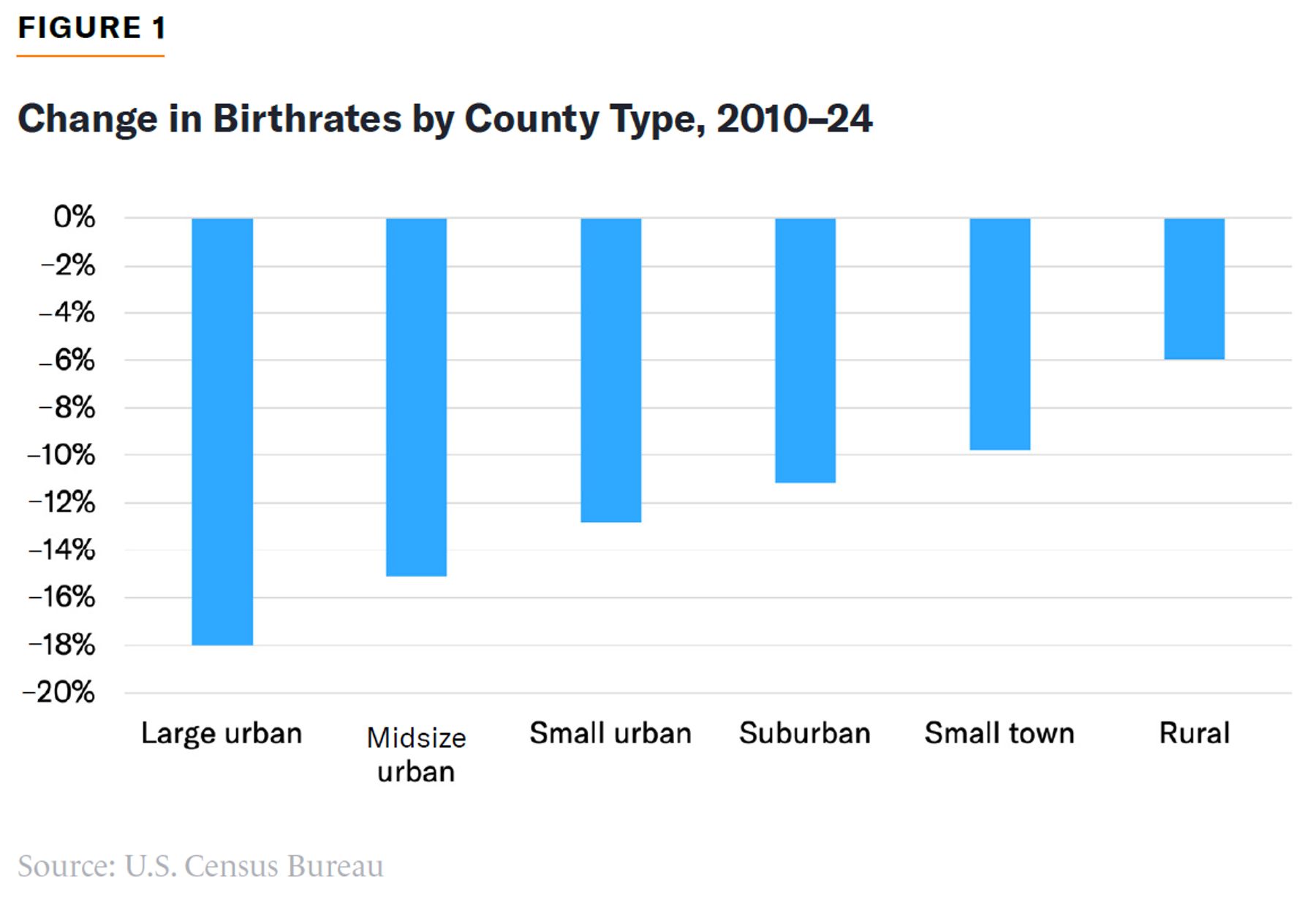
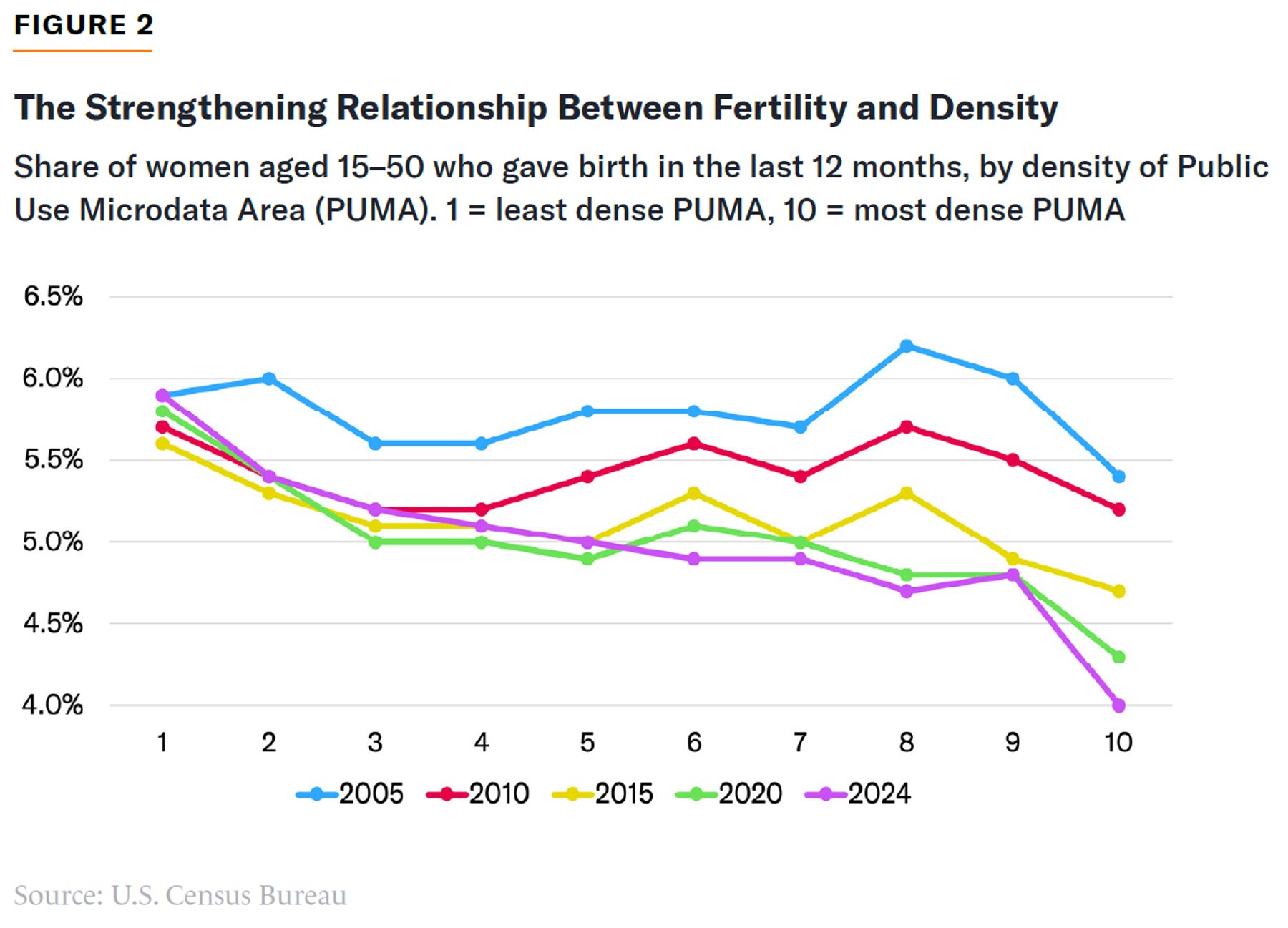
Out-migration was one cause of such large declines. But falling fertility also contributed. Birthrates have been in long-term decline across the country, but in recent years have fallen much faster in large cities than in less urban parts of the country. In large urban counties, birthrates are down 18% since 2010 (Figure 1). Indeed, the relationship between fertility and density has grown stronger over the last two decades, as birthrates have fallen fastest in the most densely populated parts of the country (Figure 2).
Where Families Are Feeling Squeezed
We will highlight four areas—housing, child care, education, and public safety—where major cities are failing families.
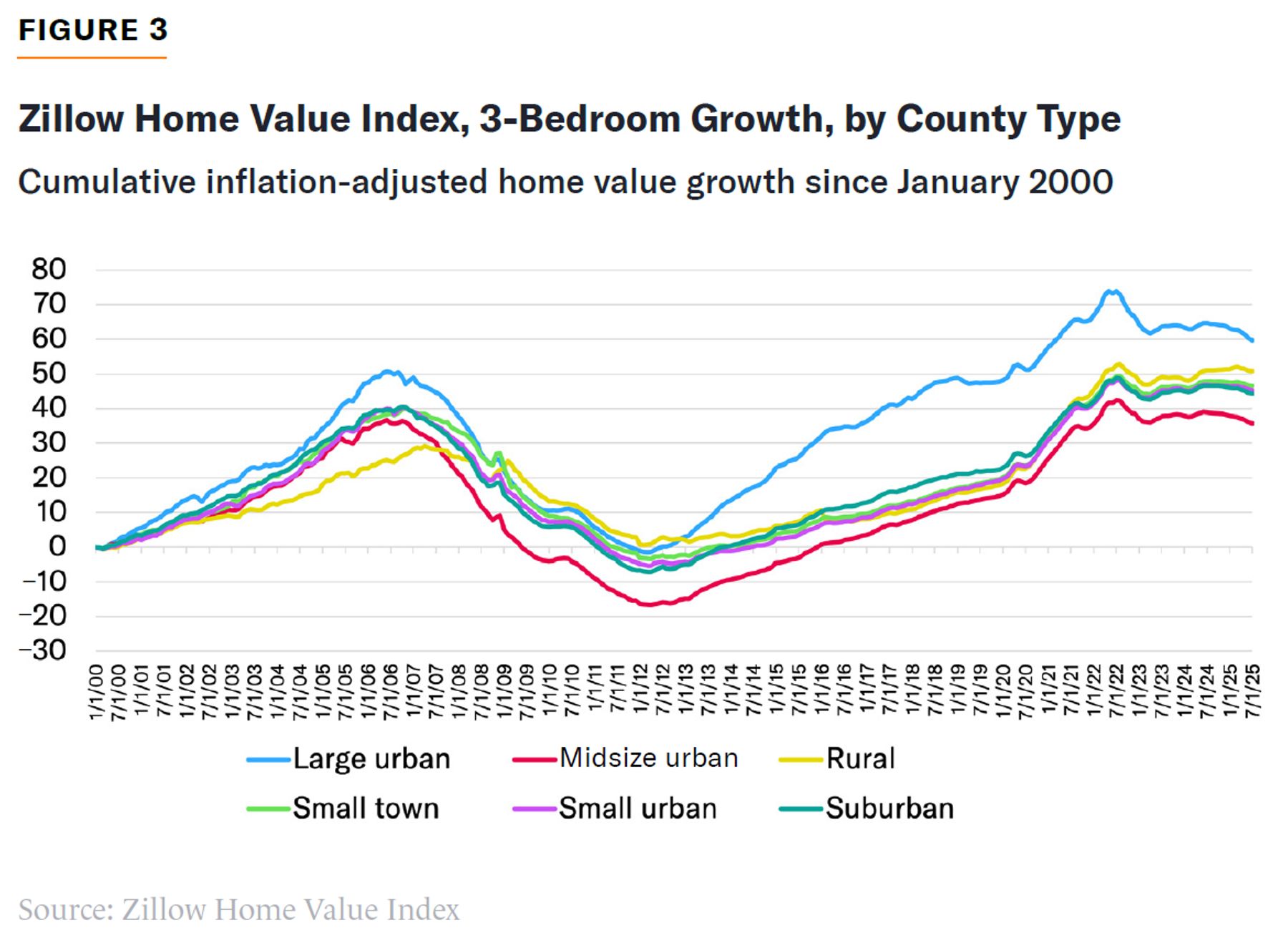
The cost of housing types conducive to family formation is on the rise nationwide, but it has risen faster in the country’s largest cities than in other types of places. Since 2000, the average price for a three-bedroom house or condo has risen 60% in large urban counties, faster than in any other county type (Figure 3). National polling finds that families with kids would prefer to trade off common space for additional bedrooms. Yet developers and public officials are undersupplying these types of units, partly because of regulatory barriers that add costs to family-friendly layouts.[2]
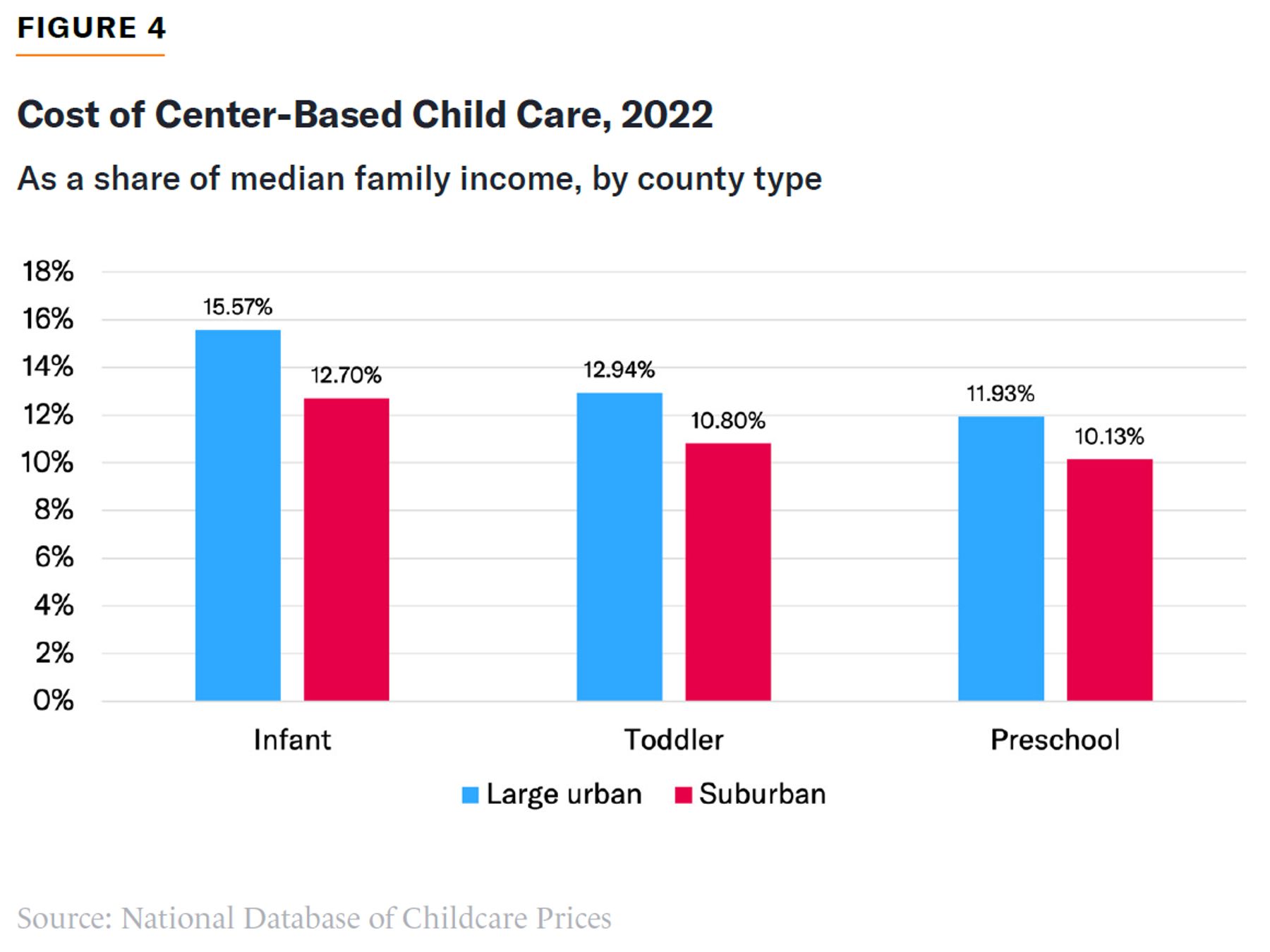
Families choosing large cities over suburban communities can expect to pay a higher share of their income for center-based child-care arrangements. In a typical large urban county, the median family will pay nearly 16% of its income for infant child care, compared with less than 13% in suburban communities (Figure 4).[3]
Cities’ refusal to allow sufficient construction to stabilize rent and home prices further squeezes families needing child care in two ways. First, child-care centers themselves must compete for scarce floor space, with city regulations often limiting them to the ground floor. Second, for parents entrusting their children to friends or relatives instead of formal child care, expensive, supply-constrained housing markets often make those arrangements impractical. Some families can consolidate into multigenerational homes, but many cannot. Housing scarcity can leave potential caregivers priced out of nearby neighborhoods.
Many big-city leaders find themselves out of step with parents on issues such as education and public safety. A Manhattan Institute poll of 20 large metro areas finds that more than two-thirds of adults support school choice and charter schools. Support among parents is at least 10 percentage points higher than the general public.[4] Yet in cities like Chicago, progressive mayors have sided with teachers’ unions over parents, fighting school choice and gifted and talented (G&T) programs. Elsewhere across the country, states are meeting parents’ demands with an unprecedented expansion of school choice programs.[5] Charter school enrollment has grown more than three times faster in suburban districts than in large cities since 2019.[6]
Additionally, while some mayors have embraced the spirit of calls to “defund the police,” such messages and policies have not proved popular with parents, especially in light of the surge in violent crime across the country starting in 2020. In Minneapolis, residents decisively rejected a 2021 ballot referendum that would have replaced the city’s police department with a new Department of Public Safety that takes a “public health approach” to crime. Efforts to pull police officers out of public schools, often against the wishes of parents themselves, failed in Los Angeles and elsewhere.[7] The NYPD reversed its experiment of placing school safety officers under its community affairs unit.[8] Cities’ refusal to enforce fare rules led to rising disorder in public transit systems, a major issue in cities where many kids commute to school on trains and buses. Though the post-pandemic violent crime wave has largely faded, the distrust that it created among families will likely persist. For parents, safety comes above everything else; if parents don’t feel comfortable sending their kids to school every morning, cities will continue losing families.
The Long Tail of the Great Recession
Each of the issues highlighted above was exacerbated by the Covid-19 pandemic and its aftermath, which sent housing and child-care prices skyrocketing, helped spark a nationwide wave of violent crime, and reopened tense, fundamental debates over school curricula and parental choice. But these issues—particularly affordability—had already been worsening leading up to 2020.
The slow economic recovery from the Great Recession allowed many cities to postpone tackling their simmering affordability crises. In the first half of the 2010s, job growth was highly concentrated in a very small number of “superstar” metros.[9] Parents wanting access to booming job markets had little choice but to tolerate affordability and quality-of-life issues in major cities. Cities faced fewer competitive pressures to ensure adequate housing supply growth or quality services: NYC, for example, added just one housing unit per 3.6 jobs created between 2009 and 2018.[10]
The bargain changed in the latter half of the 2010s, as the economic expansion began to reach a broader swath of the country. Workers and parents had more viable options as job growth reached more left-behind places. Net domestic out-migration from large urban counties turned negative in 2013 and grew for the rest of the decade. By 2019, more than 400,000 Americans were moving away from large urban counties every year.[11]
The pandemic gave parents an even broader array of choices. Unlike the recovery from the Great Recession, which was slow and initially concentrated in major metros, the bounce-back from the pandemic was broad and rapid. At the same time, a growing subset of workers could now keep economic or employment ties to a city without living nearby, through remote or hybrid work. Net domestic out-migration from large urban counties doubled again, to 800,000 per year. Only a temporary, unprecedented wave of immigration kept big cities’ population levels relatively stable.
Going forward, cities should expect a more intense competition—among one another and against suburbs—to attract parents and families. Changes in economic geography and the opportunities offered by remote or hybrid work have opened up a new set of choices that are here to stay. Cities will need to systematically address the problems pushing young families away, or risk the urban family exodus continuing.
An Agenda for More Family-Friendly Cities
This section sets out practical steps that large U.S. cities can take in order to make starting and raising a family more feasible. Our focus is on big, high-cost metros (for example, New York, Los Angeles, and Chicago) where the decline in the number of children has been most pronounced. We draw selective lessons from medium-size cities that are gaining families, but we tailor recommendations to dense places where daily life relies more on renting, walking, and transit. At the same time, we recognize that many families—especially with two or more children living in the less dense, transit-poor parts of these cities—depend on cars for part of their routine; even in New York City, nearly half of households own a car.[12] Our proposals, therefore, aim to work for both transit- and car-using families.
Three factors recur in interviews, surveys, and administrative data:
- Affordability and fit. Family-size homes and reliable child care are scarce and expensive. The middle-income band (80%–150% of area median income) often earns too much for subsidies but not enough for prevailing market costs. Housing and child care that exist are frequently the wrong fit or in the wrong locations for family routines.
- Reliability. Parents struggle to plan around unstable systems. Day-care waiting lists that shift midyear, school admissions rules that change with each administration, unreliable commutes, or uneven neighborhood services raise the risk of disruption.
- Time costs. Daily life with children hinges on combining trips—school drop-off, work, groceries, after-school pickup, and medical appointments—within a reliable window. In dense cities, limited storage and reliance on walking or transit mean that routine errands are more frequent; carrying food and supplies for a family of four is difficult unless stores are nearby or a car is available. Small frictions accumulate and can be the final push to move.
Beyond these three factors, community networks—extended family, congregations, parent groups, and immigrant associations—are fraying partly because of growing cost-of-living challenges in major cities. Raising a family in a big city is complicated in ways that suburban life simply is not. Networks help overcome these challenges, reducing instability through information sharing and practical support. But rising costs, dysfunctional housing markets, and inadequate child-care systems can tear these networks apart, both geographically and economically. Without them, the urban family exodus risks becoming a self-reinforcing trend.
What follows is a set of proposals organized around four areas where policy can reduce risk and save families time and money. Each of these areas of concern is consistently cited by parents leaving New York City as among the most important to their decision.[13] For each area, we offer a set of targeted reforms to help cities attract and retain young families:
- Housing that fits families. Increase the supply of new, family-friendly housing units through land-use reform and streamlined approvals.
- Reliable child care. Stabilize funding, smooth subsidy cliffs, expand and accredit the kinds of care that families actually use (including home-based and off-hours), and support the workforce so that care is reliable.
- High-quality schools. Give parents more choice; make admissions rules stable and transparent over several years; expand high-quality options near where families live.
- Safe, walkable, and practical public realm. Focus street design, parks, sanitation, lighting, and transit safety on the routes and places that families use every day; encourage small amenities (such as stroller access or bathrooms) that reduce daily friction.
Our design principles are reliability and suitability. The analysis that follows will document the problem in each area and explain why the proposed actions are likely to help.
Housing That Fits Families
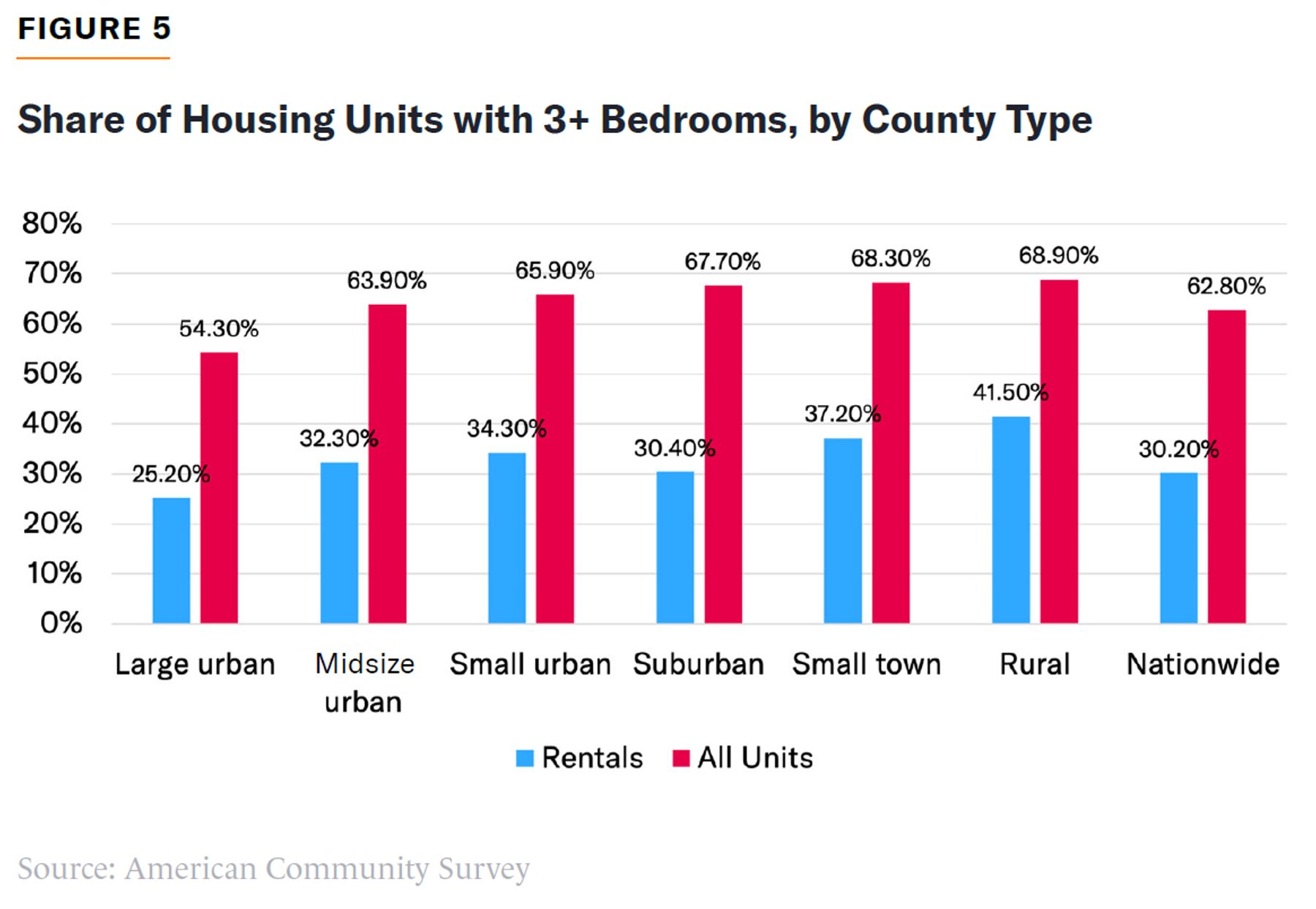
Cities are not building enough of the kinds of housing that families want (Figure 5). A growing share of new apartments built around the country are studios and one-bedroom units. While those units do relax competitive pressures on larger units by funneling housing demand elsewhere, cities ultimately need to build more multi-bedroom units to attract and retain families.
Housing is the largest expense for families in large U.S. cities, but the challenge is not only affordability. Family housing is often the wrong size and in the wrong places. In New York City, where about 70% of households rent, just 19% of rented apartments have three or more bedrooms.[14] Nationwide, 40% of households rent and 30% of rented apartments have three or more bedrooms.[15] Families may adapt to high costs when apartments are suitable and near good schools, child care, and transit, but that is increasingly not the case in many housing-starved metros. Cities that undersupply family-friendly units, particularly near transit corridors, dramatically limit families’ options and make the day-to-day tasks of parenting inconvenient.
Families value housing stability, an advantage that traditional homeownership has over renting. In general, suburbs will continue to have significantly higher rates of homeownership than major cities. But more renter-dominant cities like New York—where only 31% of children live in privately owned units—can still compete for families by stabilizing costs through housing abundance.[16]
In New York, the City of Yes for Housing Opportunity zoning changes approved in 2024 are an important step.[17] They reduced parking mandates, expanded mixed-use flexibility, allowed more transit-oriented density, and legalized accessory dwelling units (ADUs).
In November, New York City voters approved a set of additional housing-related ballot measures that will modestly accelerate the approval and construction of new housing in the city. The first, Proposal 2, creates a fast-track approval process for 100% affordable housing projects. Another measure, Proposal 3, creates an expedited review process for smaller-scale developments. The final housing-related measure creates an Affordable Housing Appeals Board that can bypass the opposition of local city council members. These reforms make it easier to add housing across the city, but more needs to be done to supply enough family-suitable housing.
One approach is simply to mandate that new housing have more family-size units when public subsidies are used—the approach of a recently proposed New York City Council bill.[18] However, such requirements would likely add to the cost of building affordable housing. Instead, cities should dismantle supply-side barriers to new family-friendly housing.
To retain families, policy—in New York and cities across the U.S.—should focus not only on increasing overall housing supply but also on increasing the supply of units that work for households with children. Some key directions for reform:
- Up-zone for more development of all housing types, particularly around transit. When smaller units are in short supply, single adults are more likely to bunch together in groups that can outcompete families for scarce, multi-bedroom units with more flexible layouts.[19] In places like Washington, DC, booming construction of smaller apartments has eased competition for larger row homes. Cities should broadly lift height and bulk restrictions, caps on floor-to-area ratios (FAR), and other zoning restrictions that prohibit denser developments.
- Allow family-friendly, multi-bedroom units to count toward inclusionary zoning requirements. Many cities have inclusionary zoning programs, which require developers to set aside a certain share of new units to rent at below-market rates. Cities should allow developers to meet some or all of these requirements with market-rate, family-friendly (3+ bedroom) units.
- Consider a builder’s remedy–style policy for neighborhoods not meeting housing targets. In California, cities not meeting state zoning guidelines must approve certain housing projects, a policy called “builder’s remedy.” States could build on this model by setting growth targets for new family-friendly housing units and enabling developers to request expedited review in neighborhoods or cities not meeting their prescribed building goals.
- Repeal parking rules and restrictions on single-stairwell buildings that make larger floor plans more costly. Many cities mandate that developers set aside parking spaces for rental units on a per-bedroom basis, raising costs for three-and four-bedroom apartments. Cities should eliminate parking requirements around transit corridors; where parking requirements remain, they should be set on a per-unit, rather than per-bedroom, basis. Further, cities should reform building codes to allow taller single-stairwell apartment buildings, which make floor plans with more than one bedroom more feasible for developers.
- Use preapproved designs to speed approvals. Standardized plans for small apartment buildings that receive by-right approvals could reduce design and permitting costs. In New York, the Department of Housing and Preservation and Development (HPD) already offers standard plans for ADUs, as does San Diego.[20] Expanding this practice would make it easier for smaller developers and property owners to build family housing in the less dense areas of the city.
- Encourage time-saving building features. Elevators, stroller storage, playrooms, and in-unit laundry reduce the daily burdens of family life. City policy can encourage these by offering density bonuses, expedited approvals, or targeted incentives.
- Prioritize ground-floor services: While City of Yes eased mixed-use restrictions, zoning could more actively prioritize space for groceries, clinics, and child-care facilities in dense neighborhoods.
Over the last year, several states and cities, in addition to NYC, have adopted policies to expand housing supply:
- California’s landmark SB 79, recently signed by Governor Newsom, requires cities to zone for greater height and density around transit stops. Rather than dictate precise reforms from the state government, SB 79 gives cities some discretion in how they meet the bill’s up-zoning requirements.
- In August 2025, Denver abolished parking requirements citywide.[21] Chicago passed a similar reform last year, eliminating parking requirements within a half-mile of a train station or a quarter-mile of a bus stop.[22] Previous research demonstrated that parking spots associated with larger, multi-bedroom units were more likely to go unused, adding needless cost to the kind of housing that families want.[23]
- Berkeley, CA, the first city in the U.S. to adopt single-family zoning, abolished it last summer, legalizing duplexes, triplexes, and fourplexes in high-demand areas.[24]
- In Washington, AB 1491, enacted last year, requires cities to loosen FAR limits around transit stops.[25]
- Montana lawmakers passed a slate of reforms, the “Montana Miracle,” in 2023, which ended single-family zoning in cities with at least 5,000 residents, pushed municipalities to legalize ADUs, and rolled back parking requirements. In 2025, the state followed up with additional ADU, parking, and height-restriction reforms.[26]
A family-friendly housing policy must therefore build on the foundation of reduced parking mandates, expanded mixed-use flexibility, and more transit-oriented density while directly addressing suitability. That means encouraging developers to include larger units and incorporate everyday features that make raising children feasible in dense cities without saddling developers with new, expensive mandates.
Reliable Child Care
A family-friendly city needs child care that is available where families live, affordable across income ranges, and flexible and stable enough for parents to plan around.
The cost of care for infants and toddlers often rivals or exceeds rent, and the availability of providers is uneven across neighborhoods. In counties with a million residents or more, a full-time infant slot in a child-care center averages over $15,000 per year. Even home-based care exceeds $10,000.[27] Lower-income families rely on subsidies, but waiting lists are long, and many providers do not accept vouchers because reimbursement rates lag behind actual costs. Reliability is as important as price: a lost child-care slot can upend work and housing stability. This component considers how to fund child care more sustainably, broaden the range of providers that can participate, and improve workforce stability so that care is both affordable and dependable.
New York City already makes significant investments. It administers child-care vouchers funded by federal and state programs, operates universal pre-K for four-year-olds, and continues to fund 3-K for some three-year-olds. Some neighborhoods host EarlyLearn centers in public school space, and recent pilots have offered property-tax abatements for landlords who host child-care centers.[28] These efforts provide a foundation, but coverage is uneven, funding is capped, and infant and toddler care remains particularly scarce. With little to no productivity growth in the sector, wage and cost pressures on traditional child-care arrangements will continue to grow.[29]
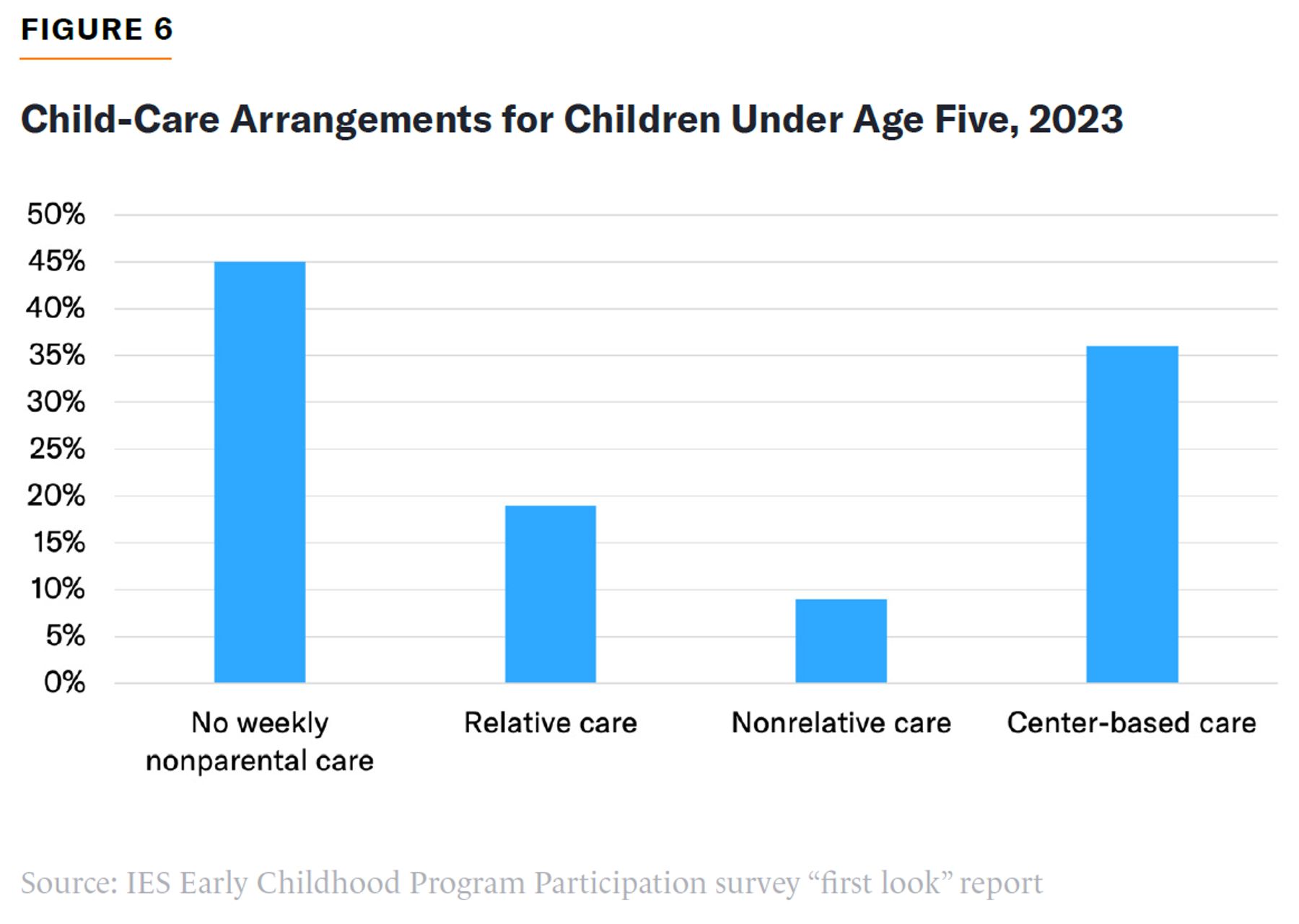
Cities should not lose sight of the fact that, nationwide, less than 40% of families with children under five rely on formal, center-based child-care arrangements (Figure 6). Addressing rising child-care costs means not just reducing the cost of center-based care but solving problems faced by families using other kinds of child-care arrangements.[30] In cities with voucher programs, eligibility should include nontraditional, home-based, and part-time options that fit with the diverse set of families’ preferences and scheduling constraints. Designing policy around families’ actual child-care preferences can bring new providers into the system, boosting affordability and reliability.
Expanding the supply of housing can ease child-care burdens on two fronts. First, it can enable more intergenerational care, with family members or au pairs either under one roof or nearby. Off-hours and emergency care become easier with a relative nearby, even when a child is primarily in center-based care. Second, more abundant housing can ease competition for scarce real estate, potentially lowering costs for child-care providers. But neither of these effects would be sufficient to make child care markedly more affordable or attainable for a typical family. That will require deeper supply-side reforms to cities’ child-care sectors.
Strengthening child care requires building on existing programs and improving the supply of providers. Key steps for policymakers:
- Stabilizing voucher funding and smoothing eligibility. Voucher programs should be predictable from year to year, and eligibility should phase out gradually so that modest income gains do not cause families to lose all support at once. Aligning voucher payments with market prices would make it viable for more providers to participate, reducing the mismatch between subsidy levels and actual costs.
- Bringing more providers into the system. A certification track for home-based and informal caregivers would expand supply and allow more families to use vouchers, while also adding oversight and training.
- Updating siting rules. Current regulations limit child-care centers to ground floors with dedicated yards, driving up providers’ costs. Allowing safe upper-floor centers would expand capacity in dense neighborhoods.
- Supporting off-hours care. Evening and weekend care is critical for families in health care, hospitality, and service jobs. Pilots in other cities show that it is feasible, but New York has little provision for it today. While cities should not create new, open-ended, publicly funded programs for off-hours care, they should work with employers and unions to make it easier to offer, where feasible.[31]
Provision of free, universal, and center-based child care was a central issue in New York City’s most recent election, as it has been in many cities across the country. But “one size fits all” models cannot accommodate the complex and varied needs of families, particularly those with infants and working parents. City-level programs have also run into major implementation issues. The 3-K rollout in New York, for example, has been plagued by logistical mismatches that have forced parents to accept inconvenient places or to go on waiting lists, while many available seats remain unused.[32]
In general, policies to support families are better administered at the state or federal level, where revenue is more stable and governments have more options to close budget gaps. In New York, the Empire State Child Tax Credit, Earned Income Credit, and Child and Dependent Care Credit build on federal benefits without sharply limiting families’ choices or creating complex urban bureaucracies.
High-Quality Schools
Nearly all major U.S. cities are contending with steep enrollment declines driven by falling birthrates, rising housing costs, increased remote work, and growing options for school choice, private, and home-based education.[33] Since the pandemic, the nation’s largest districts—including New York City, Los Angeles, and Miami-Dade—have each lost up to 13% of their students, with the sharpest drops in kindergarten and elementary grades.[34] These shifts place new pressures on school budgets, planning, and program delivery as districts face shrinking student pipelines.[35]
Alongside demographic change, large city districts face persistent variation in public school quality, often rapid turnover in reforms and leadership, and frequent changes to assignment and admissions rules—all of which heighten family uncertainty about the likelihood of their children receiving high-quality education and influence whether to stay in or leave large urban areas.[36]
Urban school districts are also facing new challenges from suburban rivals. Since 2021, 13 states have made all students eligible for some form of school choice, whether through vouchers, tax credits, or tax-advantaged savings accounts, enabling much faster charter school enrollment growth in suburbs than the country’s largest cities.[37] While suburbs have catered to parents’ desire for a wider variety of options, many big-city school districts have sided with activists over families, wavering on G&T, school choice, or other specialized programs.
Cities should return to offering a wide range of high-quality choices for parents. A few starting points:
- Embrace choice in education. Expanding school choice will allow families more opportunities to find a learning environment that fits their child’s needs and to stay in the city. In cities such as New York, this requires lifting the statewide cap on charter schools, which outperform traditional public schools on standardized tests.[38] Large school districts are uniquely positioned to offer more specialized schools and services. The One Big Beautiful Bill Act created a new dollar-for-dollar tax credit of up to $1,700 for donations to scholarship-granting organizations (SGOs). The tax credit, which can fund scholarships for students from families earning up to 300% of their area’s median income, will open a new source of funding for private schools, expanding families’ available choices. Under OBBBA, state governments need to opt in to participation—and they should.
- Consolidate and repurpose under-enrolled schools. With many schools operating significantly below capacity, reorganization can expand offerings, improve quality, and reinvest space for community or early childhood uses. Cities should focus on closing underperforming schools and opening new spots for displaced students, when feasible, in higher-performing schools.[39]
- Focus on elementary school improvement. Investing in neighborhood elementary schools—especially in zones losing the most families—can build a stable foundation and encourage parents to stay as children transition to upper grades. Parents should be able to see how well a school is performing, and the city, under mayoral control, should be held accountable for improving its schools. Letter grades and public reporting, standard under Mayor Bloomberg in NYC, have been shown to significantly improve the educational outcomes in the worst-performing schools.[40]
- Advance predictable, high-quality options. Clear, multiyear notice for major reforms and a variety of available academic tracks and enrichments—vocational, technical, accelerated academic—across districts give families confidence and time to plan.
- Align programs to today’s family needs. Strong after-school and summer programs, better aligned with work schedules, can offer genuine support for working parents.
While city school systems offer exceptional opportunities—from world-class magnet programs to bilingual immersion and universal pre-K—retaining families also depends on making access to quality education more predictable and the baseline education qualitatively better.
Safe, Walkable, and Practical Public Realm
A thriving city for families ensures safe streets, reliable transit, and accessible public spaces that make everyday routines easy and enjoyable. In dense urban areas, families typically have smaller private residences and rely much more on high-quality outdoor spaces and shared amenities for recreation, community, and play. The ability to combine errands, school, and work trips close to home allows children to walk or bike to school, travel on public transit independently, and play freely in clean, well-maintained parks. Small amenities like public toilets, stroller-friendly sidewalks, benches, and good lighting dramatically reduce daily friction.
Public safety is nonnegotiable: if they can, families will leave cities that tolerate disorder and crime near schools, parks, and playgrounds. Recent surveys confirm that safety often outranks housing and schools as the top reason families choose where to live.[41]
Nationwide, violent crime has stabilized and has begun to fall after its pandemic-era spike. Overall, crime rates still remain well below their 1990s peaks. Policies like Vision Zero and Safe Routes to School in New York have made pedestrians safer, while targeted police deployments have stabilized transit corridors. Yet progress is uneven. While the pandemic-era crime wave has receded in most cities, levels of violence remain unacceptably high. Tolerance for quality-of-life offenses and visible disorder also continues to push families away. Perceptions matter: surveys consistently show that safety ranks alongside affordability and schools as the top reason families consider moving.
A truly family-friendly public realm must blend safety, walkability, comfort, and reliable maintenance. Policymakers must:
- Prioritize visible safety and order. Provide consistent police or ambassador presence at schools, parks, and transit. Enforce sanitation and antisocial behavior codes to show that public spaces are actively managed.
- Expand Safe Routes to School, Vision Zero, and play streets. Traffic calming, protected crossings, and safe zones—measured by reductions in injuries and crashes—help children and families safely navigate neighborhoods.
- Upgrade transit safety and reliability for youth. Parents need confidence that older children can ride transit independently. Cities should enforce fare payments and boost lighting and staff presence at major stops.
- Maintain parks and playgrounds to high standards. Fast response to vandalism, repair needs, and hazards like icy sidewalks reassures families. Communal outdoor areas and amenities must be well kept to compensate for smaller homes.
- Invest in practical amenities. Public bathrooms, benches, shade structures, and water fountains should be regularly maintained in all neighborhoods and transit corridors.
- Design for all ages and abilities. Adapt public spaces for children, caregivers, older adults, and people with disabilities, using regular community input.
- Set clear goals and manage in public. Leaders should set quantifiable public safety and management benchmarks so that communities can hold them to account.
Cities where parents feel confident that children can safely and independently use streets, transit, and parks—and where outdoor spaces are practical extensions of home life—are cities where families remain and thrive.
Conclusion: Families Are the Test of a City’s Future
Large U.S. cities cannot take families for granted. In New York and other high-cost metros, the number of children has been falling as middle-income households leave and immigrant families increasingly choose faster-growing, lower-cost regions. Families are essential to urban stability: they invest in schools, support neighborhood institutions, and anchor civic life. Their departure is an early indicator of decline.
The four principles outlined here—housing that fits, child care that meets need, good-quality schools, and a safe and practical public realm—are not new ideas. New York already has major investments in place, from zoning reforms to pre-K to Vision Zero. But existing efforts are uneven, incomplete, or not aligned with what families need. The task now is to build on what works and fill the gaps: the shortage of family-size housing, child care that is costly and unstable, uneven school quality, and public spaces that too often feel unsafe or neglected.
Middle-income households are at the center of this challenge. They are too rich to qualify for subsidies but too poor to absorb the full costs of housing and child care. They have the mobility to leave, and when they do, the city loses not only their children but also future taxpayers and community leaders. Immigrant families, who historically offset these losses, are now more selective, often settling in smaller or southern metros where costs are lower and community networks stronger.
Cities cannot remove every difficulty of family life, but they can reduce some of the friction. The common thread across the four principles is affordability, reliability, public safety, and time. Families need housing that they can afford and that suits them, care they can count on, schools they can plan around, and neighborhoods where children can move safely. Moreover, families need to feel wanted and welcome in cities. Without these basics, large metros will continue to lose the very households that sustain their future.
About the Authors
Connor O’Brien is a fellow at the Institute for Progress, where he focuses on high-skilled immigration policy. He was previously an analyst at the Economic Innovation Group, where he also wrote about urban policy, demographics, and labor markets. He is a graduate of the University of Chicago and Rutgers University. He is on X/Twitter @cojobrien.
Liena Zagare is the editor of the Manhattan Institute’s The Bigger Apple, a newsletter focused on policy and politics in New York City. She’s the founder and publisher of Bklyner, the award-winning local news outlet in Brooklyn, New York. She also founded and in 2011 sold a network of local news sites to AOL’s Patch, where she served as director of special projects. She was previously an investment analyst for the World Bank’s International Finance Corporation. Her advocacy for sustainable local news has appeared in the New York Times, The Atlantic, and the Columbia Journalism Review. Zagare has a B.Sc. in Economics from the London School of Economics and a Master’s in Urban Planning from the NYU Wagner School of Public Service. She was born in Latvia and lives in Flatbush, Brooklyn, with her family.
Endnotes
Photo by Kena Betancur/Getty Images
Are you interested in supporting the Manhattan Institute’s public-interest research and journalism? As a 501(c)(3) nonprofit, donations in support of MI and its scholars’ work are fully tax-deductible as provided by law (EIN #13-2912529).