Good morning:
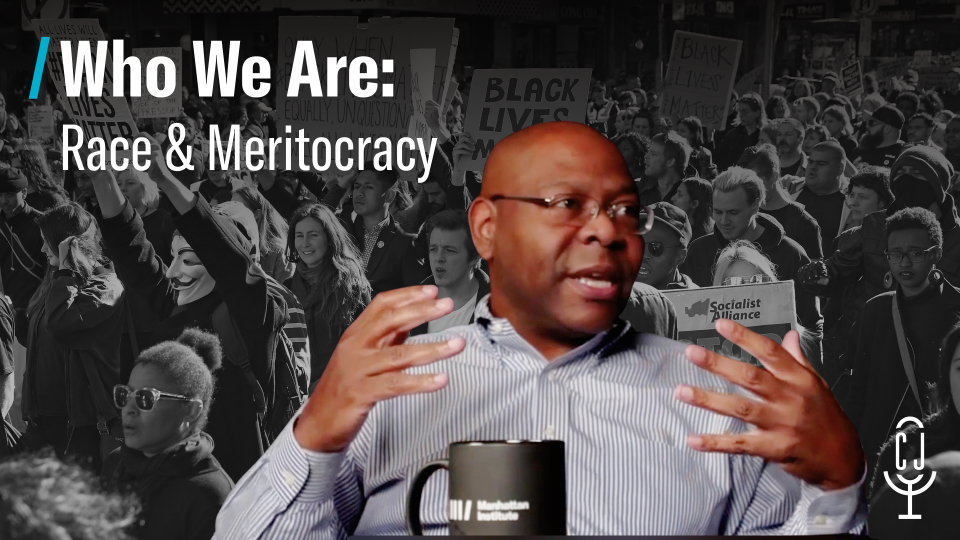
This week, our new “Who We Are” series, which introduces City Journal Podcast listeners to some of the motivating principles and key scholars of the Manhattan Institute, features senior fellow Jason L. Riley on the topic of race and meritocracy.
In conversation with fellow Rafael Mangual, Riley discusses how the political Left frames racial disparities to advance a victimhood mentality among Americans, rather than solutions rooted in responsibility, opportunity, and community empowerment.
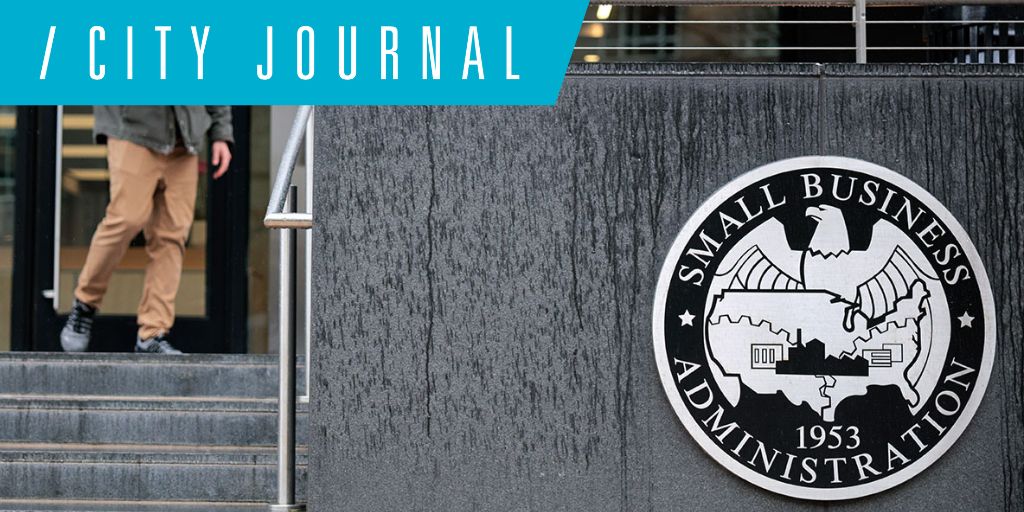
One of the fruits of a victimhood mentality is the demand that opportunities and resources, including government contracts, be distributed based on race. In City Journal, director of Research Judge Glock and senior fellow Christopher F. Rufo follow up on President’s Trump’s campaign promise to end federal spending on corrosive diversity, equality, and inclusion programs and find that the Small Business Administration continues to award special contracts exclusively to so-called disadvantaged businesses and women-owned small businesses. When the administration says, “no DEI,” it should mean it—and Glock and Rufo show the administration how it can make good on its promise.
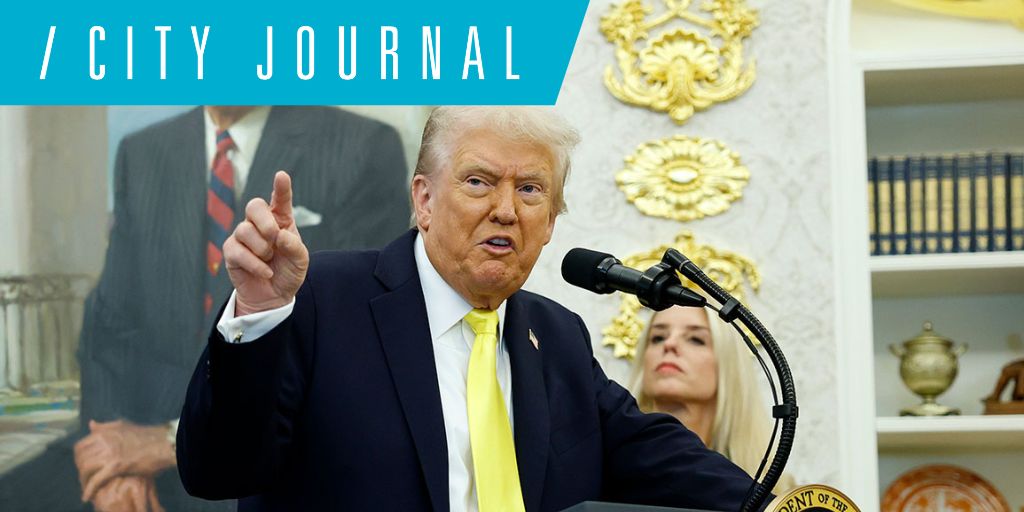
Also in City Journal, fellow Heather Mac Donald writes that President Trump’s public reaction to violent lawlessness in the United States is indeed without precedent in recent history. “Never before has a president commented with such urgency on particular acts of crime that otherwise lack conventional political significance,” she writes. The president’s approach may be unusual, but it is clear. And it is perhaps the only way to break through the complacency with which too many cities treat violence and disorder in urban life.
Where the president’s words clarify, too many others attempt to obscure. That’s the flaw in recent news coverage of a U.S. Supreme Court case on the question of which team transgender-identifying athletes should be allowed to play on. Many commentators and reports wrongly assert that transgender-identifying players will have no option at all. In the Wall Street Journal, fellow Colin Wright breaks through the misinformation: Nobody is banned from playing, only from playing for opposite-sex teams.
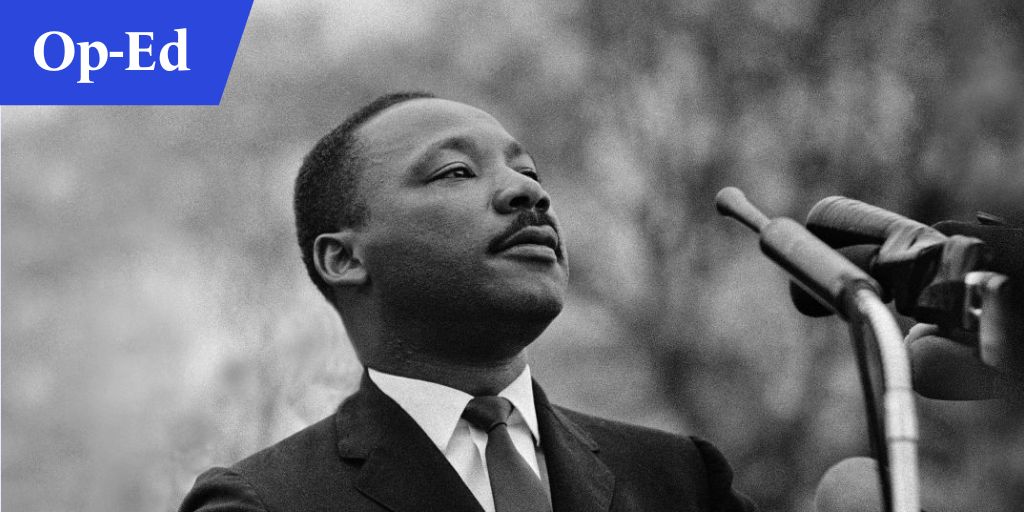
In the Wall Street Journal, senior fellow Roland Fryer reflects on how he came to appreciate the strategic genius of Martin Luther King’s nonviolent resistance as a method of social change. The same logic, Fryer writes, applies to today’s immigration protests, which are likely to lose support as they become belligerent and violent.
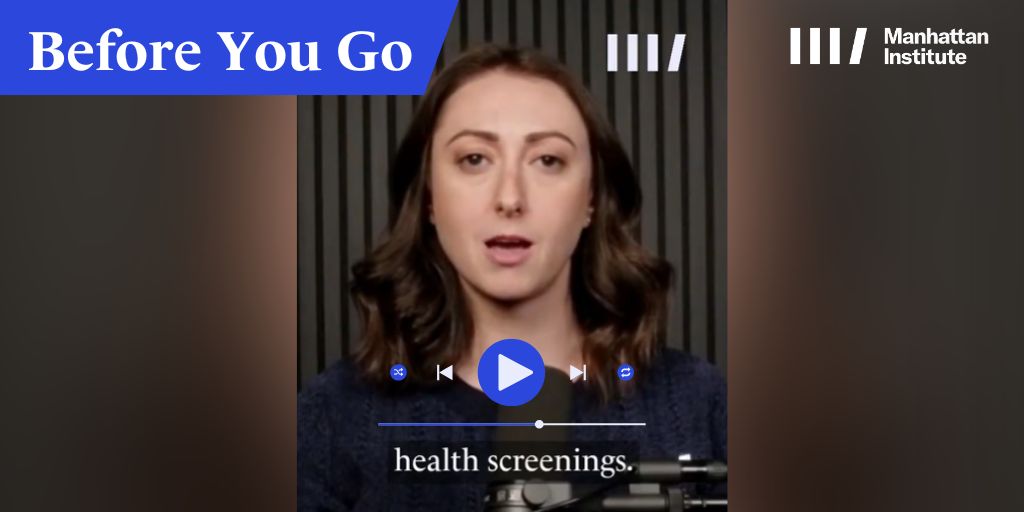
Finally, be sure the check out Paulson policy analyst Carolyn Gorman’s video breaking down some of the key findings of her recent research. A preview: It turns out, universal mental health screenings in schools do not improve mental health or academic outcomes and often lead to over-diagnosis and overtreatment. Continue reading for all these insights and more. Kelsey Bloom
Editorial Director |
|
|
Who We Are: Race and Meritocracy (ft. Jason Riley) By Manhattan Institute “There is still racism today. It hasn't gone away entirely. I don't think it ever will. And so it's something that's easy to exploit, it is one way to explain why people continue to use it. ... “ We also today have what I'd call a racial grievance industry out there. It's a very lucrative industry. I think if you or I decided to spend our time blaming all the problems of racial minorities on white people, or white supremacy or systemic racism.” |
|
|
The Transgender Sports Deception
By Colin Wright | The Wall Street Journal
“The Supreme Court heard oral arguments this week in Little v. Hecox and West Virginia v. B.P.J., cases challenging state laws that restrict participation on girls’ and women’s sports teams to female athletes. A January 2025 poll found that 79% of Americans—including 67% of Democrats—believe male athletes who ‘identify’ as women shouldn’t be allowed to compete in women’s sports. “Faced with this overwhelming consensus, much of the media has adopted a strategy of reframing the issue. It is presented as whether transgender people should be ‘banned from sports,’ not whether males should be excluded from female sports. ...
“Sports are divided by sex for a reason. Men and women differ in ways that matter profoundly for athletic performance. These differences aren’t ‘social constructs’ but biological facts rooted in sexual dimorphism. Male athletic advantage doesn’t depend solely on adult testosterone levels. Physiological differences that lead to performance gaps appear well before puberty, even in newborns.” |
|
|
Martin Luther King’s Game Theory
By Roland G. Fryer, Jr. | The Wall Street Journal
In middle school, “I learned about Malcolm X, Black Power, systemic oppression and a version of history that treated anger as authenticity and restraint as weakness. It was also where my youthful hostility toward Martin Luther King Jr. Crystallized. To my preadolescent mind, King was soft. ...
“With the benefit of time and a bit of economic theory, I came to realize that my youthful view of Martin Luther King was exactly backward. He wasn’t weak. He was a brilliant social strategist. To see why, it helps to think of the civil-rights movement in terms of game theory—as an effort to move America from a bad equilibrium to a better one. ...
“King’s genius was recognizing that [to reach another equilibrium] required not only protest, but coordinated collective action and a credible, sustained commitment to nonviolence. Nonviolence is powerful not because it is passive, but because it is informative. Sustained, disciplined nonviolence is costly and hard to fake. It separates those seeking equality from those seeking chaos. By doing so, it helps outsiders distinguish between good and bad types—including, in my own case, separating the boy I was from the man I became.”
|
|
|
Rude but Right on Crime
By Heather Mac Donald | City Journal
“Trump disregards any remaining presidential norms of rhetorical restraint in favor of an unmediated relationship to events and to his own reactions. He has followed up his outrage over particular acts of lawbreaking with attempts to sic the National Guard on some of the most crime-plagued cities and on those where activist sabotage of immigration enforcement has been most egregious. Where deployed, Guard soldiers have deterred crime through their physical presence, but such deployment is only a short-term fix to urban disorder. ...
“The administration should exploit any funding lever it has to force states to reinstitutionalize the mentally ill homeless, both for the safety of the innocent and the dignity of the vagrants themselves. ...
“So far, Trump’s second administration has been light on legislative proposals or on the sober crime commissions favored by previous presidents. It does not matter. This lack of proposed lawmaking is less important than Trump’s inclination to lay down a philosophical marker: violence is not normal and should not be tolerated.” |
No White Men Need Apply
By Judge Glock & Christopher F. Rufo | City Journal
“President Donald Trump promised to end federal spending on diversity, equity, and inclusion (DEI) programs. Yet the government has continued to award contracts based on race and sex. Despite rampant fraud and multiple court rulings against the practice, the Small Business Administration (SBA) has used ‘disadvantage’ essays from business owners to skirt the rules and continue discriminatory programs that dole out billions in government contracts. ... [And] the largest disadvantaged-business initiative—the SBA’s 8(a) program—is thriving. ...
“Instead of trying to reform 8(a), the Trump administration should abolish it. Under the Fourteenth Amendment’s Equal Protection Clause, the administration would be within its rights to stop all contracting based on race and sex, even if such contracting were justified under the fig leaf of a ‘disadvantage’ essay. The White House could also support Senator Joni Ernst’s ‘Stop 8(a) Contracting Fraud Act,’ which would pause 8(a) contracting until a thorough audit is completed, or call on Congress to end the program altogether.”
|
The Manhattan Institute is proud to serve as the Principal Institutional Partner for the Sun Valley Policy Forum’s 2026 Winter Summit in the iconic resort town of Sun Valley, Idaho on February 11, 2026.
We are thrilled to join Joe Lonsdale and MI senior fellow Christopher F. Rufo for an evening on principled leadership and the future of American institutions in an AI-driven era.
Please click here to learn more about the Sun Valley Policy Forum and our partnership and to purchase tickets at a discounted rate for friends of the Manhattan Institute. |
|
|
“ In a new Manhattan Institute report, I reviewed the evidence and conclude that these programs are harmful. Universal mental health screenings don't prevent mental health conditions or improve academic outcomes. ...
“They do flag vast numbers of students incorrectly as having potential mental health problems leading to over-diagnosis and overtreatment.” Related: | |
|
For more information and media requests, please contact
communications@manhattan.institute.
Are you interested in supporting the Manhattan Institute’s public-interest research and journalism? As a 501(c)(3) nonprofit, donations in support of MI and its scholars’ work are fully tax-deductible as provided by law. |
|
|
Photo Credits: adamkaz/E+/Getty Images; Noah Berger/AP Photo; Anadolu/Getty Images; Wong Yu Liang/Getty Images; Catherine McQueen/Getty Images; Probal Rashid/LightRocket/Getty Images |
|
|
The Manhattan Institute works to keep America and its great cities prosperous, safe, and free. Manhattan Institute 52 Vanderbilt Ave. 3 floor New York, New York 10017
Want to change how you receive these emails?
Unsubscribe | Subscription Preferences
Copyright © 2025 Manhattan Institute, All rights reserved. |
|
|
|