Good morning:
Just after noon on Saturday, 26-year-old Darrel Rodriguez was shot and killed on a New York City subway while commuting home to University Heights from his job as a security guard. As of Wednesday afternoon, when family and friends began sharing their stories about their lost loved one, Rodriguez’s killer, a masked and hooded gunman, remained at large.
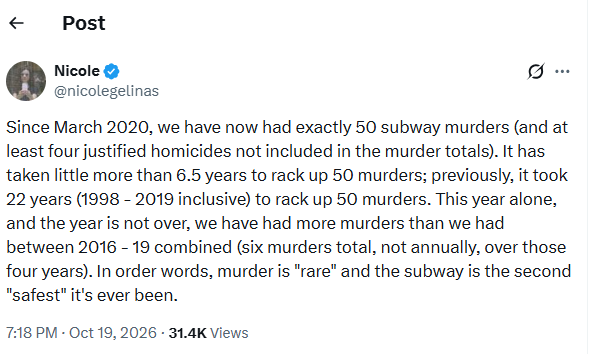
How did NYC Mayor Zohran Mamdani spend his first public address following the shooting? As senior fellow Nicole Gelinas writes in City Journal, Mamdani spent Monday morning at a campaign-style event celebrating new childcare slots, mentioning the killing only after being prompted by a reporter who was present. It was the seventh subway murder this year, in a system where felony assaults are nearly double their 2019 level. Mamdani’s focus on affordability has been good politics so far, Gelinas notes, but voters’ patience with disorder in the subway and preventable execution-style killings in public spaces will not last forever.
|
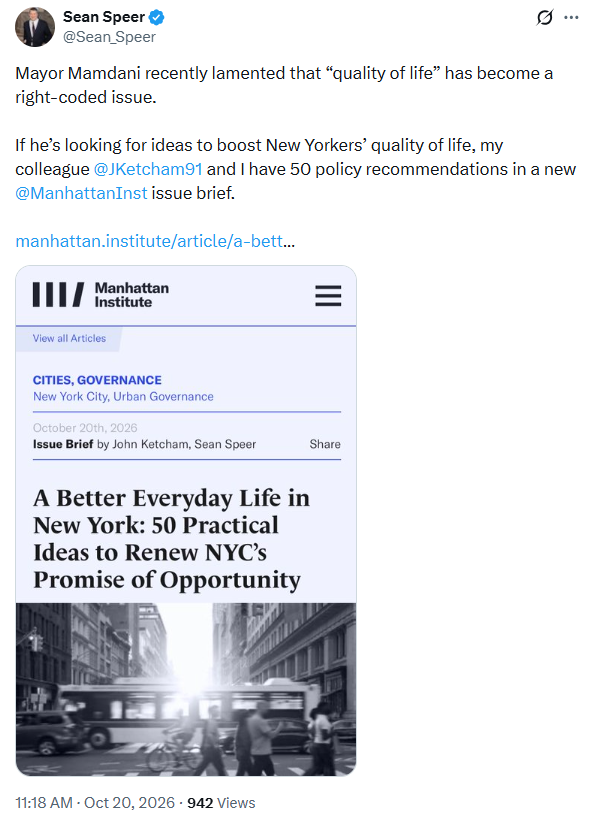
Mamdani has argued that “quality of life” issues should not be seen as a right-wing concern, and that “if politics cannot deliver on the block” where people live, voters have little reason to trust it in other areas of life.
In a new issue brief, MI scholars John Ketcham and Sean Speer take the mayor at his word, offering 50 practical ideas to improve everyday life in New York and restore the city’s promise of opportunity. Drawing on years of Manhattan Institute scholarship, the broad recommendations include legalizing more two-family homes, ending parking mandates, hiring more police officers, fixing Rikers rather than closing it, and making buses faster as opposed to free. They also propose requiring principals to intervene early when children miss school, as an essential way to combat absenteeism. If the mayor adopts these proposals to promote economic opportunity, affordability, family life, public order, and competent government, the authors write, “we will welcome it.”
|
Meanwhile, the sexual-assault allegations against seven Cornell fraternity members have turned into a national referendum on campus life and Greek fraternal organizations. Unfortunately, many journalists and politicians have treated the allegations as established fact. Gov. Kathy Hochul has called for closing the “voluntary intoxication loophole” and appointed Attorney General Letitia James to reinvestigate.
MI investigative reporter Christina Buttons warns in The Daily Wire that expanding the definition of assault to cover “bad sex” has dangerous consequences. Buttons reports that data from the Bureau of Justice Statistics’ National Crime Victimization Survey do not support the claim that the U.S. is experiencing a rape epidemic. What has increased, however, “is the range of experiences now described as nonconsensual. Spearheaded by activists, these expanded definitions—and the subsequent encouragement of women to reinterpret past experiences through them—has created serious consequences for individuals, society, and now potentially also the legal meanings of rape and sexual assault.”
At Columbia University, two students, Nikos Mohammadi and Christina Ma, made a related argument in the student publication Sundial. Among the arguments in their essay, the students wrote that it infantilizes women to suggest that sex is not permissible if a woman later comes to feel, after consenting in the moment, that the sexual experience was regretful. In other words, they write, freedom includes the “freedom to make bad decisions.”
The response was vicious. As Adam Lehodey reports in City Journal, they faced a flood of online abuse, and a campus “free speech” group canceled an event over their column. Mohammadi told Lehodey that skepticism about the case “was a little taboo on campus, and the point is it shouldn’t be taboo.” About a dozen people privately thanked him, and Sundial has defended the decision to publish the column.
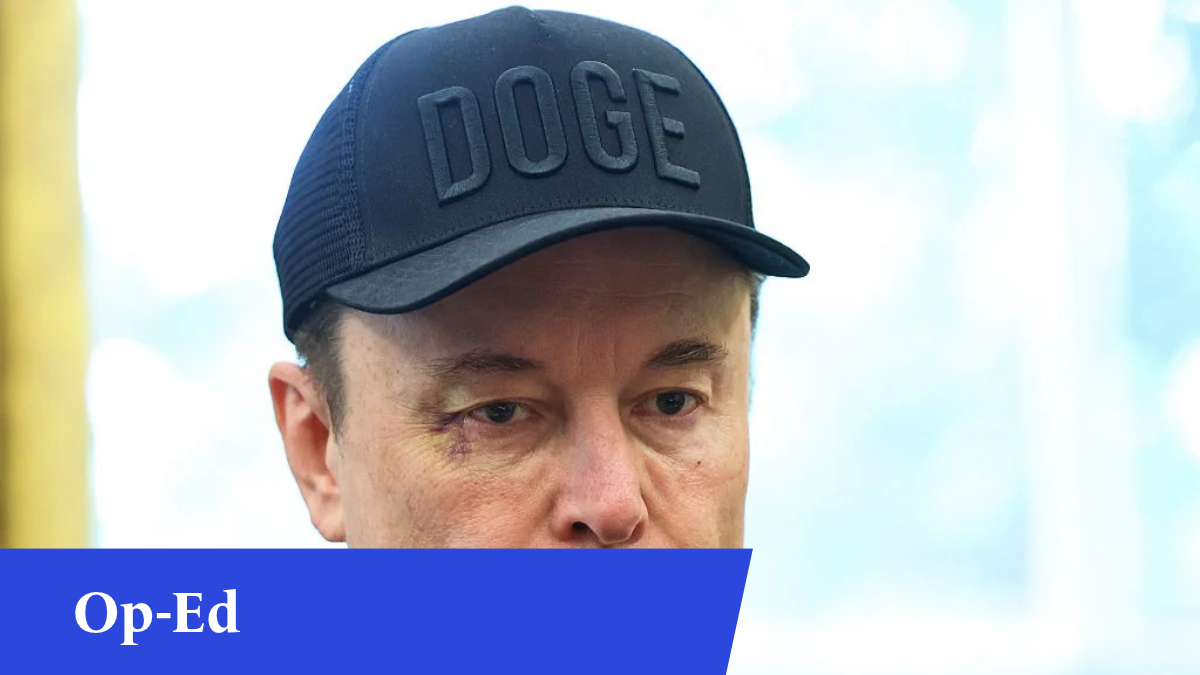
Finally, DOGE has largely vanished from the headlines, but director of research Judge Glock argues that its legacy is real. While the press fixated on Elon Musk’s larger-than-life promises, the fact is the federal civil service shrank by more than 270,000 employees, or 12 percent. That is the fastest decline in federal employment since the end of World War II. Whatever one thinks of how it got there, Glock writes, DOGE accomplished what many thought impossible: it beat the bureaucracy.
Continue reading for all these insights and more. Kelsey Bloom
Editorial Director
Manhattan Institute |
|
|
|
The Future of Disparate Impact
By Robert VerBruggen | Manhattan Institute | Photo by AndreyPopov/iStock/Getty Images Plus
For more than half a century, employers have faced “disparate impact” liability for hiring practices that produce demographic disparities, even when there is no evidence of intentional discrimination. The threat of liability discourages merit-based hiring and pressures employers to consider race in their decisions. In a new report, senior fellow Robert VerBruggen examines two developments that could reshape the doctrine. A recent Trump administration legal opinion sharply limits federal enforcement of disparate-impact rules, focusing instead on intentional discrimination. Meanwhile, the growing use of AI in hiring presents a new challenge: algorithms can discriminate through proxies for race or sex, even without being programmed to do so. VerBruggen proposes a narrower legal standard that targets genuine discrimination rather than statistical disparities. He calls for transparent, auditable hiring algorithms and protections for employers that proactively test their systems—preserving meritocratic hiring while guarding against algorithmic bias. |
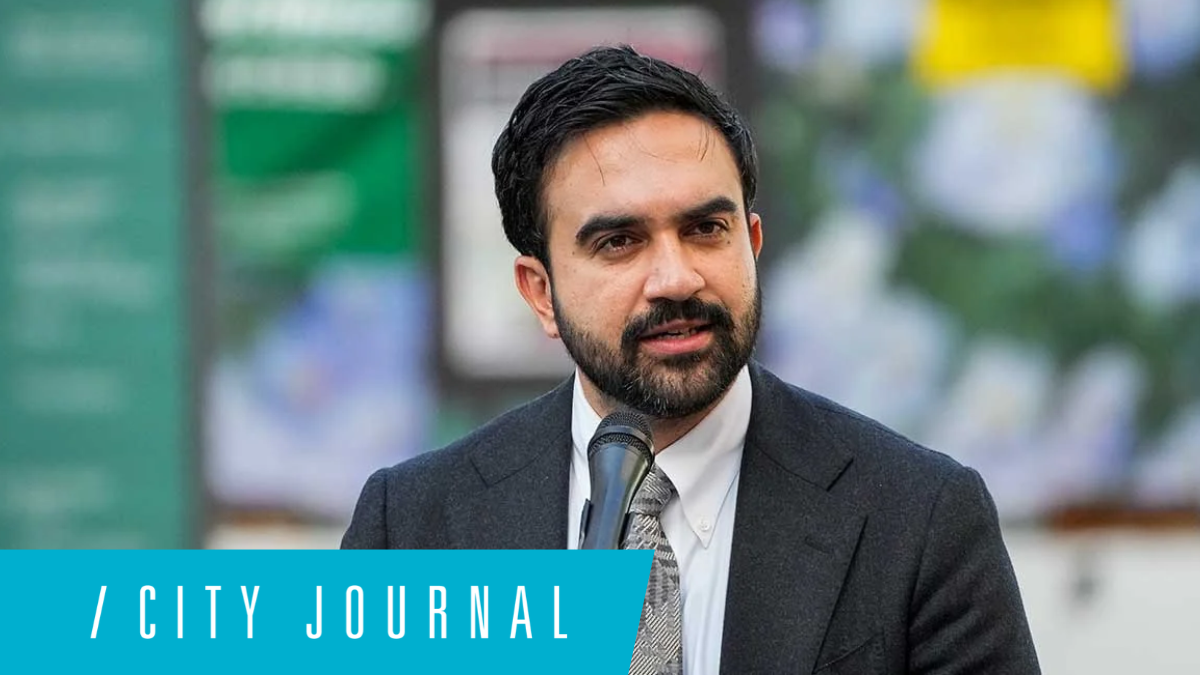
Mamdani Can Ignore Subway Violence for Only So Long By Nicole Gelinas | City Journal | Photo by KHemaz/GVN via Getty Images
“Early Monday, New York Mayor Zohran Mamdani convened the press for an announcement. A civilian not privy to Mamdani’s advance schedule might have thought that the mayor would inform the public about the latest subway horror: the noontime Saturday killing of 26-year-old Darrel Rodriguez, commuting home from his job as a Midtown security guard, shot by a disguised, hooded, and masked gunman who, despite ubiquitous Manhattan cameras, has evaded a police manhunt for at least two days. (He is still on the run.)
“Instead, reporters who attended and members of the public who joined on YouTube to see the mayor were in for a spectacle: a grinning Mamdani bounding up to a podium to campaign-style music, against a backdrop of ebullient toddlers bouncing on an indoor jungle gym. ‘Good morning, my fellow New Yorkers,’ he said to adults cheering and waving bright placards. ‘Today is an extraordinarily exciting day.’ “What was the big news? Twelve thousand new childcare slots for two-year olds . . . beginning nearly a year from now.” |
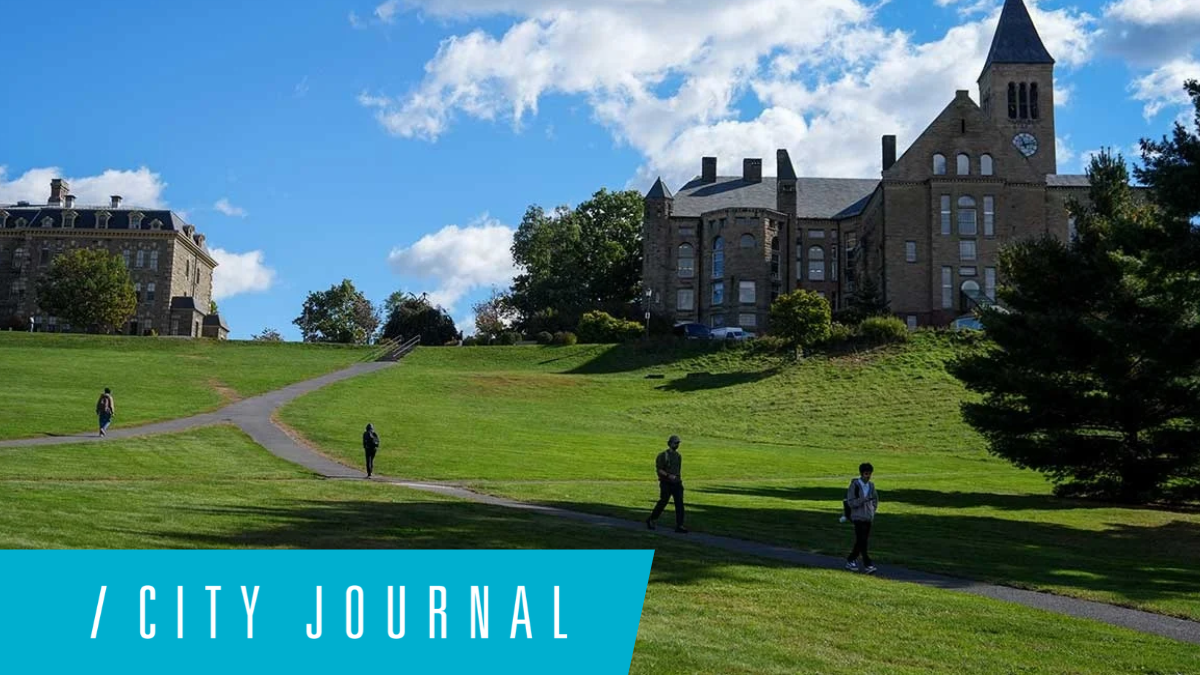
Two Columbia Students Dissented on the Cornell Seven Case—then the Blowback Began
By Adam Lehodey | City Journal | Photo by Ryan Murphy/Getty Images
“On October 13, Columbia University juniors Nikos Mohammadi and Christina Ma published an opinion piece on the alleged rape of ‘Jane Doe’ by seven members of a fraternity at Cornell. Dissenting from general campus opinion, they argued that it was ‘worth taking a pause before jumping to wide-sweeping conclusions’ about the case, and that the prevailing rhetoric—that women lack meaningful agency when choosing to perform acts they may later come to regret—was infantilizing.
“Seething responses flooded in. ‘Brother you gotta go kill yourself,’ one read. ‘I hope this follows you around forever,’ read another. ‘[H]ope both are shown the same cruelty you carry in your heart for someone you don’t even know,’ read a third. The Columbia Open Discourse Alliance, ‘a non-partisan coalition for free speech and open discourse,’ condemned Sundial, where the piece was published, claiming that it ‘promotes rape culture.’ Such opinions simply should not be permitted, argued the Columbia Political Review.”
|
How DOGE Beat The Bureaucracy
By Judge Glock | Daily Wire | Photo by Tom Brenner For The Washington Post via Getty Images “What really happened when Elon’s layoff experiment went to Washington.
“Elon Musk’s Department of Government Efficiency (DOGE) went from an inside joke about a Musk-favored cryptocurrency, Dogecoin, to the biggest story in Washington to a near-nonentity — all in under a year. During DOGE’s whirlwind tour in power, the press highlighted its improbable promises of trillions of dollars in savings, its exaggerations of the savings it did achieve, and its occasional naivete about the politics and policy of Washington.
“Yet the media spent so much time disputing DOGE’s claims that they largely ignored how it did change spending. In the end, while DOGE made only modest reductions in government contracting and a handful of cuts to government grants, it had a massive impact on the federal civil service. Before Trump took office, the civil service hit a modern peak of more than 2.3 million employees. Since then, it has shrunk by more than 270,000 people, a 12% drop — the fastest decline in federal employment since the end of World War II.”
|
The Dangerous Consequences Of ‘Concept Creep’ In Dating
By Christina Buttons | Daily Wire | Photo by Buddy Bartelsen/ullstein bild via Getty Images
“The sexual-assault allegations against seven fraternity members at Cornell University have revived a decades-old debate about whether college campuses face a rape crisis. A former Cornell student, identified by the pseudonym Jane Doe, says the men sexually assaulted her during a night of heavy drinking and drug use in 2024.
“Though the allegations remain contested, journalists, activists, and Democratic politicians have already treated them as fact, citing the case as evidence of a larger problem at American colleges and universities. Vox says that there is ‘[a] crisis that goes far beyond Cornell.’ The Atlantic asks whether college is becoming less safe for women. The Guardian declares that we live in a ‘rape-prone society.’ Tens of thousands of women on TikTok have posted #IAmJaneDoe in solidarity with the Cornell accuser, drawing comparisons to the #MeToo movement. New York Governor Kathy Hochul is using the case to push for changing state law, arguing for closing the ‘voluntary intoxication loophole,’ and has appointed Attorney General Letitia James to reinvestigate the allegations.”
|
|
|
A Better Everyday Life in New York: 50 Practical Ideas to Renew NYC’s Promise of Opportunity
By John Ketcham and Sean Speer | Manhattan Institute | Photo by deberarr/iStock/Getty Images Plus via Getty Images “Can ordinary New Yorkers still get ahead? The city’s promise of opportunity is under strain. In a new issue brief, MI scholars John Ketcham and Sean Speer tackle the fact that 76,000 middle-wage jobs have been lost since 2019, real incomes for the bottom 90% are flat, residents face a median asking rent of $3,707, and over a third of public-school students are chronically absent.
They offer 50 proposals for the Mamdani administration to improve quality of life in New York City. The proposals include easing zoning and parking rules, expanding charter schools, hiring more police, loosening childcare requirements, and using AI to speed up city services. They also call for closing budget gaps without new taxes.” |
|
|
For more information and media requests, please contact
communications@manhattan.institute.
Are you interested in supporting the Manhattan Institute’s public-interest research and journalism? As a 501(c)(3) nonprofit, donations in support of MI and its scholars’ work are fully tax-deductible as provided by law. |
|
| |
The Manhattan Institute works to keep America and its great cities
prosperous, safe, and free. Manhattan Institute
52 Vanderbilt Ave. 3 floor New York, New York 10017
Copyright © 2026 Manhattan Institute, All rights reserved. |
|
|
|
|