Good morning:
This week, director of Constitutional Studies Ilya Shapiro weighed in on some of the significant U.S. Supreme Court decisions issued this week.
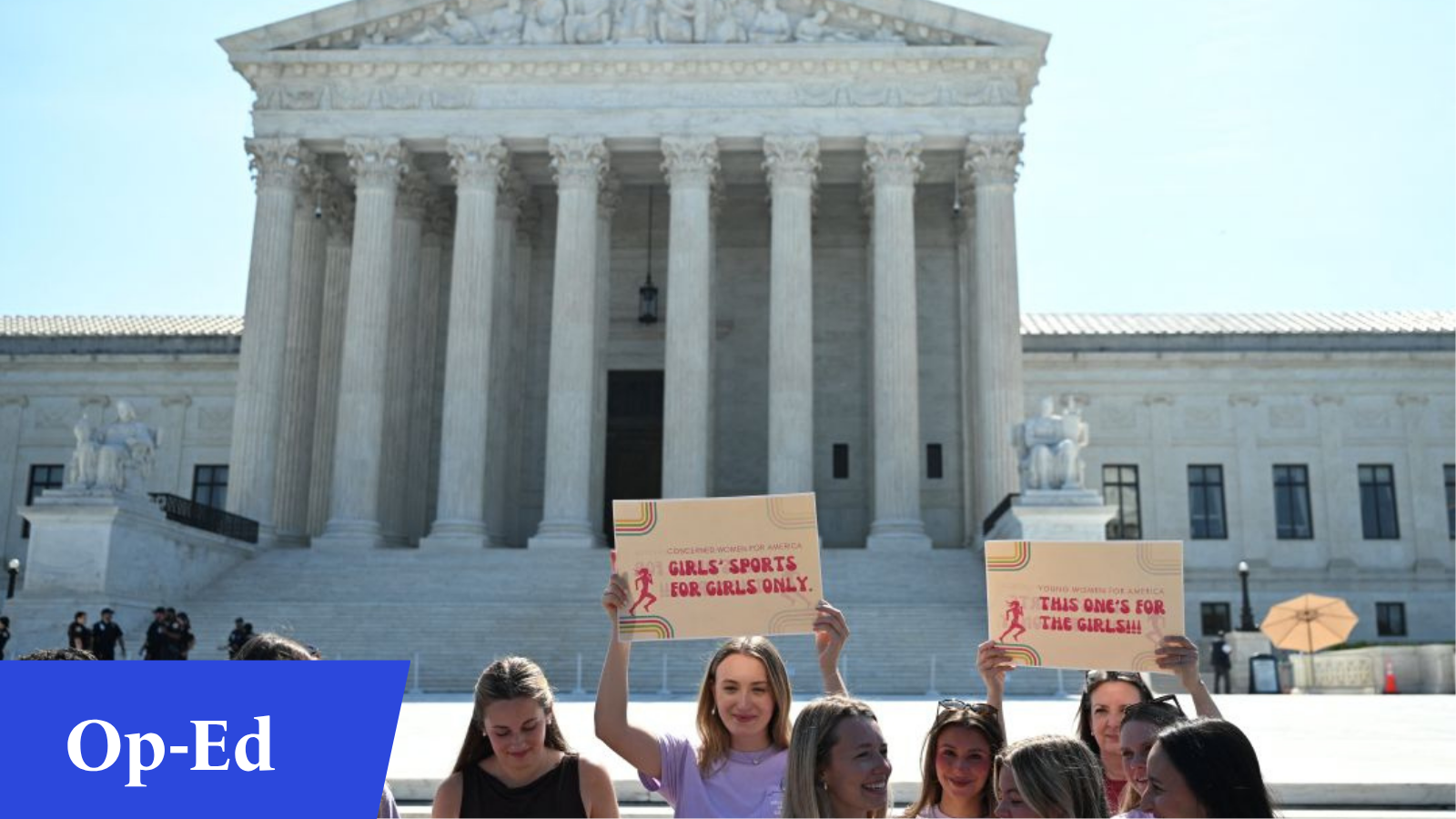
In the Free Press, Shapiro praised the Court for standing up for common sense, biological reality, and young female athletes in its decision on state bans that prohibit biological males from playing in girls’ and women’s sports. As Shapiro has written elsewhere, “states have enacted biological-sex-based restrictions for the same reason we have female categories of sports in the first place: men and women are biologically different in ways relevant to athletic competition, so it makes sense to separate the sexes.” The Equal Protection Clause does not block these common-sense distinctions.
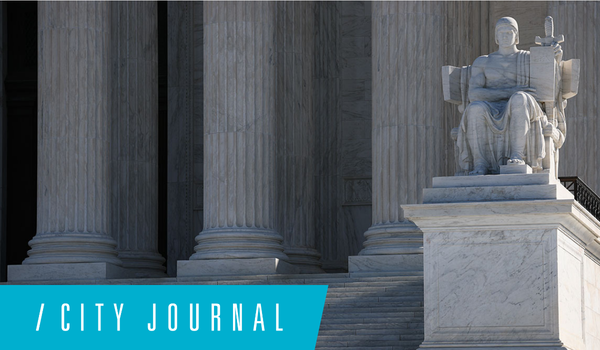
In City Journal, Shapiro weighed in on the decision in Trump v. Slaughter, which found that the chief executive, the only official elected by the entire country, has the authority to remove the heads of so-called independent agencies. These heads execute the agenda of the president, it makes sense that, as the president’s subordinate, they are subject to removal by him. As Shapiro summarized, “In a republic, the people whom we elect should govern. The buck should stop with the president, not assorted boards of independent bureaucrats.”
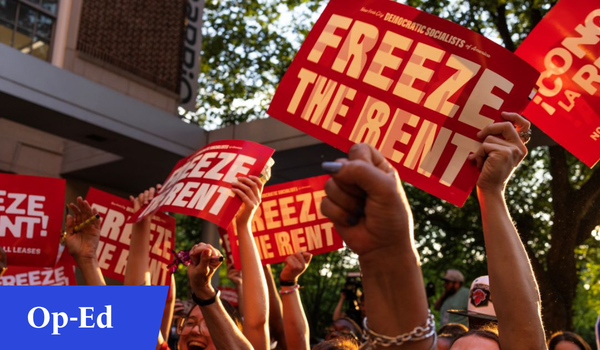
One panel that is supposed to be independent weighed in on the lives of New Yorkers. Senior fellow Arpit Gupta, who sits on the NYC Rent Guidelines Board, was the lone vote against the decision to fulfill a Zohran Mamdani campaign promise and freeze rents on one- and two-year leases. In a column for Vital City, Gupta lays out what’s at stake in the rent freeze decision and offers an agenda to address the underlying problem in rent-stabilized housing.
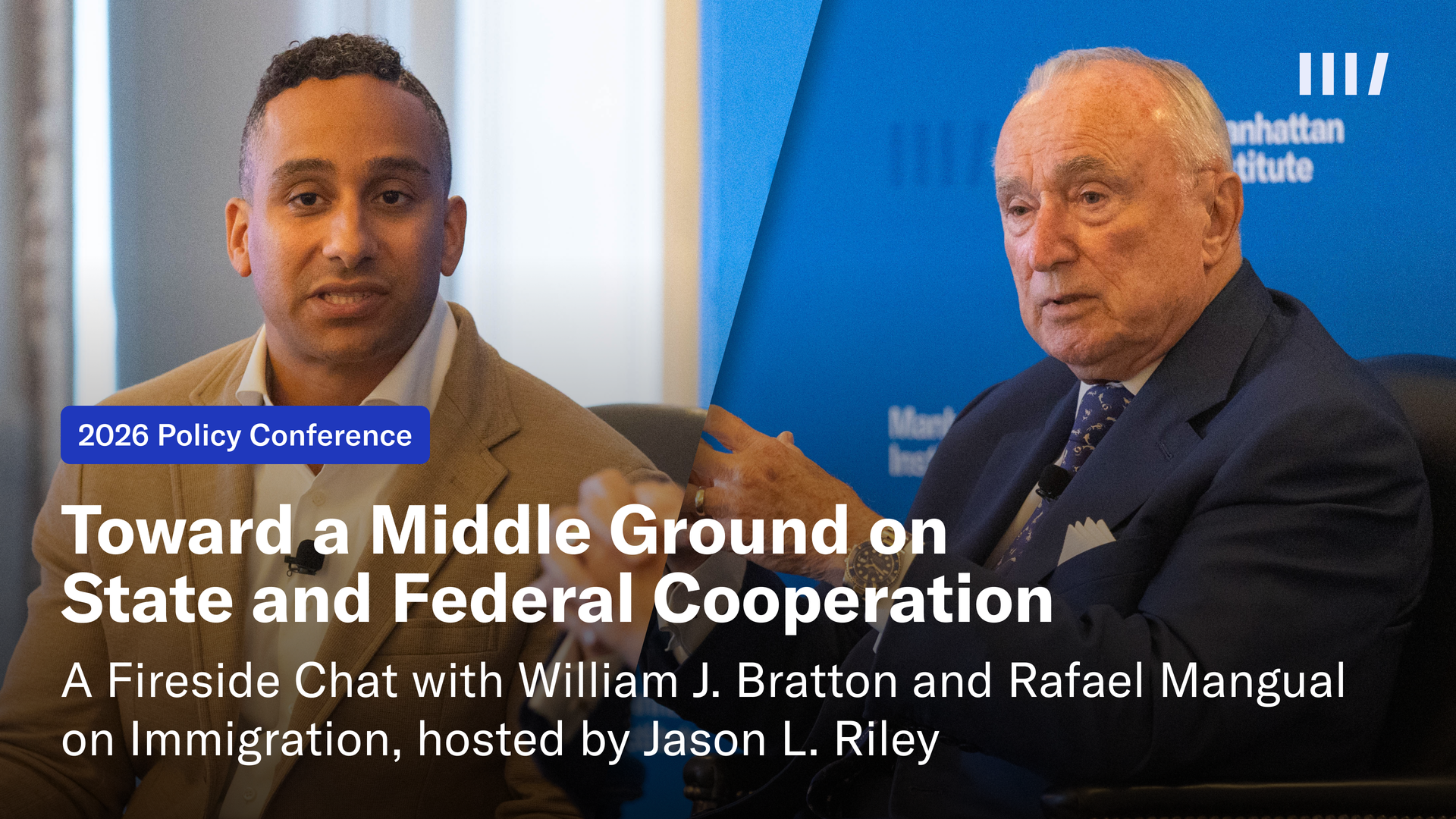
Elsewhere in this newsletter, we have a new report by Brian Boyd on how public universities can respond to artificial intelligence on college campuses, and flourish despite the changes this technology will inevitably bring. Fellow Rafael Mangual sat down with former NYC police commissioner William J. Bratton for a discussion on the policy nuances and intersections of immigration, public safety, and law enforcement.
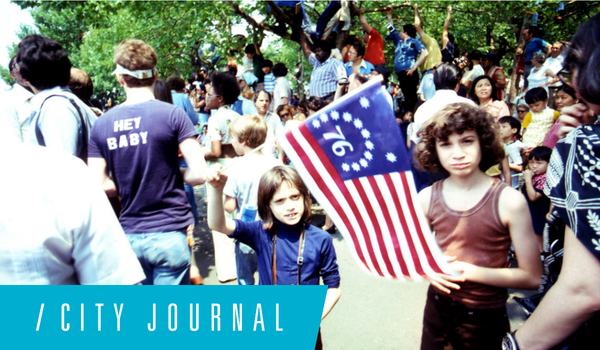
Finally, Tevi Troy, a senior fellow at the Ronald Reagan Institute, wrote in City Journal about how four presidents—Richard Nixon, Gerald Ford, Jimmy Carter, and Ronald Reagan—intersected with the nation’s 200th birthday in 1976. During that time, history and partisan politics overlapped at key revolutionary sites, including a church at Valley Forge, Philadelphia’s Independence Hall, and Thomas Jefferson’s home at Monticello.
So far, America’s semiquincentennial year has been a more muted affair. But it does not make it any less significant. The promises and assertions made in the Declaration of Independence launched a unique political experiment never before tried in world history.
The fact of the Declaration of Independence and, later, the U.S. Constitution, asserts that free men are capable of governing themselves and not only have the right to do so, but the duty to govern themselves well. The United States tests the proposition, as Alexander Hamilton wrote, in Federalist No. 1, “whether societies of men are really capable or not of establishing good government from reflection and choice, or whether they are forever destined to depend for their political constitutions on accident and force.”
As we near the 250th birthday of the United States of America, take seriously your part in this grand and noble experiment.
Happy Independence Day, Kelsey Bloom Editorial Director |
|
|
|
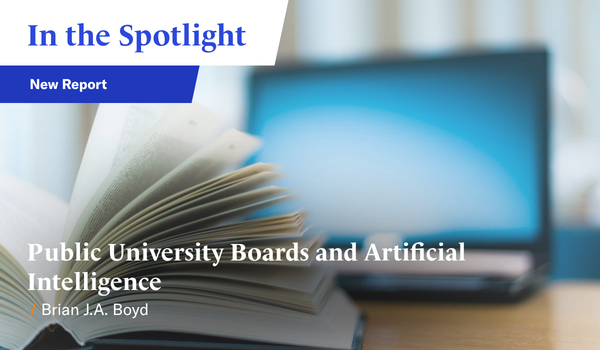
Public University Boards and Artificial Intelligence
By Brian J.A. Boyd | Manhattan Institute | Photo: monticelllo/iStock/Getty Images Plus via Getty Images
Artificial intelligence promises to upend higher education, which already faces mounting pressures from declining enrollment and growing public skepticism about the value of a college degree. In a new Manhattan Institute report, Brian J. A. Boyd explains how public universities can respond to this moment by ensuring that AI enhances, rather than erodes, human learning.
Drawing on historian Niall Ferguson’s metaphor of the “cloister and the starship,” Boyd proposes that universities maintain AI-free “cloisters” for rigorous reading, writing, and discussion. These environments, he argues, allow students to acquire the knowledge, skills, and habits of mind needed to make effective use of the AI-powered “starship” later in life and work. AI should function as a complement to human intelligence—not a substitute for it.
The report recommends strengthening core curricula, requiring transparency whenever AI is used in coursework or research, establishing clear institutional policies on acceptable AI use, and expanding interdisciplinary programs that pair technical innovation with civic and ethical education. By combining timeless educational principles with responsible technological adoption, Boyd argues, public universities can prepare students for an AI-driven future without sacrificing their fundamental mission.
|
|
|
After the Mamdani Rent Freeze
By Arpit Gupta | Vital City | Photo by Andrew Lichtenstein/Corbis via Getty Images
“The Rent Guidelines Board, on which I serve, has just voted to freeze rents on New York City’s roughly 1 million rent-stabilized apartments, fulfilling a key campaign promise by Mayor Zohran Mamdani. This settles what will happen to rents this October, but raises the question of whether the rent-stabilized stock is still going to be standing, habitable and occupied in 2046. On its current trajectory, a large share of it will not be — especially if Mamdani and his appointees on the Board follow through on the mayor’s pledge to freeze rents every year of his term. ...
“The city’s rent stabilization system represents a unique legacy of affordable housing in a dense urban environment. It would be a tremendous housing failure to let this stock fall into deep disrepair and neglect, the consequences of which will be felt first and foremost by tenants themselves. At the same time, we must recognize that the political demand for a freeze exists because tenants in the legacy stock pay more and more every year for buildings that are getting worse because the system offers owners no revenue beyond rent increases from tenants. A rent freeze addresses tenant affordability in the short-run, but aggravates the long-term channel of viability.”
|
The Supreme Court Stands Up for Girls in Sports
By Ilya Shapiro | The Free Press | Photo by Alex WROBLEWSKI / AFP via Getty Images
“After the Supreme Court heard arguments in West Virginia v. B.P.J. and the companion case, Little v. Hecox, earlier this year, it looked like the challenges to West Virginia’s and Idaho’s laws prohibiting biological males from playing girls’ and women’s sports would fail. Tuesday’s ruling confirms why: Sex categories in sports exist for a reason, and neither the Constitution nor federal law requires schools to pretend otherwise.
“Justice Brett Kavanaugh’s majority opinion gets the central point right. The question wasn’t whether transgender students deserve dignity, but whether the 1972 Education Amendments’ Title IX and the 14th Amendment’s Equal Protection Clause forbid schools from maintaining girls’ and women’s sports for biological females. Kavanaugh’s opinion is admirably direct: ‘The answer is yes.’ That is, schools may preserve female athletic categories based on biological sex.” |
|
|
Four Presidents, One Bicentennial
By Tevi Troy | City Journal | Photo by Adam Gray/Getty Images
“America’s 250th birthday is now nearly upon us. The semi-quincentennial, whatever else one might say about it, has been a decidedly muted affair compared with the last big national anniversary, 50 years ago. The bicentennial was a major event, and not just on July 4, 1976, but for a long period leading up to it. It was such a big deal, in fact, that it wound up drawing into its orbit no less than four American presidents or future presidents.
“Gerald Ford occupied the White House in 1976, and he presided over a series of patriotic events that many boomers and Gen Xers still view today with nostalgia. But his experience is only part of the bicentennial story. ...
“The next time we’ll see the confluence of a presidential election and a big national anniversary will be America’s tricentennial—the 300th anniversary celebration, in 2076. How many presidents and future presidents take a hand in that occasion remains to be seen. However things play out, though, it will be hard to match the four-president extravaganza that was our bicentennial in 1976.” |
Humphrey’s Executor Has Been Slaughtered
By Ilya Shapiro | City Journal | Photo by Win McNamee/Getty Images
“The Supreme Court today restored an old-fashioned constitutional idea: if a principal federal officer exercises executive power, the president must be able to remove him. The justices’ 6–3 ruling in Trump v. Slaughter, which struck down a law prohibiting the president from firing members of the FTC except for cause, is the logical endpoint of a 15-year series of cases that have steadily chipped away at Humphrey’s Executor, the 1935 decision that blessed for-cause removal protections for the heads of so-called independent agencies.
“The Court didn’t mince words. Chief Justice John Roberts wrote that ‘Humphrey’s framework, in short, has not withstood the test of time.’ Then came the sentence that will launch a thousand administrative-law articles: ‘If anything more is left of Humphrey’s, we overrule it.’ The New Deal compromise that invented quasi-legislative agencies has finally met Article II of the U.S. Constitution. ...
“This ruling isn’t a gift to Donald Trump or his successors. It’s a restoration of constitutional accountability. Congress can create executive-branch agencies and specify what they may do, but it cannot create a fourth branch of government and then pretend its officers are independent of the only person the Constitution makes responsible for executing federal law.” |
|
|
A Fireside Chat with William J. Bratton and Rafael Mangual on Immigration
By Manhattan Institute
In an event hosted by Manhattan Institute Senior Fellow Jason Riley, Manhattan Institute Policing and Public Safety Initiative Head Rafael Mangual and Former NYC Police Commissioner William J. Bratton take a deep dive into the complex relationship between immigration, public safety, and law enforcement. The two discuss policy nuances, crime statistics, and the future of immigration enforcement in the US. |
|
|
For more information and media requests, please contact
communications@manhattan.institute.
Are you interested in supporting the Manhattan Institute’s public-interest research and journalism? As a 501(c)(3) nonprofit, donations in support of MI and its scholars’ work are fully tax-deductible as provided by law. |
|
|
|
The Manhattan Institute works to keep America and its great cities
prosperous, safe, and free. Manhattan Institute
52 Vanderbilt Ave. 3 floor New York, New York 10017
Copyright © 2026 Manhattan Institute, All rights reserved. |
|
|
|
|