Good morning:
This week, Manhattan Institute scholars returned to our roots and took a close look at crime and standard of living issues in New York City and other great American cities.
Fellow Rafael A. Mangual wrote about how anti-social behavior in public places—like smoking on a subway car or playing excessively loud music—is always backed up by the threat of force, for UnHerd. These incidents make it clear that there is a false dichotomy between “violent” and “non-violent” crimes. What makes many crimes “non-violent” is the fact that no one has challenged the perpetrator.
Still, violent crime persists, as the highly deadly Labor Day weekend in Chicago shows. In the Wall Street Journal, senior fellow Jason L. Riley writes that the Chicago mayor’s insistence that more police officers is an “antiquated” crime-fighting strategy is flat wrong. The empirical data prove that increased police presence saves lives, and cities like Chicago particularly benefit from additional officers, where murder victims are overwhelmingly black.
Seemingly small changes in technology and policy can have major consequences for city dwellers. Driverless cars may be popular in Los Angeles but senior fellow Nicole Gelinas warns against the cheap and frictionless adoption of driverless cars in New York City. In a column for the New York Times, Gelinas reminds readers of how the introduction of ride-hailing services like Uber and Lyft slowed traffic flow, replaced public transportation, and disrupted the economics of the taxi business.
In City Journal, former MI senior fellow Jonathan Lesser evaluates New York’s new energy plan that seeks to move the state toward electrification and zero emissions. His assessment: The plan is based on dubious assumptions and non-existent technologies, and all this “bureaucratic make-believe” will lead to very real devastations in New York’s economy.
Also in City Journal, director of constitutional studies Ilya Shapiro took a high-level look at the nationwide injunctions against the Trump administration. In response to these rulings, President Trump has soured on the originalist Federalist Society. But Shapiro warns that the president’s frustration is misplaced. The judiciary is in undeniably better shape than it was prior to the first Trump administration, and the president should be proud of his legacy of judicial appointments.
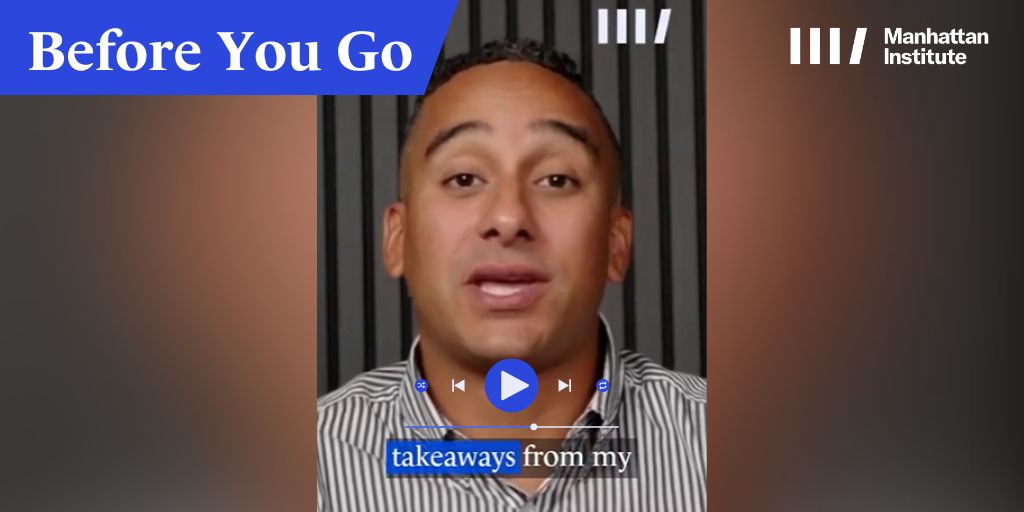
Finally, in a new video, Rafael A. Mangual breaks down the three things the next mayor of New York City must do to ensure the NYPD is fully staffed, highly motivated, and strongly supported. Continue reading for all these insights and more. Kelsey Bloom Editorial Director |
|
|
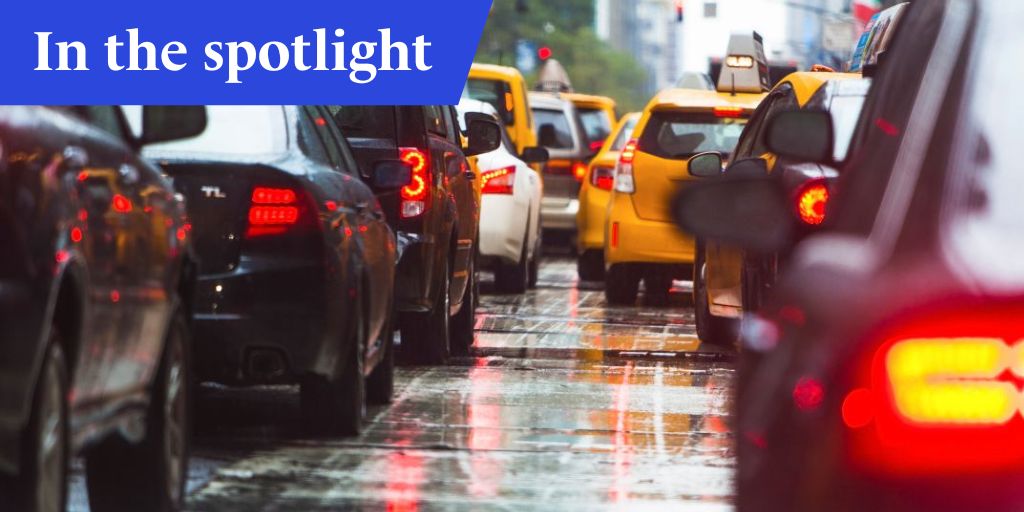
New Tech Can Change a City. New York Learned That the Hard Way with Uber. By Nicole Gelinas | The New York Times “Waymo wants to come to New York City. The driverless-ride company, owned by Google’s parent, Alphabet, has begun testing its electric Jaguars, with a person operating the cars as state law requires, in a pilot program. ... “The prospect of a car ride, if it’s cheap enough, can lure people away from subways and buses. We saw this in the mid-2010s, when Uber and its smaller competitor Lyft, ...
engaged in a price war for market share and strained the congested streets even more with cheap rides. Speeds on Manhattan’s streets slowed down, ride-hail apps replaced subway and bus trips and there was major disruption to economics of the taxi business. ...
“A major story of the 2010s across the country was the embrace of new technology without much thought to the consequences — and the later regret. When Uber came to town, New York was naïvely giddy, allowing technology to govern the city. This time, it should be the other way around.” |
|
|
The Simple Solution to Violent Crime: More Cops
By Jason L. Riley | Wall Street Journal
“The Democratic reaction to President Trump’s federal crackdown on crime was as predictable as the dozens of shootings in Chicago over the holiday weekend, which left at least seven dead. ...
“Increased police presence isn’t felt equally across racial and ethnic groups, and places like Chicago particularly benefit from additional cops, where murder victims are overwhelmingly black. According to a 2020 analysis of the race-specific effects of larger police forces, ‘there is now a strong consensus in the academic literature’ that increasing the presence and visibility of police officers ‘reduces crime.’ Moreover, the authors found that although ‘the total reduction in homicide is roughly equal across Black and white victims, the decline in homicide is twice as large for Black victims in per capita terms’.”
|
|
|
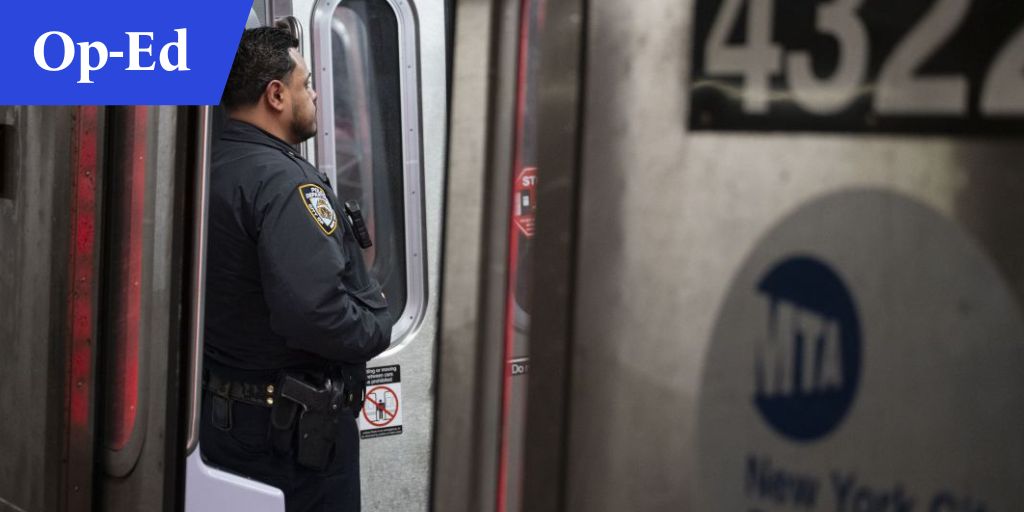
Progressives Underestimate the Danger of Subway Disorder
By Rafael A. Mangual | UnHerd “Whether police should intervene when individuals break what are perceived to be minor rules — like hopping the turnstile, smoking in the subway, and playing music from a speaker in a public place — has been an ongoing debate for as long as I’ve been alive. ...
“Anyone who has endured the indignity of biting their tongue while someone acts blatantly antisocial in public intuitively understands that such behavior is an expression of power — reinforced by the credible threat of violence. It’s essentially a dare. The guy who lights up a cigarette on a commuter train knows he’s not supposed to; and he’s counting on the fact that it’s going to bother those around him. He expects people to keep quiet about it, and when they do, it feeds his own self-perception as a ‘tough guy’ insofar as he understands fear to be the primary explanation for the silence.”
|
|
|
Trump Should Thank the Federalist Society By Ilya Shapiro | City Journal
“The second Trump administration has sustained more nationwide injunctions in its first four months than the Biden administration did in four years—and more than all presidencies combined going back at least to John F. Kennedy. ... These judicial frustrations have prompted fierce criticism from the president, vice president, and many high-ranking officials, including calls for impeachment. After the U.S. Court of International Trade blocked his tariffs, Trump pointed his Truth Social finger at Leonard Leo and the Federalist Society for allegedly misleading him on judicial appointments.”
But “the great irony is that, despite the president’s protestations against the federal bench, the most enduring impact remaining from his first term is his transformation of the judiciary—with the help of the Federalist Society.” |
New York’s Green Energy Fantasy Continues
By Jonathan A. Lesser | City Journal
“New York’s recently released Draft 2025 Energy Plan is rooted in fantasy. The plan asserts that the Empire State’s electrification and zero-emissions obsession will reduce energy costs, fight climate change, and create over 60,000 net new jobs by 2035. In reality, while the plan won’t meaningfully affect the climate, it will devastate consumers and New York’s economy. ...
“The plan’s authors seem to believe that consumers and businesses will welcome these changes. Consumers, they assume, will embrace higher electricity prices; happily trade gas furnaces and water heaters for costlier electric heat pumps; grow to love electric vehicles, despite slowing sales and the vehicles’ poor performance in cold winters; and support electric utilities’ ability to shut off large appliances remotely. None of those assumptions is realistic.” |
|
|
“Open-air drug use. Aggressive panhandling. People sleeping in transit hubs. These things chip away at the city’s sense of safety. New Yorkers deserve a city that’s safe, clean, and orderly. To make that happen, the next mayor needs to make sure that the NYPD is fully staffed, highly motivated, and strongly supported.” |
|
|
For more information and media requests, please contact
communications@manhattan.institute.
Are you interested in supporting the Manhattan Institute’s public-interest research and journalism? As a 501(c)(3) nonprofit, donations in support of MI and its scholars’ work are fully tax-deductible as provided by law. |
| |
Photo Credits: adamkaz/E+/Getty Images; Noah Berger/AP Photo; Anadolu/Getty Images; Wong Yu Liang/Getty Images; Catherine McQueen/Getty Images; Probal Rashid/LightRocket/Getty Images |
|
|
The Manhattan Institute works to keep America and its great cities prosperous, safe, and free. Manhattan Institute 52 Vanderbilt Ave. 3 floor New York, New York 10017
Want to change how you receive these emails?
Unsubscribe | Subscription Preferences
Copyright © 2025 Manhattan Institute, All rights reserved. |
|
|
|