Good morning:
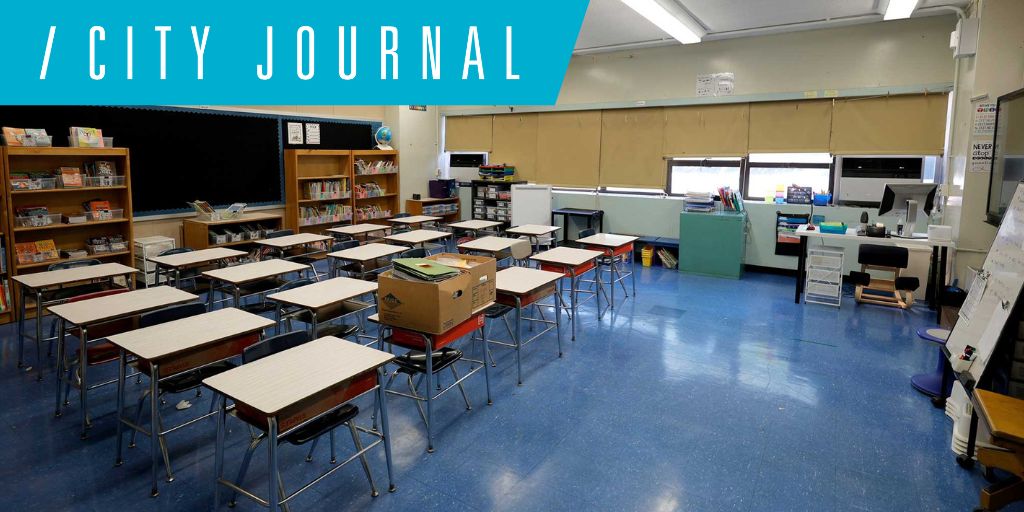
With most schools closed this week to celebrate Thanksgiving, take the time to watch a new documentary, 15 Days, on the Covid-19-era school closures.
Reviewed by Adam Lehodey in City Journal, the film reminds viewers of the Covid-era’s key players, as well as the decisions and debates that Americans still have not fully reckoned with. In particular, 15 Days focuses on the advocacy of teachers’ union leaders and how they used the pandemic and the school closures they demanded as an opportunity to bilk states and the federal government for more than $185 billion in funding—even after we knew children were largely not at risk of serious illness, and evidence from several U.S. states and European countries suggested that school reopenings were not correlated with fatalities.
The public officials who failed to stand up to teachers’ unions and kept students and families unsure about the next steps for their schools failed the children they were supposed to serve. Supporting children sometimes means stepping in.
Naomi Schaefer Riley uses another documentary, the 2023 Netflix film Take Care of Maya, to urge American parents and the broader public not to turn against mandated reporting of child abuse by medical professionals. As she writes in City Journal, Child Abuse Pediatricians are often blamed for incorrect diagnoses; and they are blamed when Child Protective Services decides to remove children from their parents’ custody. That is a nightmare for any parent, “but for abused children, the nightmares are darker still.”
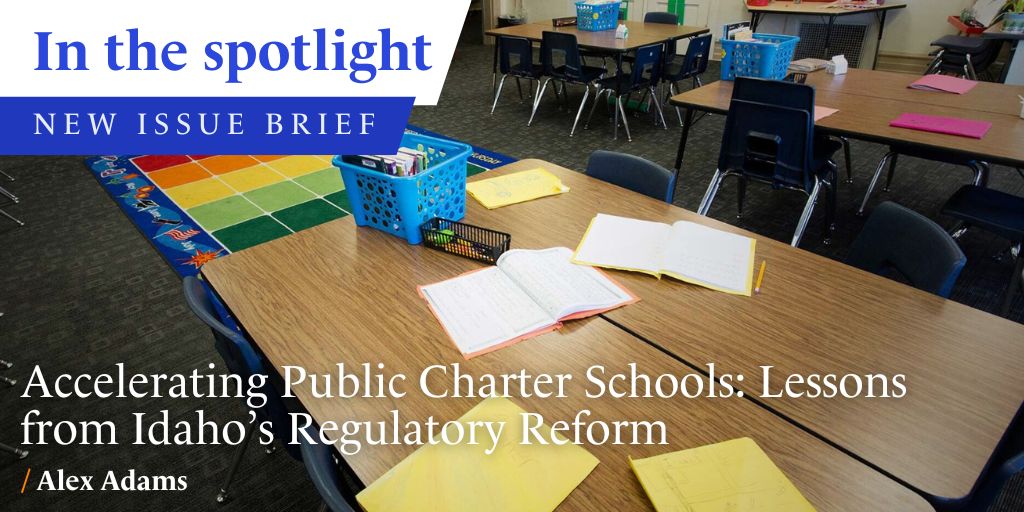
On a more positive note, a new issue brief by Alex Adams uses Idaho, an early adopter of charter school legislation, as a case study for states looking to find the appropriate balance of flexibility and accountability in their charter school systems. Idaho’s high-performing charters were rewarded with more autonomy and less heavy-handed regulatory oversight. Low-performing schools were given more support, but also more oversight than even traditional public schools. In both cases, the focus was on student success.
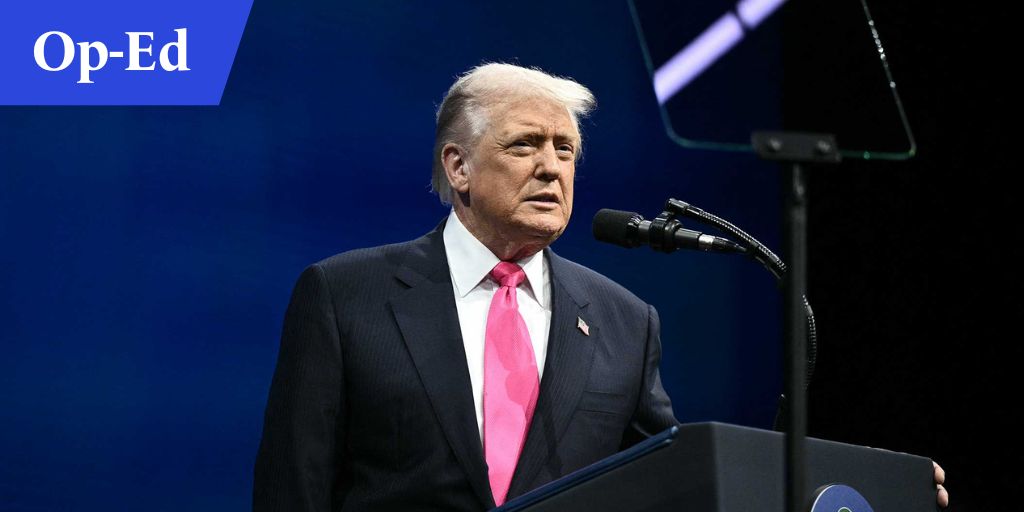
In other news, Jim Copland weighs in on the reporting that President Trump is looking to address the problem of “woke capital”—political activists disguised as investors using America’s biggest publicly traded corporations to advance a leftist political agenda over the interests of average shareholders. In the New York Post, Copland writes that putting an end to this kind of activist investing is great for the average Joe, who relies on passive index funds for their retirement.
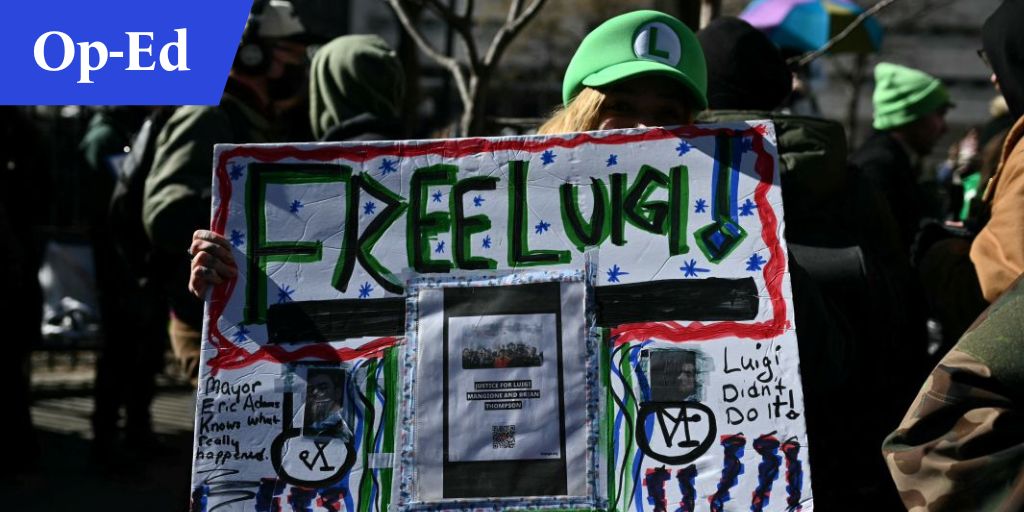
In a new essay for the print edition of National Review, Tal Fortgang defines the new morality that leads seemingly normal Americans to celebrate and elevate to cult status people like Luigi Mangione, the alleged killer of health insurance executive Brian Thompson. It’s a pagan morality, untethered from the Biblical, Judeo-Christian tradition of recognizing the dignity of every individual and holding individuals responsible for their actions, as opposed to the groups they belong to. As we lose biblical literacy and smirk at the Bible as foundational American text and moral standard, pagan morality floods in to take its place.
Finally, in a new MI video, Adam Lehodey recommends three books (other than the Bible) for NYC mayor-elect Zohran Mamdani to read over his Thanksgiving break. We should crack them open, too. Continue reading for all these insights and more. And have a very happy Thanksgiving.
Kelsey Bloom Editorial Director |
|
|
Accelerating Public Charter Schools: Lessons from Idaho’s Regulatory Reform By Alex Adams | Manhattan Institute
Less than two decades ago, Idaho’s charter-school sector was struggling under a bloated, overregulated system. Today, the state is among the nation’s most dynamic charter environments. In a new Manhattan Institute issue brief, Alex Adams explains how Idaho achieved this turnaround—and what other states can learn from it.
In 2024, the state enacted the Accelerating Public Charter Schools Act (APCSA), which repealed and replaced Idaho’s 25-year-old charter statute. The law replaced a one-size-fits-all regulatory model in favor of a framework that rewards high performing charters with “earned autonomy.” High-performing charters can now earn 12-year renewals (up from five), fast-track replication into new communities, and operate with substantially greater autonomy. New and innovative schools benefit from streamlined applications, improved access to facilities financing, and the creation of short-term “pilot” charters for testing novel models.
At the same time, APCSA strengthens accountability for struggling schools and reshapes the state’s chief authorizer—the Public Charter School Commission—by emphasizing support rather than adversarial oversight.
Idaho’s experience offers a clear lesson: to expand high-quality charter options, states should cut unnecessary regulation, differentiate oversight based on performance, and create straightforward pathways for successful schools to grow. |
|
|
An Insidious New Morality Is Giving License To Kill By Tal Fortgang | National Review
“The new morality is totally incompatible with social life. What would you do if you were a law-abiding person who suspected that you lived among a critical mass of (Luigi) Mangiones? ... If there is reason to believe that your neighbors would try to justify your murder because you have come to symbolize something they detest, finding new neighbors is urgent and imperative. This is no way to build a community, an economy, or a polity. Just the opposite: it’s fatal to the cooperation we need in order to flourish. The new morality is not safe for human consumption. ...
“The pagan instinct to reject the notion of individual agency and dignity — indeed, to deny that each person is an individual — does not die easily, and never permanently. When it rears its head, it does so not merely as incantations and abstractions but as a prefabricated justification for bloodlust, dehumanization, and social breakdown.” |
|
|
How Trump Can End ‘Woke Capital’ — and Free US Companies To Get Back to Business
By James R. Copland | New York Post
“The slate of reforms under consideration (by the Trump administration) could be the biggest positive development for our financial markets since the early days of the Reagan administration, if not since the creation of the federal securities laws themselves. It could also finally put the brakes on the rise of ‘woke capital.’
“For years, political activists have been using America’s biggest corporations as vehicles for their social agenda. They call it ‘ESG’ — environmental, social and governance investing — but it really boils down to pressuring companies to take political stands that most ordinary investors never asked for, from Black Lives Matter to ‘climate justice.’
“Since these funds aren’t picking individual stocks, they don’t bear any cost when they get things wrong. ... That’s why we’ve seen the Big Three passive funds pushing companies to take woke actions — from climate pledges to race-based hiring policies — regardless of what most shareholders actually want.” | |
|
Who Was to Blame for Pandemic School Closures?
By Adam Lehodey | City Journal
The new documentary “15 Days spotlights the advocacy of teachers’ union leaders, who considered the pandemic an opportunity to advance their conception of ‘justice.’ By highlighting pandemic-era failures, it reminds parents and politicians that public education exists to serve families and children. ...
“‘Justice is our middle name. It is the lens through which we do all of our work. Climate justice is racial justice. It is worker justice. It is gender justice,’ said (American Federation of Teachers president Randi) Weingarten in a clip included in the documentary. The actress Jane Fonda went further, saying ‘Covid is God’s gift to the Left.’ ...
“Good governance requires carefully balancing competing goods—public health, yes, but also education and people’s livelihoods. 15 Days tells the stories of parents and families who bore the costs of politicians’ inability, or unwillingness, to do so. For parents who suffered during the pandemic, the film is worth viewing." |
A Child’s Worst Nightmare
By Naomi Schaefer Riley | City Journal
“Media coverage, including the 2023 Netflix documentary Take Care of Maya, leans toward portraying ... child-welfare authorities (as) railroading innocent parents. This coverage, unfortunately, has played a pivotal role in turning the public against both mandated reporting of child abuse by medical professionals and the particular subfield of Child Abuse Pediatricians (CAPs), both of which remain essential for preventing and responding to child abuse. ...
“The narrative such reporting pushes is that, when you’re trained as a hammer, every problem looks like a nail. But the opposite is true. According to a 2009 study, when comparing second opinions of CAPs in which a non-CAP initially diagnosed abuse, the CAP said it was ‘not abuse’ 44 percent of the time. When there was disagreement between the CAP and non-CAP, 80 percent of the time the CAP said that it was not abuse.” |
|
|
“ If Mamdani wants a playbook for how to improve the functioning of the city as much as possible, he should read Order Without Design. The most fundamental role of a city, Bertaud shows us, is as a labor market connecting people to jobs in a way that isn't possible in rural areas.”
| |
|
For more information and media requests, please contact
communications@manhattan.institute.
Are you interested in supporting the Manhattan Institute’s public-interest research and journalism? As a 501(c)(3) nonprofit, donations in support of MI and its scholars’ work are fully tax-deductible as provided by law. |
|
|
Photo Credits: adamkaz/E+/Getty Images; Noah Berger/AP Photo; Anadolu/Getty Images; Wong Yu Liang/Getty Images; Catherine McQueen/Getty Images; Probal Rashid/LightRocket/Getty Images |
|
|
The Manhattan Institute works to keep America and its great cities prosperous, safe, and free. Manhattan Institute 52 Vanderbilt Ave. 3 floor New York, New York 10017
Want to change how you receive these emails?
Unsubscribe | Subscription Preferences
Copyright © 2025 Manhattan Institute, All rights reserved. |
|
|
|