Good morning:
This week, in the Washington Post, education scholar Jennifer Weber looks at why there are fewer suspensions in New York City public schools today, even as assaults inside schools and classrooms are on the rise. How could suspensions decline as attacks increase? The answer is NYC’s adoption of so-called restorative justice, a way of dealing with troublemakers in schools that focuses on students’ emotional wellbeing, mediation, and conversation to address disorder and wrongdoing, rather than actual punishment and consequences.
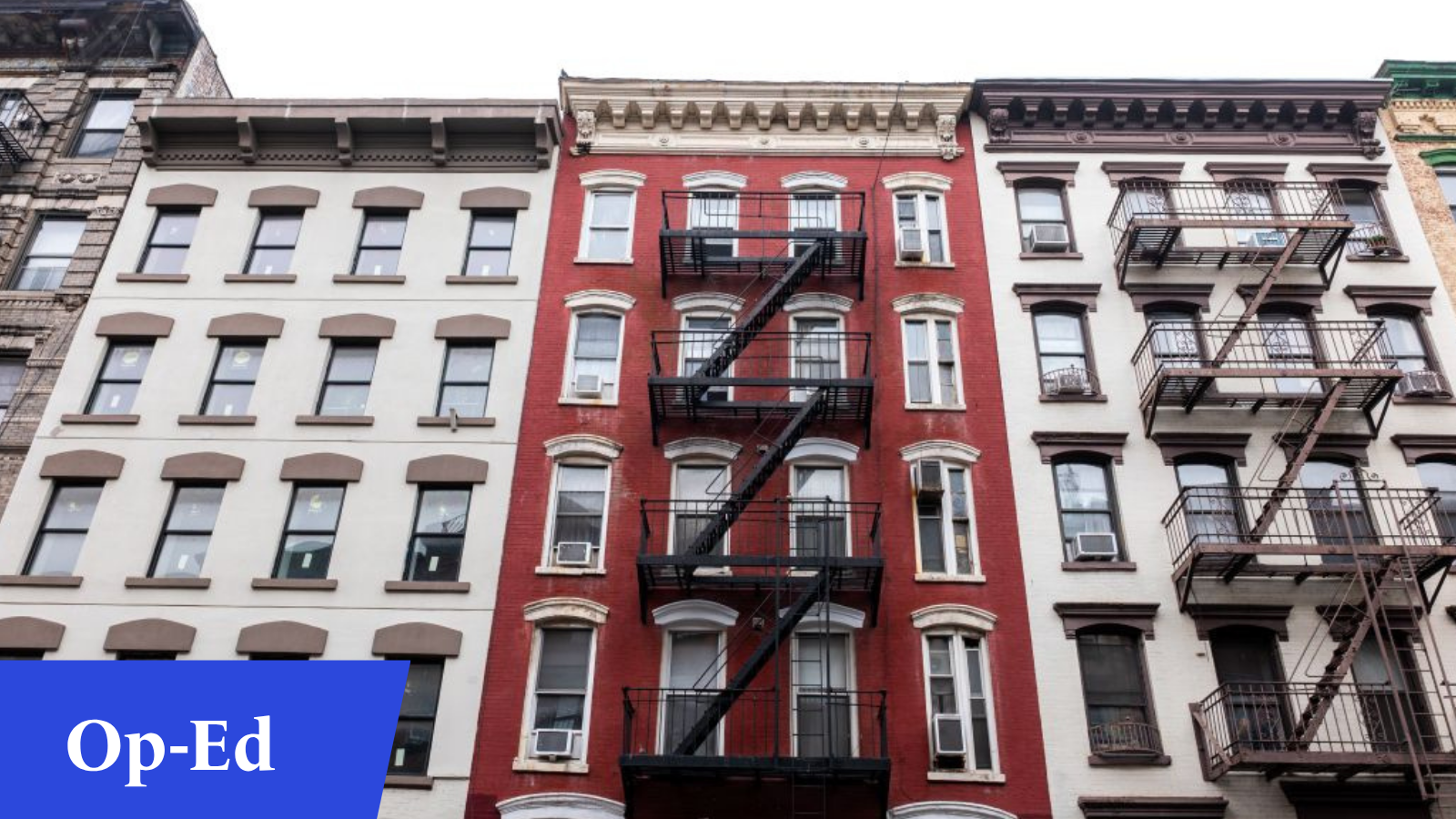
Just as NYC’s approach to suspension punishes innocent and well-behaved students, by forcing them to remain in the classroom with destructive and dangerous pupils, the latest proposal out of the City Council punishes low-income New Yorkers struggling to afford housing by deterring investment in the housing stock. Investigative reporter Adam Lehody evaluates the outrageous Community Right to Purchase Act, which would force property owners who intend to sell to make a deal with city-approved non-profits. In the New York Post, Lehody warns that this attack on private property will depress property values, will eliminate the incentive to keep units in good condition, and is likely a violation of state law.
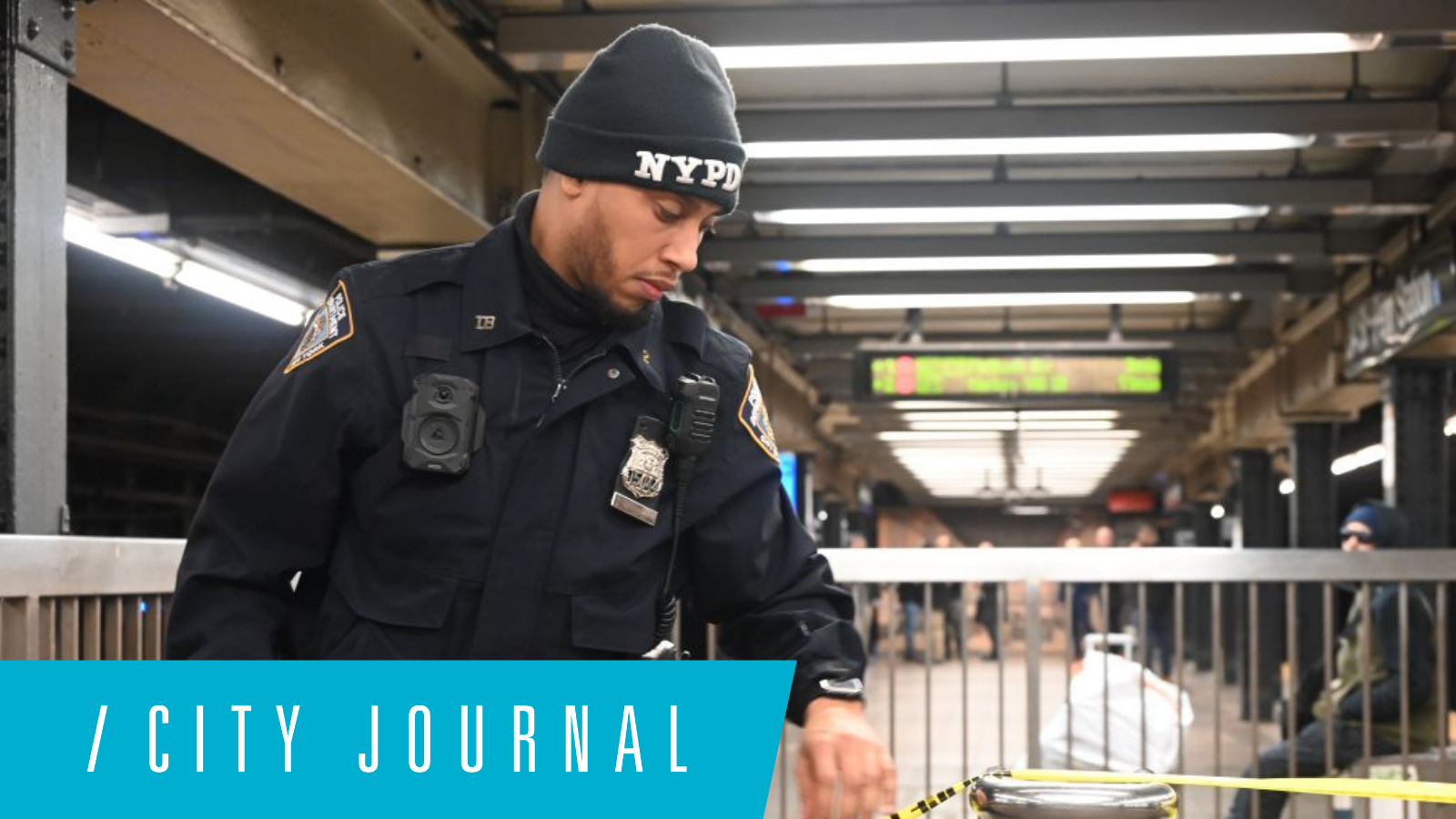
Our homes should be a refuge, but serious assaults like domestic violence often take place behind closed doors. In City Journal, senior fellow Charles Fain Lehman writes that it is a dangerous sign that murder rates are down, but assault rates are up in New York City. This trend bodes poorly for the long-term safety and stability of the city because it appears to be driven by violence on the margins that is harder to police without respect for the law and respect for officers as symbols and reminders of legitimate force.
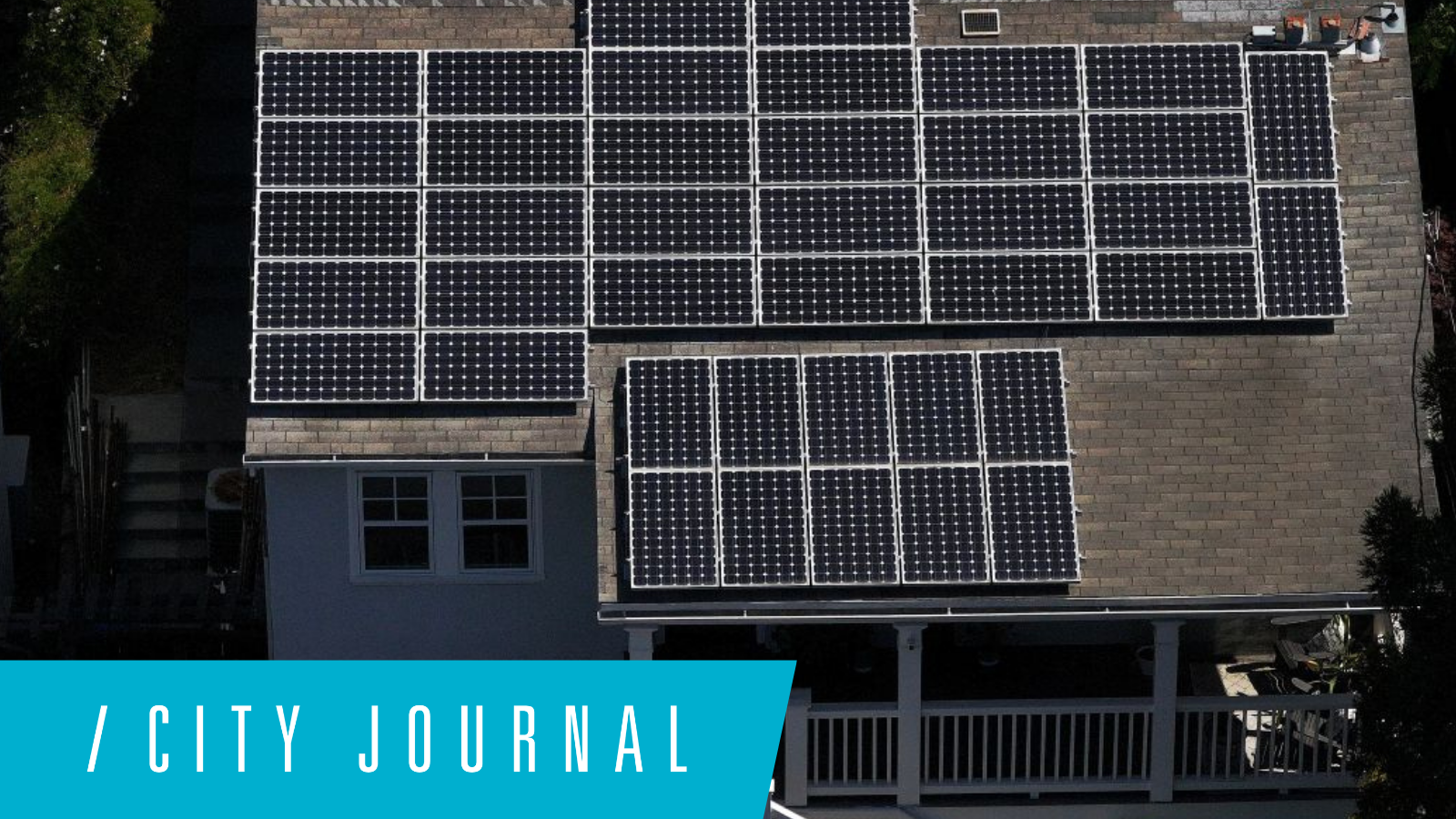
Also in City Journal, Christopher F. Rufo and Austen Hufford write about a California program that is spending millions of dollars to provide free solar panels, among other heavy appliances and goods, to “low-income” farmworkers, no matter their legal status. Ostensibly, this is a program to combat climate change. Instead, the authors find that this slush fund is part of a project to redistribute billions of taxpayer funds to energy programs and left-wing social causes, while keeping ideology allies employed and on the take.
Finally, the Research team published a new paper today by health care expert Chris Pope on how states today use Medicaid Managed Care (MMC) to extract more resources from the federal government and to hide changes in benefits. As he shows, MMC, where states contract with private insurance companies to manage the health of Medicaid beneficiaries, now constitutes the majority of Medicaid spending. Although MMC was pitched as a way to reduce spending and achieve more efficiency in the program, if anything it seems to be associated with expanded spending and less transparency. Chris offers suggestions to prevent states from gaming the system.
Continue reading for all these insights and more. Kelsey Bloom Editorial Director |
|
|
|
Reining in Medicaid Managed Care
By Chris Pope | Manhattan Institute | Photo: JGI/Tom Grill/Tetra images via Getty Images
Why do states subcontract Medicaid to private insurers if the government provides all the funds, dictates coverage, determines price, and doesn’t competitively bid the contracts? Originally, private insurers were supposed to make the process more efficient and innovative. But those promises have failed to materialize.
In a new Manhattan Institute report, senior fellow Chris Pope finds that Medicaid Managed Care (MMC) — the system where states contract with private insurers to deliver Medicaid benefits — has strayed far from its cost-saving promise. While MMC now covers 77% of Medicaid enrollees, there is little evidence that it saves money or improves care. Instead, states have increasingly used the opacity of private contractors to inflate federal matching funds. One scheme, for example, netted California a $19 billion windfall over just four years.
Prior authorization denial rates are also double those in Medicare Advantage, administrative overhead persists on both sides, and a 2021 federal investigation found most states couldn't even provide accurate payment data.
Pope recommends Congress close funding loopholes, standardize contracts nationally, require detailed spending disclosures, and allow states to outsource claims administration directly to the federal government for greater accountability. |
|
|
In NYC Schools, Suspensions Are Down. Why Are Assaults Rising?
By Jennifer Weber | The Washington Post | Photo by Artur Debat via Getty Images
“This spring, (New York City) reported that suspensions fell 8.3 percent during the first half of the school year, compared with the same period last year. The most serious suspensions, reserved for the severest offenses, fell by 21.6 percent. But during that same period, arrests of those under 21 for felony assaults inside city public schools during school hours rose 20 percent, from 28 to 34 incidents. ... That difference is hard to ignore. How can suspensions decline as assaults are on the rise? ...
“Over the past decade, New York City has steadily restricted principals’ authority to remove disruptive students from classrooms, paving the way for restorative justice to become the preferred disciplinary response. Suspensions for children in kindergarten through second grade require approval from the central office. Schools must document ‘reasonable effort’ to address behavior without removal and, for longer suspensions, obtain a sign-off from the chancellor. ...
“Schools need a clear discipline policy that holds students accountable. ... The students who can least afford the chaos — the ones already falling behind — pay the highest price when classrooms break down.”
Related: |
Tenants Will Suffer Again Under City Council’s Outrageous Plan for Apartment Buildings
By Adam Lehodey | New York Post | Photo by Spencer Platt/Getty Images “New York’s City Council is intent on helping nonprofits snap up apartment buildings, whether owners want to sell to them or not. ...
“Anyone intending to sell a ‘covered property’ would first have to notify both the city’s Department of Housing Preservation and Development and a list of department-approved nonprofits of the intended sale. The groups would then have 20 days to submit a ‘statement of interest’ if they are thinking of purchasing. Those that do would have another 70 days to make an offer. If the nonprofits don’t submit an offer, or if their offers are rejected, the owner can solicit private bids.
“But the law would grant nonprofits a ‘right to first refusal,’ meaning they would have to be notified of all private offers received. Owners would be obligated to sell to them should they match the terms made by another private buyer.
“In other words, the city would force owners to contract with nonprofits of its choosing — an egregious attack on private property that ... could very well violate state law.” |
|
|
Hayek Book Prize and Lecture By Manhattan Institute We are pleased to announce that Sean McMeekin has been awarded the 22nd annual Hayek Book Prize for his book To Overthrow the World: The Rise and Fall and Rise of Communism (Basic Books, 2025).
Mr. McMeekin will receive a $100,000 award and deliver the annual Hayek Lecture in New York City on June 4. We also extend our congratulations to the other finalists. |
New York City’s Other Violent Crime Problem
By Charles Fain Lehman | City Journal | Photo by Kyle Mazza/Anadolu via Getty Images
“New York’s leaders have been rightly celebrating the city’s major reductions in murder and gun violence. But the city still struggles with a different violent crime problem: record-high assault rates. ...
“New York City’s steady decline in deadly violence ... reflects the work of (NYPD Commissioner Jessica) Tisch and her colleagues, who have focused on targeting the people and places most prone to violence. ...
“This combination of factors—more efficient enforcement compensating for lower overall capacity—can disguise problems for only so long. Police serve not only to catch major bad guys but also to be the community’s enforcement arm. ... When visible police presence declines, so does the perceived legitimacy of the law—and with it, its force as a moral constraint.
“That’s why the continued rise in assaults is so troubling. It appears to be driven not by serious gun violence committed by a small cohort of repeat offenders, but rather by more marginal ones—men beating their partners, individuals attacking bus drivers or police, and other low-level acts of physical aggression.” |
California Is Giving Free Solar Panels to Illegal Aliens
By Christopher F. Rufo & Austen Hufford | City Journal | Photo by Justin Sullivan/Getty Images “California is spending millions of dollars on a program that provides free solar panels, refrigerators, and windows to ‘low-income’ farmworkers, including illegal immigrants. “The initiative ... is part of California’s sprawling, multibillion-dollar ‘cap-and-trade' system, which taxes carbon producers and redistributes approximately $3 billion per year to energy programs and left-wing social causes—all under the banner of fighting ‘climate change.’ ...
“Despite a $49 million budget and nearly seven years of operation, the farmworker ‘weatherization’ program has only provided services to about 2,000 families. That means the State of California has allocated roughly $23,000 per household for its program to provide free solar panels, refrigerators, and other services—a number that raises serious concerns about financial accountability. ... “These programs seem designed to ... keep the cash flowing through the state’s web of government agencies, nonprofit providers, and private contractors. Installing solar panels on some 2,000 homes will do almost nothing to reduce greenhouse gas emissions—but it will line the pockets of a few connected people who know to repeat the platitudes and pull the levers of power.” |
|
|
We are pleased to announce our partnership with the Sun Valley Policy Forum (SVPF) and to invite you to join the 5th annual three-day Summer Institute featuring many of your favorite MI scholars.
Friends of Manhattan Institute are eligible for a special perk: a 10% discount on the All-Access Pass or Silver Access Pass. The Manhattan Institute will be well represented at the Sun Valley Policy Forum this year, with presenters including: Reihan Salam: Renewing the Promise of America and its Great Cities: From Institutional Decay to Dynamism Ilya Shapiro: The Supreme Court and the American Experiment Shawn Regan: Burn Out: America’s Wildfire Crisis – Are We Managing Our Forests or Letting Them Burn? Judge Glock: Freedom to Teach: Building a Flexible, Innovative Education Workforce
Other MI scholars and staff will be present as well, including Heather Mac Donald, Sanjana Friedman, Jesse Arm, and more.
Outside speakers at this year's Summer Institute include Scott Jennings, Michael Knowles, Lord Andrew Roberts, General David Petraeus, Josh Wolfe, Elliott Abrams, and our friends from The Free Press, The Daily Wire, Palantir, and Lux Capital. |
|
|
For more information and media requests, please contact
communications@manhattan.institute.
Are you interested in supporting the Manhattan Institute’s public-interest research and journalism? As a 501(c)(3) nonprofit, donations in support of MI and its scholars’ work are fully tax-deductible as provided by law. |
|
|
|
Photo Credits: adamkaz/E+/Getty Images; Noah Berger/AP Photo; Anadolu/Getty Images; Wong Yu Liang/Getty Images; Catherine McQueen/Getty Images; Probal Rashid/LightRocket/Getty Images |
|
|
The Manhattan Institute works to keep America and its great cities
prosperous, safe, and free. Manhattan Institute 52 Vanderbilt Ave. 3 floor New York, New York 10017
Want to change how you receive these emails?
Unsubscribe | Subscription Preferences
Copyright © 2026 Manhattan Institute, All rights reserved. |
|
|
|
|