Good morning:
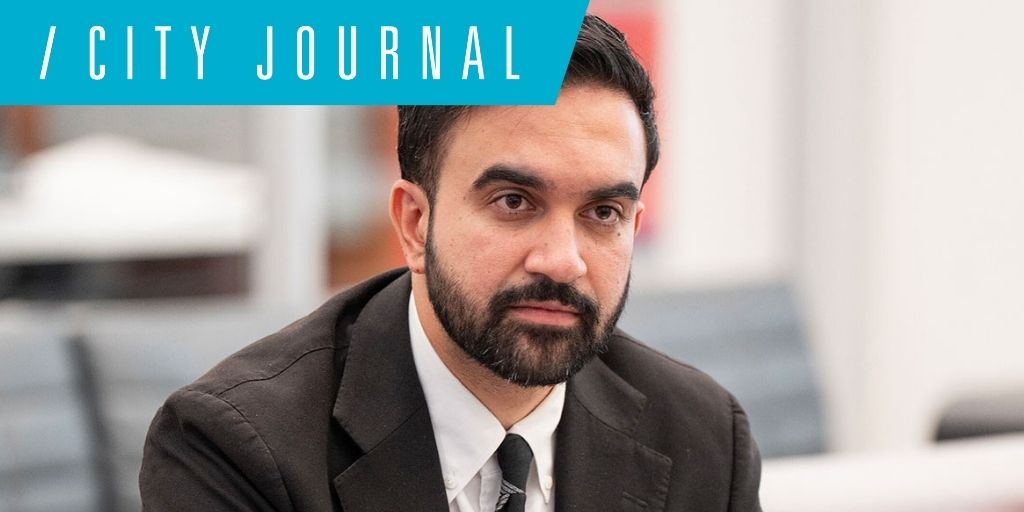
In a few weeks, New York City’s new mayor, self-described socialist Zohran Mamdani, will have to submit a draft budget. As senior fellow Nicole Gelinas explains in City Journal, Mamdani’s inaugural budget will be far more revealing about how he intends to govern than any campaign speech.
A common progressive myth is that New York has been constrained by decades of austerity, but Gelinas shows the opposite: the city’s budget has grown far faster than inflation since the 1970s, without delivering markedly better core services. That reality will pose a problem for Mamdani’s agenda of universal childcare, free buses, a new Department of Community Safety, and other broad entitlements, which would require roughly $9 billion a year in new taxes. Whether Mamdani demands those hikes immediately, phases in his promises, or quietly delays them through optimistic revenue forecasts will be the first real test of whether he will govern as a pragmatist or an ideologue.
Also in City Journal, legal policy fellow Jarrett Dieterle explains how former mayor Eric Adams missed a chance to delay Zohran Mamdani’s promised rent freeze. Adams sought to appoint new members to the city’s Rent Guidelines Board who could be removed only “for cause,” potentially postponing a freeze for a year or more—but two appointees declined to serve at the eleventh hour. The misstep clears the way for Mamdani’s rent freeze, a policy that will reduce housing supply, worsen maintenance, and drive up rents elsewhere.
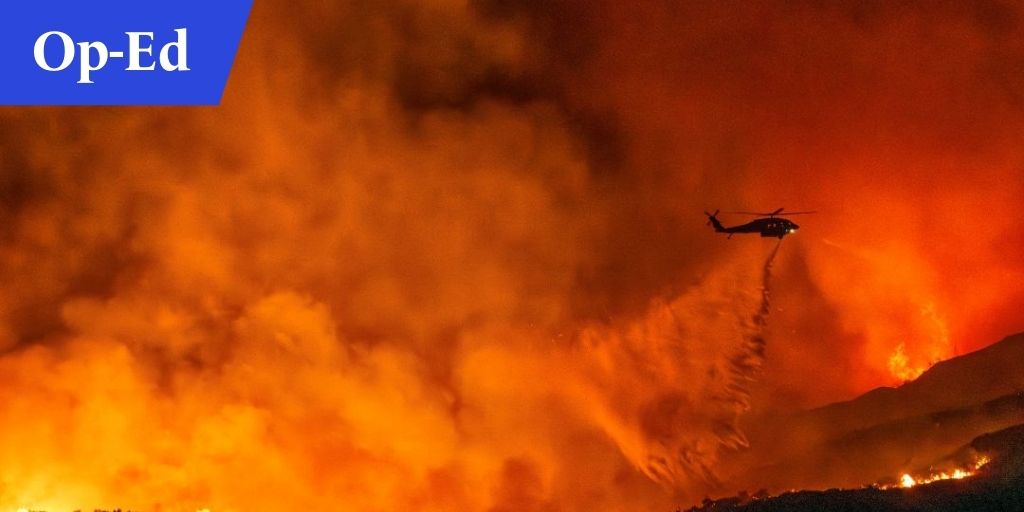
Unfortunately, the harmful consequences of progressive policies do not always prompt course correction. Senior fellow Shawn Regan explained this week how California’s environmental rules helped turn a manageable brush fire into Los Angeles’s worst urban wildfire catastrophe. One year after the Palisades Fire, evidence from lawsuits and public records shows that the state’s policy of “putting plants over people,” as one court filing characterized it, restricted normal firefighting tactics in areas with endangered plant populations. Yet a year later, California has done little to unwind these regulatory barriers, even as they continue to interfere with efforts to treat fire-prone forests.
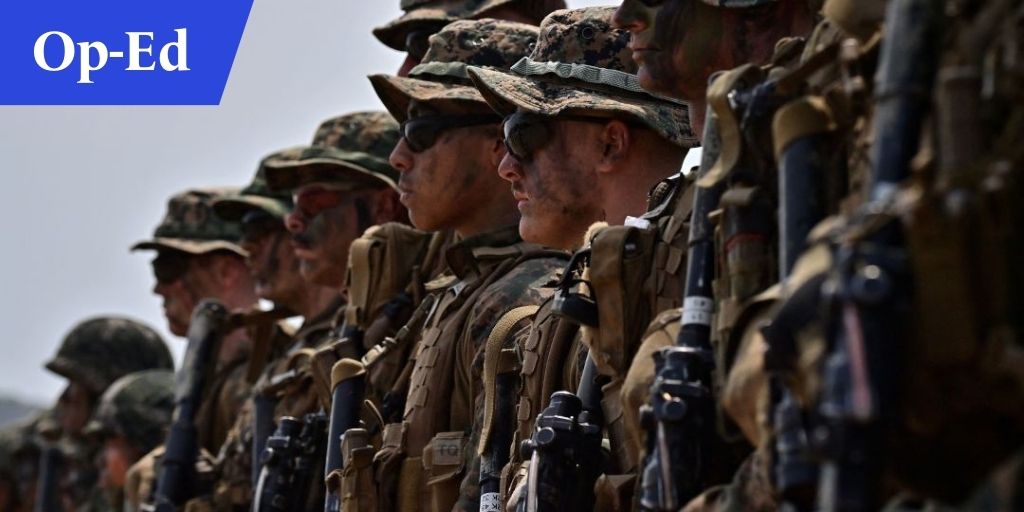
Finally, for the Wall Street Journal, adjunct fellow Kevin Wallsten and Mike Gallagher argue that the Biden administration’s DEI push contributed to a military recruitment crisis. After DEI mandates were embedded across the federal workforce, the Pentagon imposed ideological “stand-downs” to address unfounded fears about radicalization in the ranks and adopted race-conscious quotas in officer pipelines. The result was a sharp collapse in enlistment—especially among white men—along with a broader decline in public willingness to recommend military service. Early evidence suggests that the Trump administration’s reversal of these policies, and a renewed emphasis on standards and lethality, has begun to reverse the damage.
Continue reading for all these insights and more. Nick Saffran Senior Editor |
|
|
Universal Mental Health Screening in Schools: A Critical Assessment By Carolyn Gorman | Manhattan Institute
Universal mental health screening has expanded rapidly in American public schools, with nearly one-third of schools now reporting district-mandated programs. In a new Manhattan Institute issue brief, Carolyn D. Gorman argues that these screenings are ineffective, harmful, and ill-suited to the school environment, while offering model policy to regulate mental health screening practices.
Gorman finds no credible evidence that universal screening improves mental health or academic outcomes. High-quality reviews show no reduction in depression, anxiety, trauma, or suicide risk compared with no screening at all. Instead, universal programs generate extremely high false-positive rates—sometimes approaching 90%—leading many students to be unnecessarily flagged, referred, or diagnosed. Schools, moreover, are a poor substitute for clinical settings. School-based screening operates with weaker oversight, inconsistent parental consent, and limited capacity for effective follow-up care. Gorman concludes that states should prohibit universal mental health screening in K–12 schools and impose strict, transparent safeguards on any targeted, individual assessments. |
|
|
How DEI Caused a Military Recruitment Crisis
By Kevin Wallsten & Mike Gallagher | The Wall Street Journal
“DEI advocates often framed their initiatives as necessary to attract female and nonwhite recruits. Today’s evidence contradicts that self-serving view. Female recruitment is up from 16,725 in 2024 to 23,985 in 2025. Encouragement to enlist increased among blacks (9 points), Hispanics (14 points), and women under 55 (15 points) since 2023 in the Reagan National Defense Survey. …
“If the U.S. wants to sustain its all-volunteer force, we must rebuild trust in the military as a uniquely egalitarian institution in which standards are uniformly high, excellence is rewarded, and no one receives special treatment. And we must maintain this commitment across administrations.
“The conversation around DEI discrimination is long overdue. It isn’t about who wins MacArthur genius grants, but whether our military can fulfill its sacred duty.” |
|
|
One Year After the LA Fires, California Still Hasn’t Learned Its Lesson
By Shawn Regan | FoxNews.com
“One year ago this week, the Palisades Fire erupted in the hills above Los Angeles, killing a dozen people and destroying nearly 7,000 homes and businesses. It became L.A.’s worst urban wildfire catastrophe. Governor Gavin Newsom blamed climate change. But, evidence now emerging from lawsuits filed on behalf of victims tells a different story — one in which California’s own environmental policies helped transform a tiny, containable brush fire into an inferno. … “What’s holding California back? The same regulatory morass that hamstrings firefighting. Air quality rules restrict when prescribed burns can occur. Liability concerns deter private landowners from clearing brush. Environmental reviews delay projects for years. The very laws designed to protect California’s environment make it harder to protect Californians from environmental catastrophe.” |
|
|
Mamdani Meets Budget Reality
By Nicole Gelinas | City Journal
“Mamdani’s budget will be the first moment when his campaign narrative meets hard math. His election partly rode on a myth advanced in recent years by progressive economists and historians, including Kim Phillips-Fein: that, since its near-bankruptcy in the mid-1970s, New York City has governed itself under an “austerity” regime. …
“The best protection against the unknown is a resilient budget and a strong tax base. On that score, the best outcome for Mamdani—and for New Yorkers—is that his tax hikes never materialize. “Enacting them would weaken the city’s economy and revenue base while locking New York into new spending that it could not easily scale back in a downturn.” |
Eric Adams Just Blew His Chance to Delay Mamdani’s Rent Freeze
By Jarrett Dieterle | City Journal
“New York City mayor Zohran Mamdani rose to prominence on his campaign pledge to ‘freeze the rent’ on the city’s nearly 1 million rent-stabilized housing units. But in his last days in office, Eric Adams—a vocal opponent of Mamdani’s rent freeze—tried to create a bureaucratic roadblock to his successor’s plans. …
“The impact of this earlier-than-expected rent freeze will be substantial. Economic research is nearly unanimous in detailing the deleterious effects of rent control.
“For tenants living in stabilized units, it will mean run-down dwellings with more extensive deferred-maintenance backlogs. Tenants in non-stabilized units, meantime, can expect higher rents as competition gets fiercer for units not subject to the four-year freeze.” |
The Manhattan Institute is proud to serve as the Principal Institutional Partner for the Sun Valley Policy Forum’s 2026 Winter Summit in the iconic resort town of Sun Valley, Idaho on February 11, 2026. We are thrilled to join Joe Lonsdale and MI senior fellow Christopher F. Rufo for an evening on principled leadership and the future of American institutions in an AI-driven era.
Please click here to learn more about the Sun Valley Policy Forum and our partnership and to purchase tickets at a discounted rate for friends of the Manhattan Institute. |
|
|
“One question the new mayor will have to tackle is: What are we going to do with about 3,500 additional inmates when that day comes? New Yorkers want to know.” | |
|
For more information and media requests, please contact
communications@manhattan.institute.
Are you interested in supporting the Manhattan Institute’s public-interest research and journalism? As a 501(c)(3) nonprofit, donations in support of MI and its scholars’ work are fully tax-deductible as provided by law. |
|
|
Photo Credits: adamkaz/E+/Getty Images; Noah Berger/AP Photo; Anadolu/Getty Images; Wong Yu Liang/Getty Images; Catherine McQueen/Getty Images; Probal Rashid/LightRocket/Getty Images |
|
|
The Manhattan Institute works to keep America and its great cities prosperous, safe, and free. Manhattan Institute 52 Vanderbilt Ave. 3 floor New York, New York 10017
Want to change how you receive these emails?
Unsubscribe | Subscription Preferences
Copyright © 2025 Manhattan Institute, All rights reserved. |
|
|
|