When College Doesn’t Pay: A Guide for University Trustees

Photo by Jerry Holt/Star Tribune via Getty Images
Introduction
A recent Pew Research Center poll shows that seven in 10 Americans now believe that higher education is headed in the wrong direction—a view that has been increasing rapidly in recent years.[1] Although Republicans are more likely than Democrats to hold this view, a majority within both political parties now lacks confidence in colleges and universities.
This loss of public trust is not the serious headwind that schools are facing. College enrollment peaked in 2010 and has largely declined since, leading many colleges to struggle with student numbers.[2] Demographic shifts will likely make it even more difficult to fill freshman classes. Analysts believe that the number of high school graduates peaked in 2025 and will decline by 13% by 2041.[3]
Over the past several decades, the higher-education sector has enjoyed steady growth in demand and tuition revenues, fueled by generous government subsidies and a widespread belief among students that college is a “golden ticket” to the upper end of the income distribution. That era is now ending. Colleges and universities that continue business as usual are likely to struggle; some might fail altogether.
To help their institutions thrive in this challenging new era, trustees should focus on ensuring that their schools provide students with a return on investment (ROI)—that students finish college better off financially than they would have been otherwise. College is often a good financial investment but is often incorrectly assumed to be a surefire ticket to economic mobility. Too many college leaders have not grappled with the possibility that their own institutions might be harming, rather than helping, students.
The financial value of college is conditional, not universal. In many cases, attending college leaves students worse off financially than if they had not gone to school at all. The experiences of those students—who feel that they got a raw deal from higher education and often struggle with student debt—feed a widespread perception that college is not worth it.
Financial ROI should not be the only focus of higher education. Other aspects of the college experience—honing critical thinking skills, forming social connections, and becoming a thoughtful and engaged citizen—certainly matter as well and should be valued. But those nonmonetary benefits will ring hollow for students who leave college worse off financially. Trustees should understand that ROI is not sufficient for students at their institutions to succeed—but it is necessary.
Why Trustees Need to Care About ROI
Return on investment has not typically been the paramount consideration for college leadership. But trustees should evaluate their institutions’ ROI and try to make their institutions a better financial deal for students.
Prioritizing ROI is important for three main reasons. First, polling consistently shows that students want a financial return from college. Second, schools that fail to provide ROI are disproportionately losing enrollment, threatening their survival altogether. Third, governments are starting to care more about ROI, which could have consequences for any school that ignores it.
Students Want Financial Benefits from a College Education
A poll conducted in 2023 asked high school juniors and seniors their top reasons for wanting to obtain a college degree. Out of 11 options, the top four had to do with economic outcomes: “to be able to make more money,” “to be able to get a better job and/or promotion,”“to have more job security,” and “to get training for a specific career” were each chosen by about 80% of students.[4]
To be sure, high school and college students also cited other reasons for pursuing a college degree, including “a love of learning” and “to socialize and build a social network.” But opinion surveys consistently show that financial considerations are paramount in students’ minds.[5]
Troublingly for colleges and universities, many young Americans are no longer confident that higher education will yield the desired financial payoff. In a 2017 poll of graduating high school seniors, 87% agreed that “the future benefits of a college education outweigh the current financial costs.” But in a poll of seniors graduating in 2023, only 62% agreed that college was worth the costs.[6]
Other surveys tell a similar story of decreased confidence that college will pay off.[7] An NBC News poll conducted in October 2025 found that 63% of Americans believe that a four-year college degree is “not worth the cost, because people often graduate without specific job skills and with a large amount of debt to pay off.” Only 40% expressed the same sentiment in a similar poll in 2013.[8]
Student debt looms particularly large in the public’s mind. A 47% plurality believes that a four-year college degree is worth it only if the student doesn’t have to take on student loans. Only 22% think that college is worth it, even with loans.[9] Given that over 50% of college graduates take on loans at some point, these results pose an obvious challenge to continued confidence in higher education.[10]
Asked to rate universities’ performance on a variety of goals, respondents to a Pew Research Center poll gave schools poor marks on financial matters. Nearly 80% of respondents said that higher education is doing only a “fair” or “poor” job of “keeping tuition costs affordable,” while 55% gave schools the same rating on “preparing students for well-paying jobs.”[11]
Trustees should be responsive to these concerns about the perceived value of a college degree, for the sake of the students at their institutions and the institutions themselves. With ROI being the top concern for students, universities that cannot demonstrate a strong value proposition are in danger of losing enrollment. Indeed, that is exactly what has been happening over the past 15 years.
Low-Value Schools Are Losing Enrollment
The period right after the Great Recession marked “peak higher education,” as enrollment swelled and institutions found that they could hike tuition with few immediate consequences. But undergraduate enrollment has fallen nearly 20% since its peak in 2010,[12] and the decline is expected to continue with the “demographic cliff” of smaller graduating high school class sizes.[13] Falling enrollment leads to serious financial problems for institutions. Many schools have closed outright.[14]
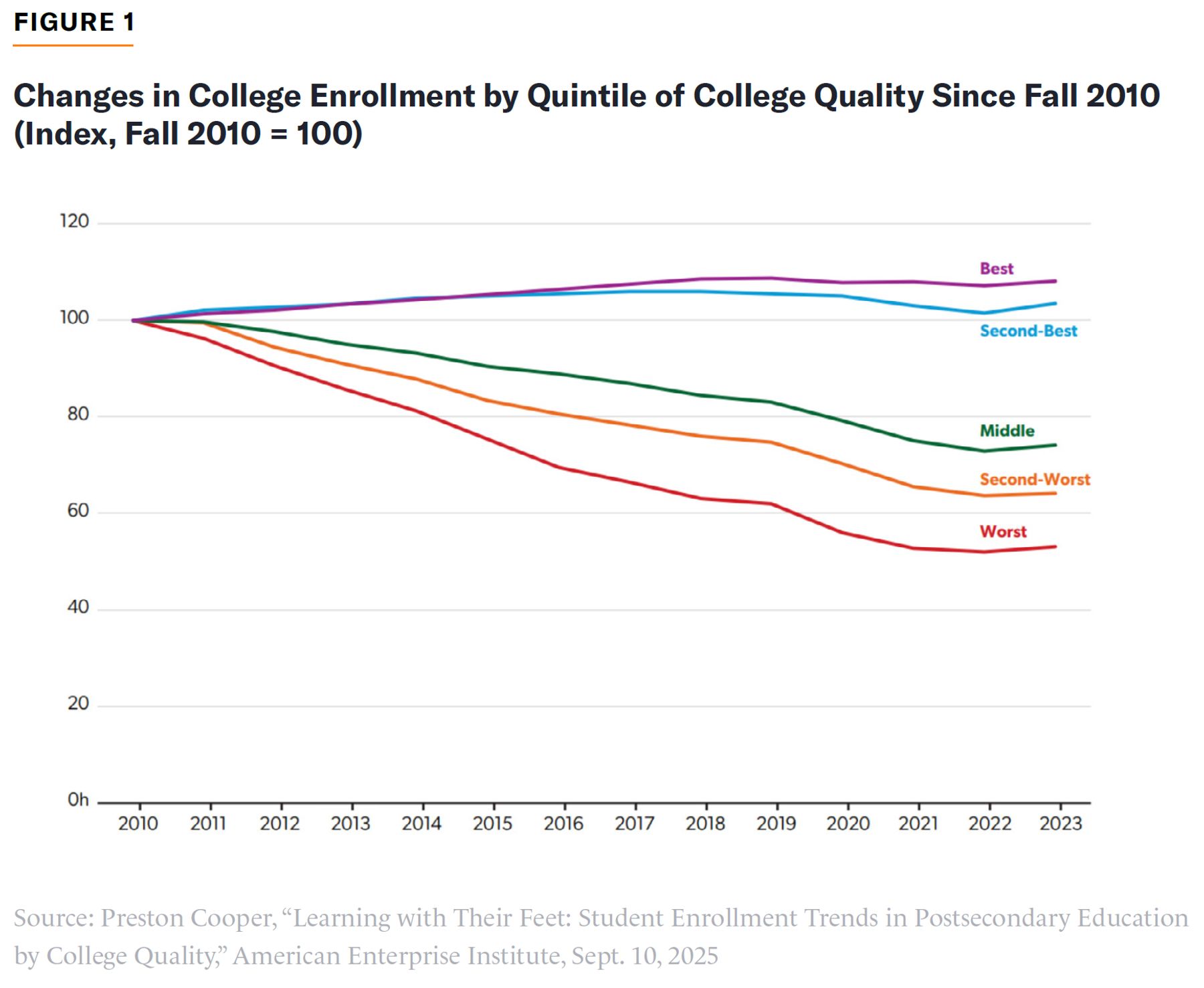
But the enrollment decline is not evenly distributed across colleges; nearly all of it has come from institutions with weaker student outcomes.
In a recent analysis for the American Enterprise Institute, I divided colleges into five groups based on their student outcomes, including loan repayment, graduation rates, and student earnings after enrollment.[15] The worst 20% of colleges by these measures have seen their enrollments drop by nearly half since 2010. By contrast, the highest-quality schools have held enrollments steady or even increased them (Figure 1).[16]
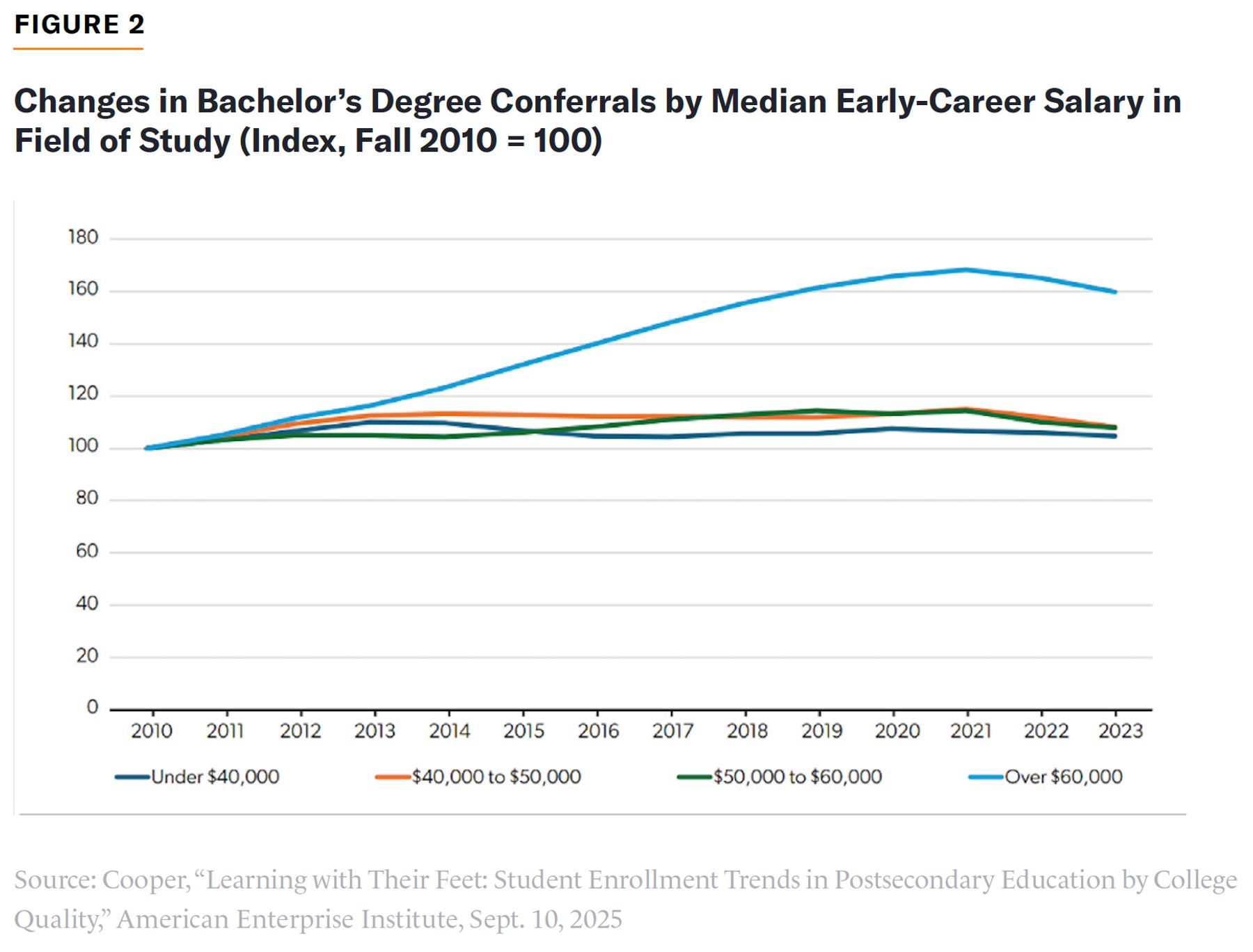
Student responsiveness to ROI is evident in the choice of major. College majors with high starting salaries—including engineering, nursing, and computer science—have surged in popularity. Indeed, the only majors that have seen significant growth in student interest since 2010 are those for which the median starting salary exceeds $60,000 (Figure 2). By contrast, majors with lower ROI—including English literature, history, and sociology—have seen student numbers dwindle.[17]
The revealed preference is clear: students are moving toward college majors where they can expect higher salaries.
Even within the same institution, outcomes can vary widely by major. At Tufts University, fine arts majors earn just $36,000 five years after graduation—comparable with people with only a high school diploma. But for Tufts computer science majors, average earnings after five years is $169,000.[18] Institution-level factors can also affect ROI: if Tufts were to hike its tuition across the board, that would reduce ROI of all its majors, all else being equal.
Colleges with a good value proposition are in a much stronger position to weather the coming demographic cliff. To ensure that their institutions are prepared, trustees should ensure that the school is offering degrees in the high-wage fields that students want to pursue. Otherwise, students may look elsewhere for postsecondary education.
Schools with Poor Outcomes Will Face Government Scrutiny
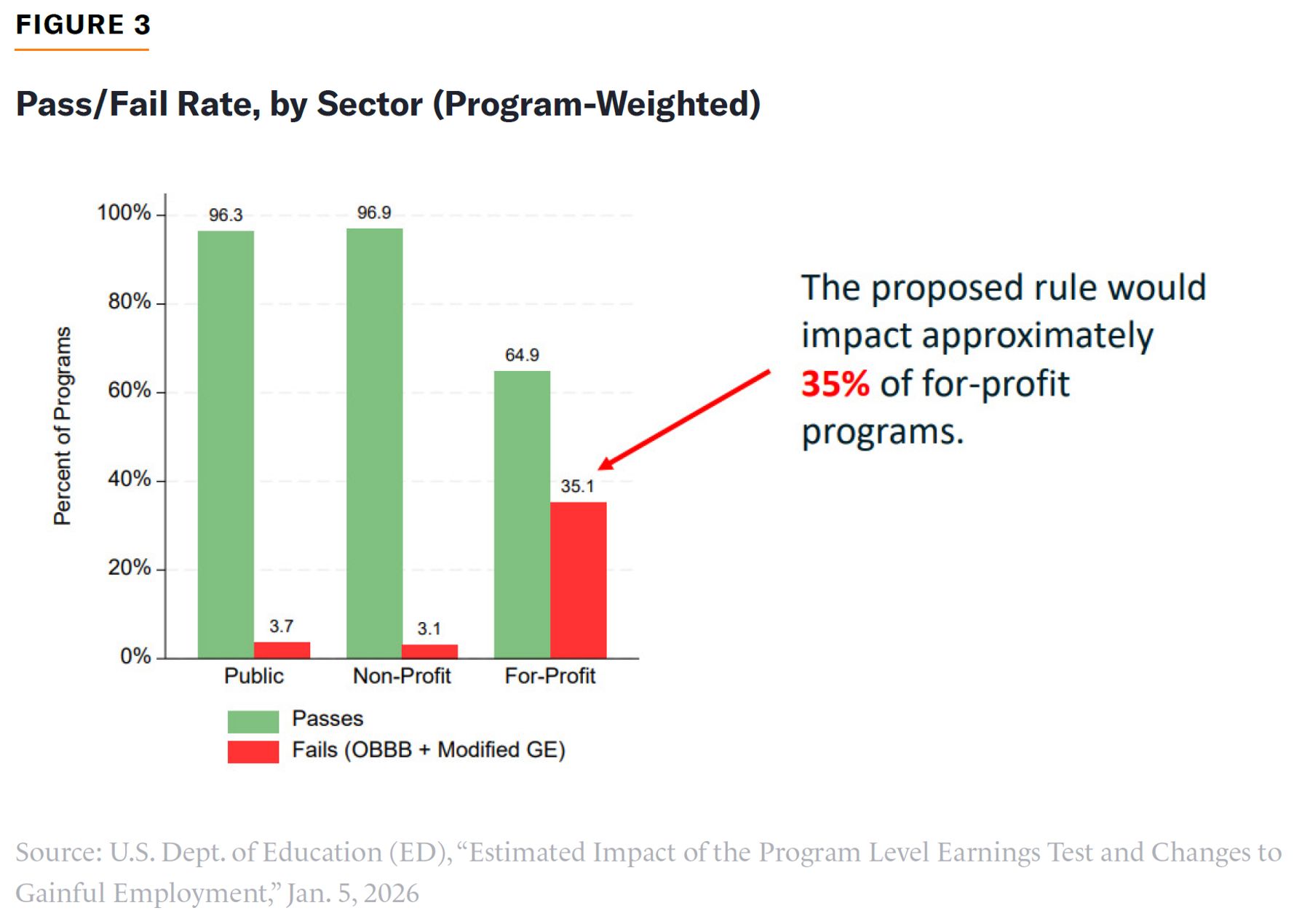
Schools with subpar outcomes may soon see the government take a greater interest in their failures. The One Big Beautiful Bill Act, which President Trump signed into law in July 2025, created a new system of accountability for colleges reliant on federal funding. For each degree program that a college offers, the median earnings of graduates must exceed the earnings of a comparable high school graduate (roughly $37,000 in 2024). For graduate degree programs, earnings must exceed those of comparable bachelor’s degree holders in the same field of study. If a degree program fails the test for at least two years, the school may no longer disburse federal loans to students enrolled in that program.[19]
The new accountability system is not particularly onerous—according to preliminary estimates from the Department of Education, only 6% of programs are in danger of failure, with for-profit colleges being most affected[20]—but does represent a new source of financial risk for schools (Figure 3). The embarrassment from even a single program failing to meet this requirement and thus losing access to federal loans may also call into question the institution’s value proposition more broadly.
Colleges will soon face consequences if students cannot afford to pay their federal loans. According to a long-standing rule, if more than 30% of a college’s former students default on their debts, the institution can lose access to federal aid entirely.[21]
Since 2020, colleges have had a reprieve from this, thanks to the student loan payment pause (borrowers cannot default on payments that are not due). But now that loan payments have resumed, many colleges run the risk of losing access to aid. As of February 2026, more than 1,000 schools had a student loan nonpayment rate high enough to put the institution in the danger zone.[22]
State governments also care about ROI. Many states have undertaken reforms aimed at boosting the economic value of their public colleges. In Florida, a portion of universities’ state funding is based on the share of graduates who earn over $40,000.[23] In Texas, a new funding formula for community colleges rewards schools that award credentials in high-wage fields.[24] Utah recently passed a law requiring colleges to reinvest part of their budgets in higher-value programs.[25] Indiana has directed schools to eliminate or consolidate hundreds of degree programs with low enrollments, especially those in lower-wage fields.[26]
Institutions that fail to grapple with ROI on their own might soon see the government do it for them. That is reason enough for trustees to be proactive in demanding an honest look at the ROI of their institutions.
Defining and Measuring ROI
Not every student who earns a college degree will become a millionaire. But colleges should strive to fulfill the “educational Hippocratic Oath”: schools should not leave students worse off than they would have been had they not gone to college.
That sounds simple. But colleges have run afoul of this standard in many ways. One of the most common is noncompletion. A student who invests time and money pursuing a degree but drops out before finishing is unlikely to see any financial benefit from the time spent pursuing that degree. College dropouts who take on student debt report doing significantly worse financially than people who never went to college at all. Dropouts are less likely than graduates to be homeowners and more likely to rely on food stamps, and dropouts almost universally say that they have regrets about their education.[27] Given that just 61% of college freshmen complete a degree within six years, the risk of dropout is severe.[28]
Even those who do finish college may not be better off for doing so. A quarter of bachelor’s degree holders earn near or below the typical salary for high school graduates, according to researchers at the New York Federal Reserve. Moreover, exorbitant tuition costs can sharply reduce the ROI of college, even for graduates who significantly outearn the high school wage.[29]
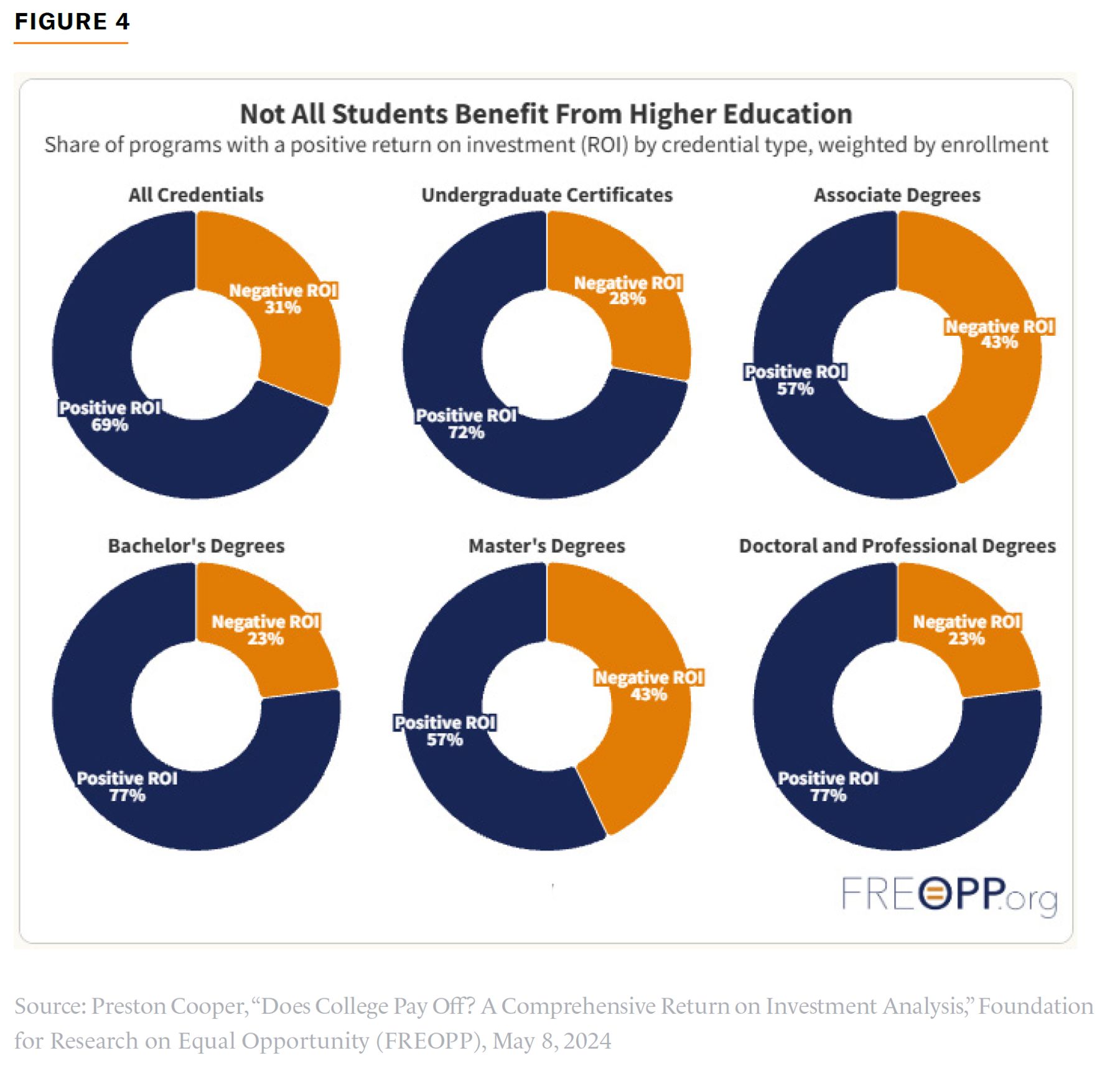
In an analysis for the Foundation for Research on Equal Opportunity (FREOPP), I combined all these factors—noncompletion rates, tuition costs, and earnings—to produce ROI estimates for more than 50,000 degree and certificate programs at thousands of colleges nationwide.[30]
The good news is that college usually pays off. The bad news is that 23% of four-year degree programs have negative ROI: students who enroll in those programs generally cannot expect that their earnings will rise enough to offset the cost of tuition and the risk of dropping out before finishing their degree. Among two-year degrees and master’s degrees, over 40% of programs have negative ROI.[31] Higher education is still worth it, on average, but the exceptions are large enough to warrant serious concern (Figure 4).
The data clearly show that ROI varies by field of study. Almost all large colleges and universities have some programs that offer excellent value—and some that need significant improvement. This means that most schools have something to be proud of, but most also have work to do.
Holding field of study constant shows that certain schools do worse across the board. A school with a low graduation rate will struggle to generate strong ROI for the average student, even if those who manage to finish are better off. Some schools offer decent educational programs but charge excessive tuition, making it difficult for graduates to “earn back” the cost of their education.
The FREOPP data for individual schools and degree programs are online and available for anyone to use.[32] Trustees should ask school leaders to study the data closely. A comprehensive ROI self-study will help college leaders fully understand the value of the different pathways that students take through their institutions and can leverage information not available to the general public.
The First Step to Improving ROI: Measurement
College leaders who want to know more about how their students fare after leaving campus are in luck. Over the past 10 years, the availability of data on student earnings after enrollment has grown astronomically. At the federal level, the Education Department publishes the College Scorecard, which provides the median earnings of students who received federal financial aid, broken down by college major, for up to five years after graduation.[33] Additionally, some university systems participate in the Postsecondary Employment Outcomes data set from the U.S. Census Bureau, which provides earnings data for up to 10 years after graduation and includes students who did not receive federal financial aid.[34] Many state governments publish excellent data sets on the earnings of college graduates (notably, Texas, Virginia, and North Carolina).
But a comprehensive understanding of ROI requires more than simply looking at the raw earnings of former students. Earnings can mean different things in different contexts. Median earnings of $50,000 per year is a great outcome for a two-year degree at a community college but abysmal for a law school. That is because community colleges and law schools enroll different types of students with very different earnings potential (not to mention that law school is an order of magnitude more expensive). For this reason, it is important for colleges to benchmark the earnings of their students against an appropriate comparison group.
For undergraduate programs, a standard benchmark is the typical earnings of high school graduates who are comparable with the types of students that the program enrolls. It is straightforward to use the American Community Survey to calculate the earnings of high school graduates in the same geographic area as a given institution with a similar demographic and age profile as its students.
This comparison is not perfect because college students differ from high school graduates in less observable ways, such as higher academic aptitude. Factors such as aptitude correlate with college attendance but also with future earnings potential. The upshot is that the true benchmark is perhaps 10%–20% higher than the simple high school graduate wage.[35]
ROI analyses must account for the costs and risks of college. Analysts should obviously consider direct costs to students: spending on tuition, fees, textbooks, and equipment. But equally important is opportunity cost: lost wages while enrolled in school. Many students do not work at all while in college, and those who do work probably have part-time jobs that pay lower wages than they could earn with full participation in the labor force. Time out of the labor force is also time not spent gaining experience and building earnings potential—which can cost students down the road.[36]
These analyses cannot look only at those who graduated. They also have to consider what happens to dropouts—how much they earn and how much they bear in direct and indirect costs. The “expected value” of college is almost always lower when incorporating the negative outcomes of noncompletion,[37] and thus a comprehensive and honest look at ROI must account for this risk.
Naturally, colleges will seek to highlight data points that make their ROI look better. For this reason, trustees need to be explicit in their request for ROI analyses that consider all these factors: benchmark earnings, direct costs, noncompletion costs, and dropout risk.
For most schools, ROI will be positive for the average student. But averages are misleading. ROI estimates should look at the full distribution of outcomes, not just the median or the average. Trustees should ask for estimates of ROI for each program and for different groups of students. The objective of the ROI analysis is to identify the places where the institution is failing the educational Hippocratic Oath, so that trustees can concentrate their energies on fixing those problems.
Strategies to Improve ROI
Armed with this information about the ROI of their institutions, trustees should set about the task of improving it. The best way to raise ROI will not be the same for every school. Some schools may have stellar programs but exorbitant tuition; other institutions might be affordable but have poor graduation rates. There is no one-size-fits-all solution, but the strategies outlined below can help trustees generate ideas applicable to their own institutions.
Overall, weak ROI is driven by at least one of three factors: low earnings after enrollment, high costs, and poor completion rates. In the following section, I explore strategies to tackle each of these factors.
Improving Students’ Earnings
Some institutions argue that they have no control over their students’ future earnings. This is patently untrue. Although many factors can affect how much students earn after leaving school, some of the factors are within the institution’s control. Colleges can take steps to give their alumni a better shot at reaching a sustainable middle-class salary.
Perhaps the most important correlate of earnings after graduation is field of study: some college majors have a much greater payoff than others. According to the American Community Survey, computer science majors have a median starting salary of $87,000, nearly twice that of anthropology majors, who earn just $45,000 (Figure 5).[38] Students who switch majors can realize enormous gains. One causal analysis found that switching to economics from a second-choice major boosted starting salaries by $22,000.[39]
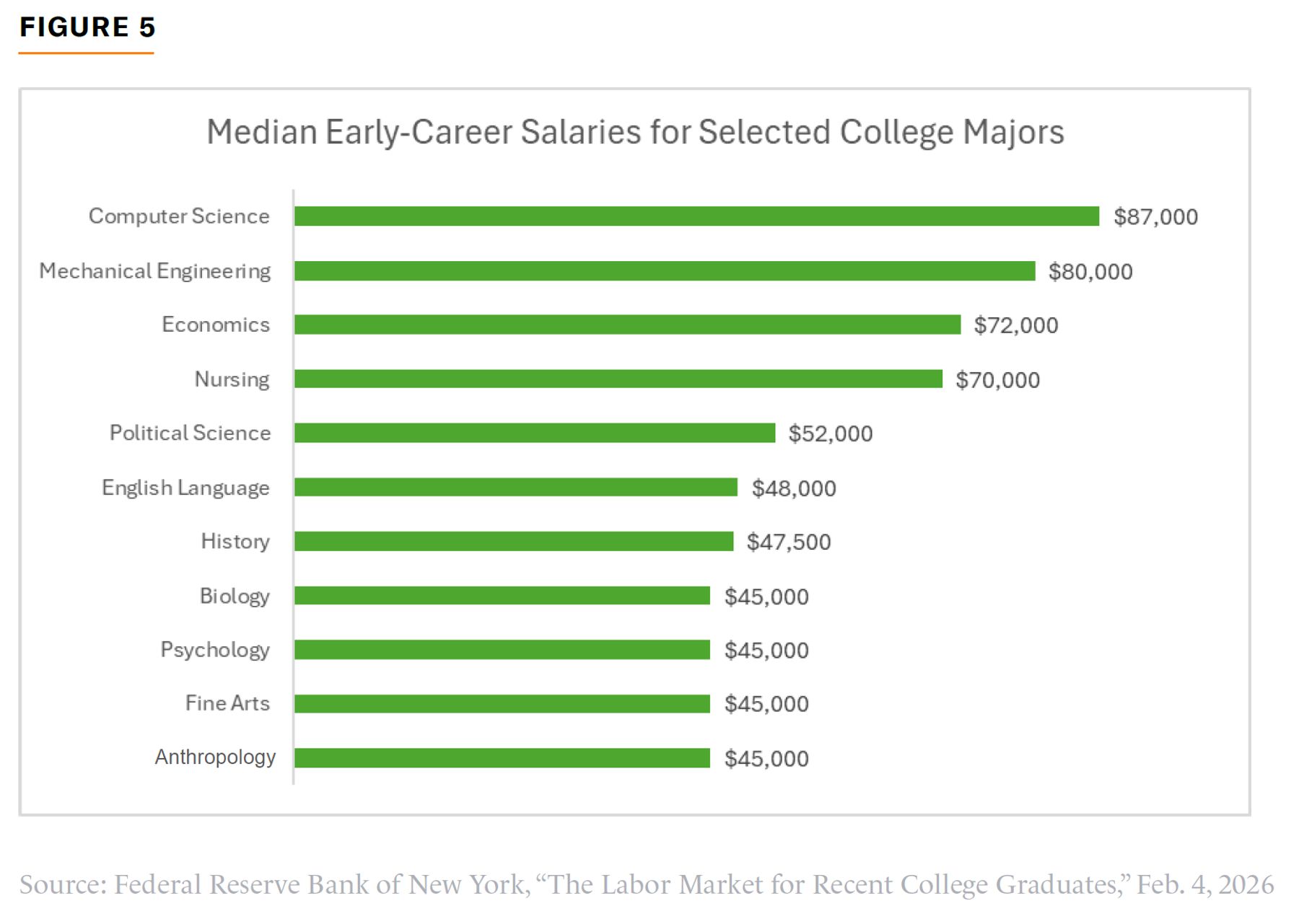
One strategy to improve ROI is to expand high-ROI majors wherever possible. Students are flocking to high-wage fields of study,[40] but some colleges impose restrictions on how many students can declare majors in high-earning fields like mechanical engineering. While it is important to ensure that students admitted to difficult majors are prepared to succeed in their classes, sometimes these restrictions go overboard and can force students into easier majors with far worse job opportunities.[41] Trustees should ensure that restrictions on high-ROI majors are removed unless they are truly necessary to keep out unqualified students.
There should also be an effort to improve outcomes for low-ROI majors. After identifying low-performing majors through an ROI self-study, trustees should require the associated academic departments to create a five-year improvement plan. It may be difficult to make an English literature major pay off, but there are things that colleges can do.
College leaders should think about in-demand occupations that could use the skills taught in lower-ROI majors and consider additions to the curriculum to better align with the labor market. English majors, for example, may benefit from courses in marketing. The Burning Glass Institute found that liberal arts majors with project management skills enjoy a 30% wage premium over liberal arts majors without these skills.[42] One model comes from Bryant University, which requires students in the College of Arts and Sciences to complete a minor in business.[43]
Career services are an afterthought for too many liberal arts–oriented colleges. But investing in strong career services can pay dividends. Students who complete an internship during college are far less likely to be underemployed after graduation, even for traditionally lower-earning majors.[44] Most employers say that they are more likely to hire college graduates with internship or work experience.[45] Schools should invest in career services and press students to engage with them. Schools should also consider hiring not only career academics but faculty with recent experience in relevant industries who can serve as a bridge to the workforce.
Institutions often close programs with low enrollment for budgetary reasons. Weak ROI should be considered a factor when considering closing a program. Schools that close low-performing programs sometimes see a boost in average outcomes, as they can redirect resources to creating or expanding programs with a stronger track record.[46]
Trustees should keep in mind that closing a program is not a verdict on the inherent value of that field of study; it might simply reflect supply and demand—sometimes, too many graduates are chasing too few jobs in a particular field. The case for closing a program might be especially strong if the program is duplicative with others in the area. Not every college needs to offer every major. Many institutions will find that they can thrive by specializing.
Reducing Costs
Public anxiety about the cost of college is well-known, with affordability being the number-one public concern about the state of higher education.[47] Net tuition prices after financial aid nearly doubled between 1990 and 2020, after accounting for inflation (Figure 6). The typical student’s family now pays about $9,400 per year; at private colleges, the annual tuition bill after financial aid is close to $20,000.[48]
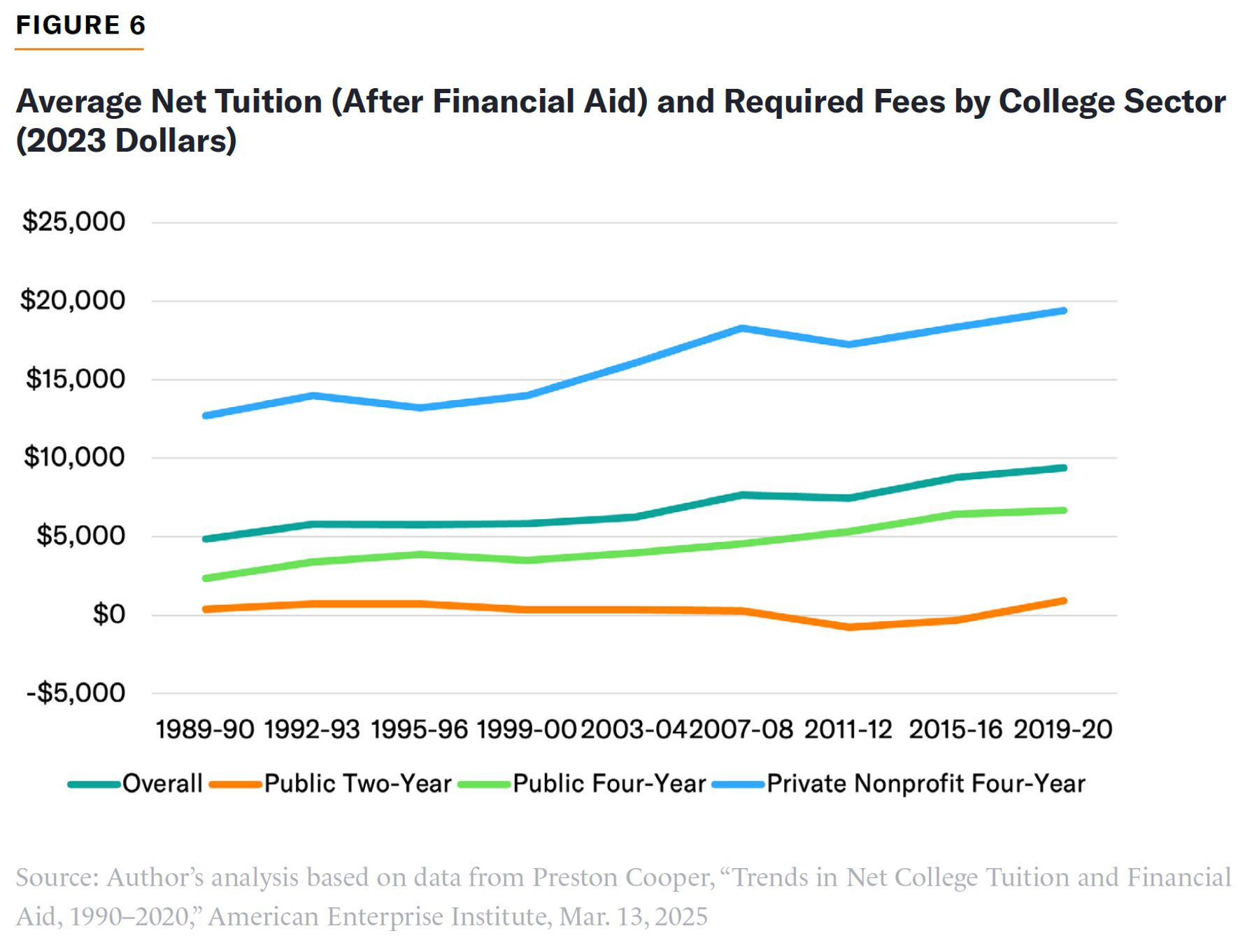
Higher tuition costs reduce the expected value of college—it is harder to “earn back” the cost of your degree when that cost is higher.[49] But cost also turns students away from college to begin with, particularly if they would need to secure loans to cover their tuition bill.[50]
According to economist Howard Bowen’s “revenue theory of costs,” nonprofit organizations like colleges have weaker incentives to minimize costs. Because colleges do not make profits in the traditional sense, there is no residual claimant with an incentive to drive costs down. As a result, additional revenues often lead to additional expenditures, rather than price relief for students.[51] Greater available revenues mean greater costs. By voluntarily constraining revenues, trustees can provide an impetus for their institutions to control costs.
One of the first higher-education leaders to figure this out was former Purdue president Mitch Daniels. When Daniels assumed office in 2012, he instituted a freeze on tuition and required fees—a policy now in its 14th consecutive year.[52] The university was forced to find cost efficiencies rather than simply rely on tuition hikes to balance the books.[53] For students, the benefits were profound: the share of Purdue undergraduates who resorted to borrowing through federal loan programs dropped from 39% to 24% during Daniels’s tenure.[54]
Many other universities have since adopted tuition freezes—notably, the public university systems in Florida.[55] The Sunshine State now has the lowest tuition in the country[56]—and the least “administrative bloat,” as measured by the ratio of noninstructional staff to students.[57] As Purdue and Florida show, the simplest way to keep costs down is to stop them from going up.
But tuition freezes are not the only answer. For students, one popular money-saving college hack is to start at a community college, complete some credits, and then transfer to a four-year school. Unfortunately, this can be risky: students who transfer lose nearly half their credits, on average.[58] Partially as a result, degree-completion rates for community colleges are abysmal.[59]
Trustees at four-year colleges have the power to address this problem and improve college affordability. Four-year schools should seek to enter into articulation agreements with local community colleges to ensure the smooth transfer of credits. Universities are often resistant to such moves because more students starting at a community college means that the four-year school collects fewer years of tuition. But trustees should remember that sometimes the alternative is not having those students enroll (and pay tuition) at the four-year school at all.
One promising model is the partnership between Northern Virginia Community College (NOVA) and George Mason University (GMU), which sets out clear transfer pathways between the schools and guarantees admission to GMU for NOVA students who maintain a minimum GPA.[60] GMU’s enrollment has grown 12% since the partnership launched in 2018.[61] Trustees could seek to replicate such models at their own institutions. They should also pursue policies that award credit for previous learning for workplace certifications and on-the-job experience.
Improving transfer pathways will help colleges tackle the third main driver of low college ROI: poor completion rates.
Improving Completion
Among students who started college in fall 2019, just 61% completed a degree or certificate within six years (Figure 7).[62] Students who do not finish college usually receive little financial benefit from their time in school, especially if they do not complete their junior or senior year and thus do not take more advanced major-specific classes that make the bachelor’s degree most valuable in the labor market.
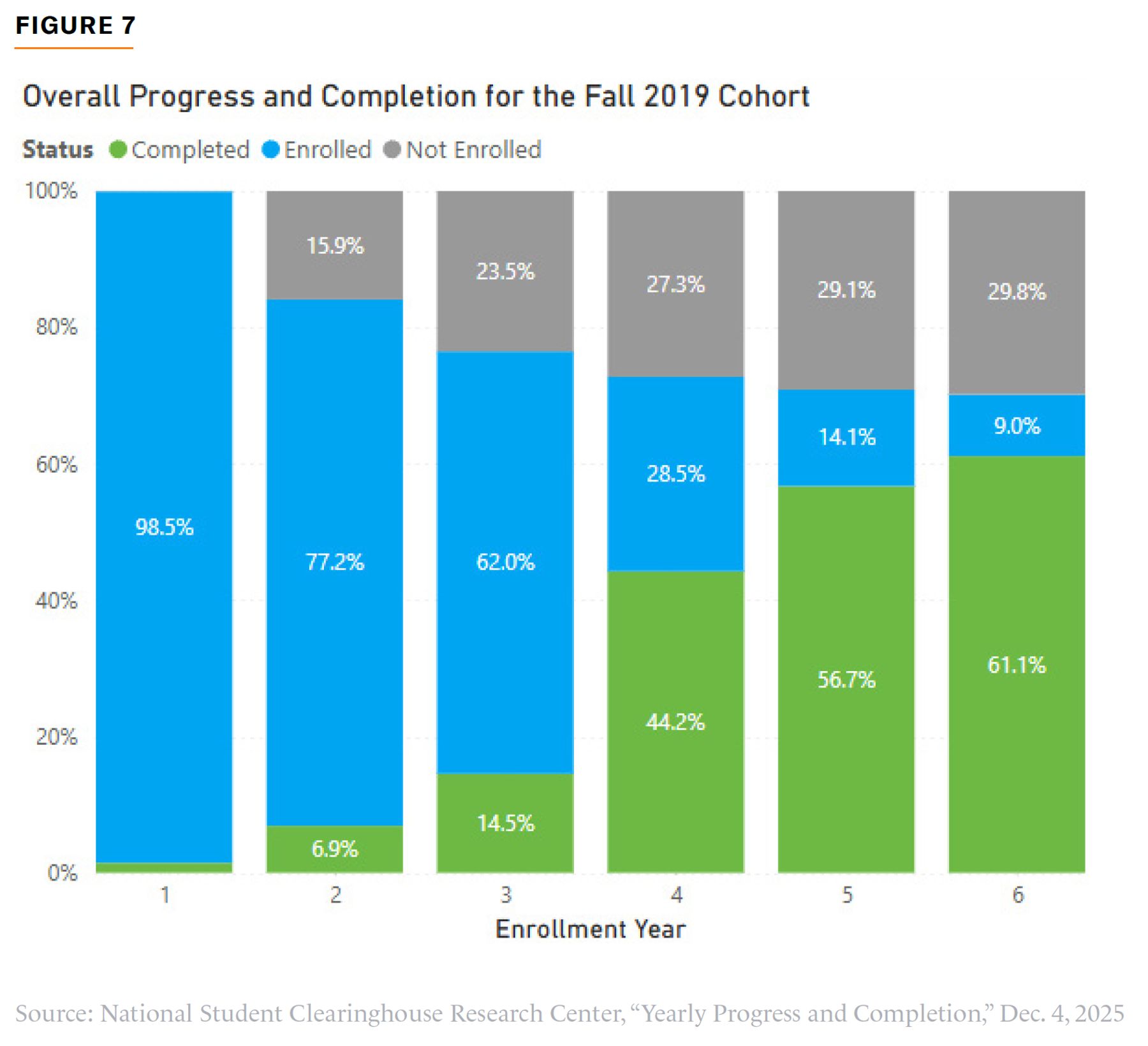
Raising completion rates can therefore improve the expected value of college, making it less likely that students will end up worse off for having pursued higher education. Fortunately, there are proven strategies to improve completion.
Georgia State University (GSU), for example, has managed to raise its graduation rate by 20 percentage points over the past two decades.[63] There was no silver bullet for GSU but rather a slew of smaller initiatives. The school used predictive analytics to counsel students out of difficult course arrangements (e.g., do not take multivariable calculus and organic chemistry in the same semester, unless you don’t like sleep). The school also used discretionary “microgrants” to help struggling students with unexpected expenses.[64]
Trustees can follow GSU’s lead by directing their own institutions to study dropout patterns and identify “choke points” where large numbers of students leave school. These can be unexpected, such as the deadline to submit one’s state-mandated vaccination report. Institutions should design interventions to help students through those choke points. This can be a good financial investment for universities in the long run: often, a modest intervention today can keep students in school (and paying tuition) for longer.
Trustees should not allow institutions to improve graduation rates by lowering standards. Unfortunately, many institutions are choosing this path. Researchers have found that most of the increase in graduation rates since the 1990s is due to grade inflation.[65] While lowering standards may provide a temporary boost in student outcomes, long-term grade inflation risks devaluing degrees from that institution.[66] Eventually, employers will get wise—and may no longer pay a premium to hire that institution’s graduates.
By contrast, trustees can improve graduation rates by ensuring merit in admissions. Colleges should not admit students who are unprepared to finish college. A strong correlation exists between academic qualifications and college completion rates; students with a “C” average in high school who enroll in college have only an 11% chance of earning a bachelor’s degree.[67] Universities can raise their graduation rates—and improve their students’ ROI—by ensuring that they admit only applicants who are prepared to benefit from higher education.
Conclusion
Higher education can no longer rely on the business-as-usual approach and expect students—and their tuition dollars—to continue rolling in. Students and the general public are plainly concerned about higher-education ROI. Schools without a strong value proposition are losing enrollment in droves. And governments are considering ROI when deciding how much funding to give institutions—or indeed, whether to fund them at all.
College is still worth it on average. But the exceptions are large enough that they risk swallowing the whole. Trustees cannot be complacent; instead, they must actively and continually consider how to improve their institutions’ ROI. That starts with honestly measuring their institution’s performance on economic outcomes. Next, they have to figure out what is driving a low ROI at their specific institution. Finally, they need to formulate a plan that involves some combination of improving students’ earning potential, lowering costs, and helping a greater share of students cross the finish line.
The challenges facing higher education are daunting. But schools that succeed at the basic task of ensuring value for students will find that they can survive, if not thrive, in this new era.
Endnotes
Are you interested in supporting the Manhattan Institute’s public-interest research and journalism? As a 501(c)(3) nonprofit, donations in support of MI and its scholars’ work are fully tax-deductible as provided by law (EIN #13-2912529).