Good morning:
This week, legal policy fellow Jarrett Dieterle sketches out today’s “forgotten man” in National Review. These men and women—working class urban residents who aren’t aligned with Big Labor or rural America—are often overlooked. Dieterle makes the case that the political left proposes policies intended to benefit these workers, but misunderstands their actual preferences. That leaves an opening for the political right to make them part of their coalition.
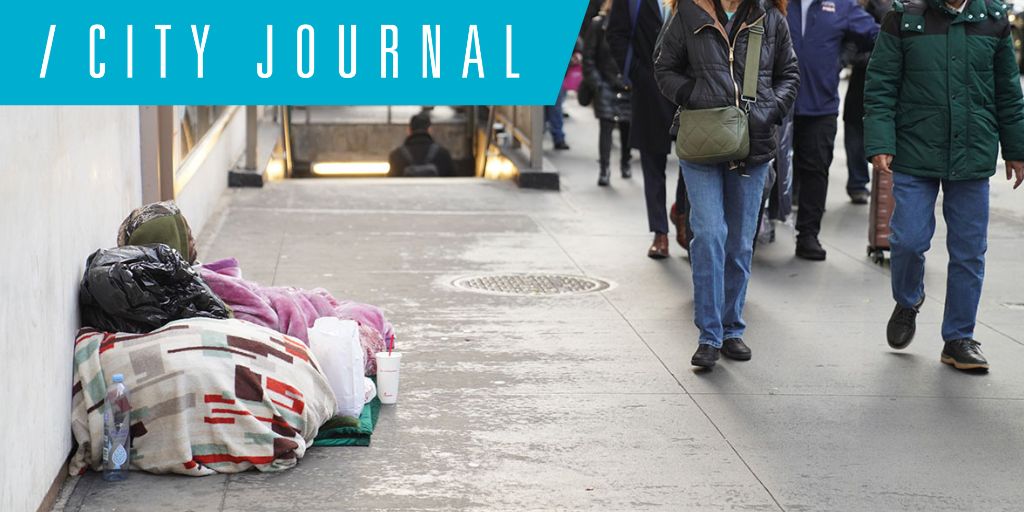
One thing urban residents of all stripes should expect from their government is streets free from vagrants and the debris and drug paraphernalia that accompany homelessness. In City Journal, fellow Heather Mac Donald takes down a recent New York Times account of homelessness in New York City and lays out the myths that overly permissive homelessness policy relies on. These fictions are used to justify keeping homeless city residents—as well as the rest of us—in unsafe and deleterious conditions.
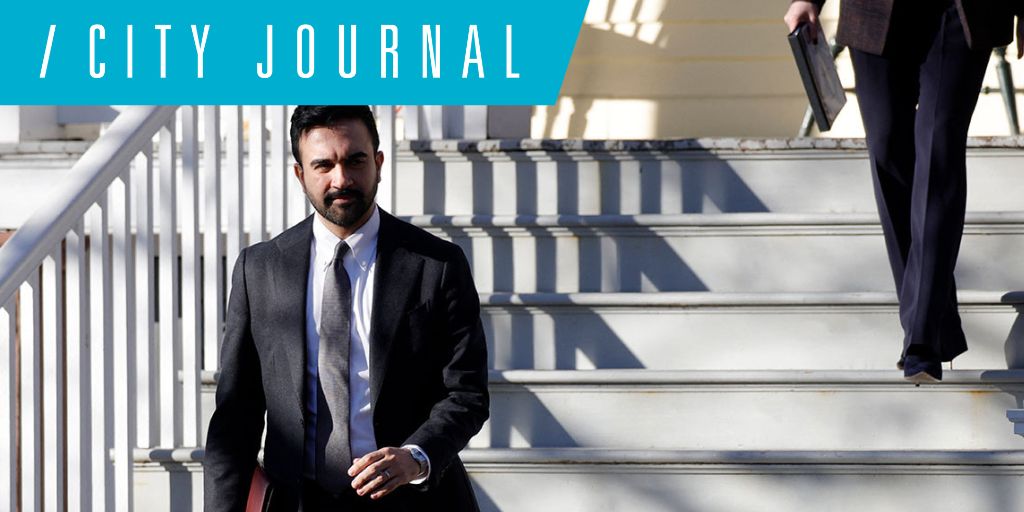
Also in City Journal, fellow Rafael A. Mangual explains NYC Mayor Zohran Mamdani’s buzzy new announcement about replacing some police officers with trained mental-health professionals when responding to mental-health crisis calls. “The mayor’s allies are doing their best to play up the announcement,” Mangual writes, but the details of the announcement are still a world away from the radical change the new mayor promised.
Also failing to live up to their promises are mental health professionals in schools across the country. In The Daily Wire, fellow Carolyn Gorman writes that schools are flush with mental health programs and counselors. Instead of helping students, all that focus on psychological issues and emotional support is redirecting class time away from learning and resulting in overdiagnoses. Schools should not use their limited time with students in this counterproductive way, Gorman writes.
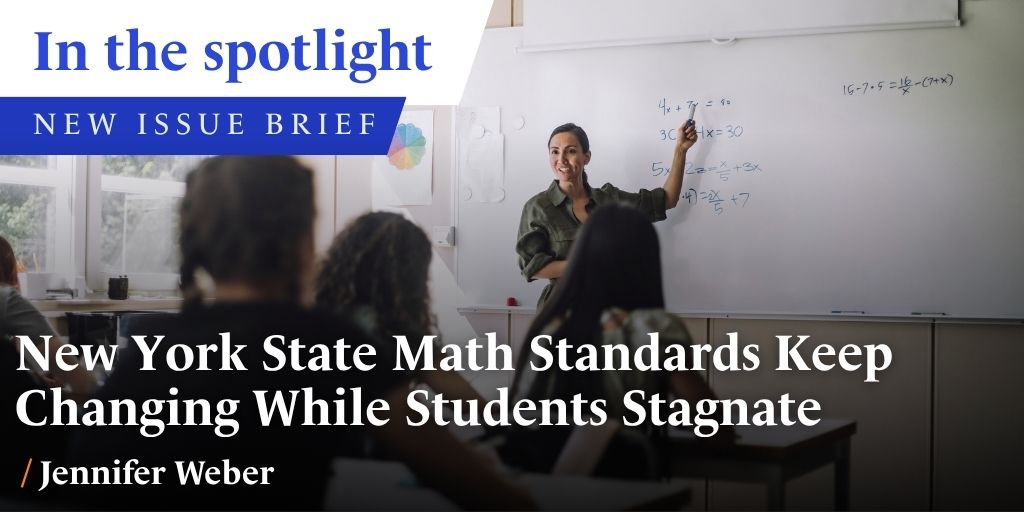
Perhaps this focus on non-academic issues is one of the reasons states are seeing such poor performance in reading and mathematics, even amid efforts to revise education standards. A new paper by fellow Jennifer Weber looks at New York State’s repeated revisions of math standards and finds that, despite the changes, students continue to stagnate and underperform. The system clearly has failed to ensure that students develop foundational mathematical knowledge before demands on them increase.
Continue reading for all these insights and more, Kelsey Bloom Editorial Director |
|
|
New York State Math Standards Keep Changing While Students Stagnate
By Jennifer Weber | Manhattan Institute | Photo by Maskot/Getty Images
In a new Manhattan Institute issue brief, Jennifer Weber argues that repeated revisions to New York State’s math standards have failed to improve student achievement. Over the past two decades, the state has rewritten its standards three times, yet math outcomes remain weak.
Results from the most recent National Assessment of Educational Progress show that New York ranks well below the national average in math proficiency. Only about 37% of fourth-grade students reached proficiency in 2024, and eighth-grade scores have continued to decline since 2019. Large achievement gaps also persist: black, Hispanic, and economically disadvantaged students, as well as students with disabilities, continue to perform far below their peers. Weber argues that the focus on repeatedly revising standards misses the real issue. Standards determine what students should learn, not whether they will actually learn it. Improving math achievement requires better classroom instruction using evidence-based approaches that build conceptual understanding and problem-solving skills.
Instead of launching yet another round of standards revisions, Weber urges policymakers to focus on improving instruction and ensuring that struggling students receive effective support. |
|
|
The Forgotten Urban Worker
By Jarrett Dieterle | National Review | Photo by Spencer Platt/Getty Images
“Today, when politicians on the left and right are falling all over themselves to align with blue-collar workers — and specifically with Big Labor — a new, urbanized version of a forgotten working class has emerged. ...
“The political left has offered mostly 20th-century solutions to the problems faced by the 21st-century urban forgotten man. It has sought to convert gig workers and other freelancers into full-scale, unionized, 9-to-5 employees earning wages ... even though such policies often cause as much harm as they help and erode the very flexibility these workers most desire. ...
“In the coming years, ... politicians will preach, labor leaders will posture, and business representatives will threaten. But beyond the political spotlight will be the DoorDash deliverer, the career waiter, and the immigrant interpreter. They will pay, pray, live, and largely be forgotten. Conservative political leaders should pay closer attention to these urban-dwelling Americans and learn how to speak for them.” |
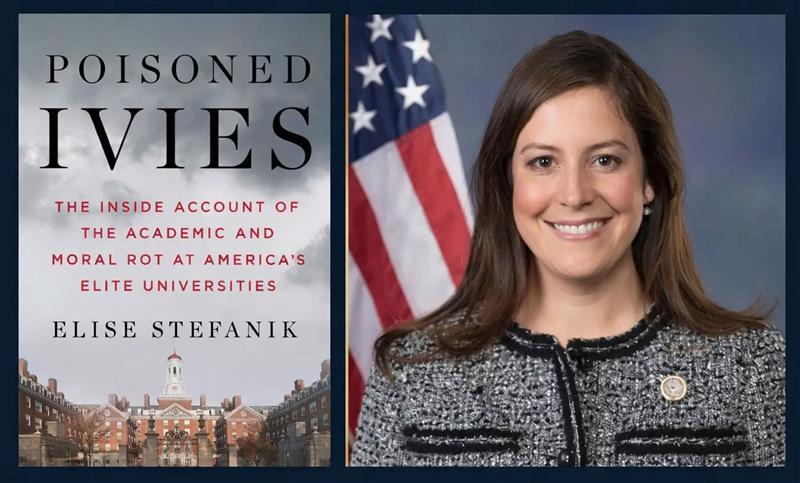
It’s Time for Schools to Get Out of the Mental Health Business
By Carolyn D. Gorman | The Daily Wire | Photo by Maskot/Getty Images
“Today, nearly all public schools—97 percent—offer some form of mental health services, like counseling and talk therapy, universal screening, wellness programming, referrals, or telehealth. The number of school counselors and school psychologists is more than four times the number of clinical psychologists and psychiatrists in a given community. ...
“None of this has produced results. Decades of evaluations show school-based mental health awareness training, mental health screening, universal and targeted prevention programs, and even school-based health centers have not improved outcomes relative to the absence of these services. ...
“But school-based mental health has not simply had a poor return on investment. It also seriously undermines accountability for all parties. By confusing roles and responsibilities across the education and mental health systems, these programs give everyone involved—parents and teachers, students and school administrators—an excuse to point the finger elsewhere when grades, behavior, or student safety falls short of goals.” |
|
|
The Alternative Reality of Homelessness Policy
By Heather Mac Donald | City Journal | Photo by Zhang Fengguo/Xinhua via Getty Images “The abomination that is urban ‘homelessness’ policy rests on the reinforcement of certain unspoken fictions. ... “The premise of nearly all homeless programs is that the homeless are helpless victims of economic circumstances. Invisible forces—capitalism, inequality, poverty, racism—have pushed them onto the streets; government’s failure to help them get off the streets keeps them there. ...
“Mainstream coverage of ‘homelessness’ is largely silent about drugs. One might think these street colonists were an adult version of a Scout troop, simply preferring life outdoors to being inside. There is no hint ... that the ready availability of drugs is a major reason many remain on the street. ...
“Mainstream coverage is only slightly more honest about mental illness. The double whammy of drug addiction and mental illness severs the social ties that would ordinarily keep someone housed. ... And allowing mentally ill chemical abusers ... to stay on the streets guarantees that neither their addiction nor their mental illness will be treated. This is not an accident.” |
Mamdani’s Office of Community Safety Won’t Change Much
By Rafael A. Mangual | City Journal | Photo by Leonardo MUNOZ / AFP via Getty Images
“New York City Mayor Zohran Mamdani announced the creation of a new Office of Community Safety. The news was presented as the fulfillment of a key campaign promise: the creation of a full Department of Community Safety, which would, among other things, civilianize mental-health crisis response by replacing police responders with trained mental-health professionals. ...
“Advocates of crisis response argue that police often use force unnecessarily during mental-health incidents—which, in their view, reveals the inadequacies of responding officers, as opposed to the inherent dangers of such calls. Thus, the city would be better off sending trained mental-health professionals to handle mental-health crises. ...
“Replacing cops with mental-health professionals is easier said than done, however. Where does the mayor plan to find a workforce of trained, credentialed mental-health professionals willing to respond 24/7, including holidays, for a municipal salary? ... Will the city be training them? If so, what will that training look like? How much will it cost? And how will the city evaluate their performance?” |
|
|
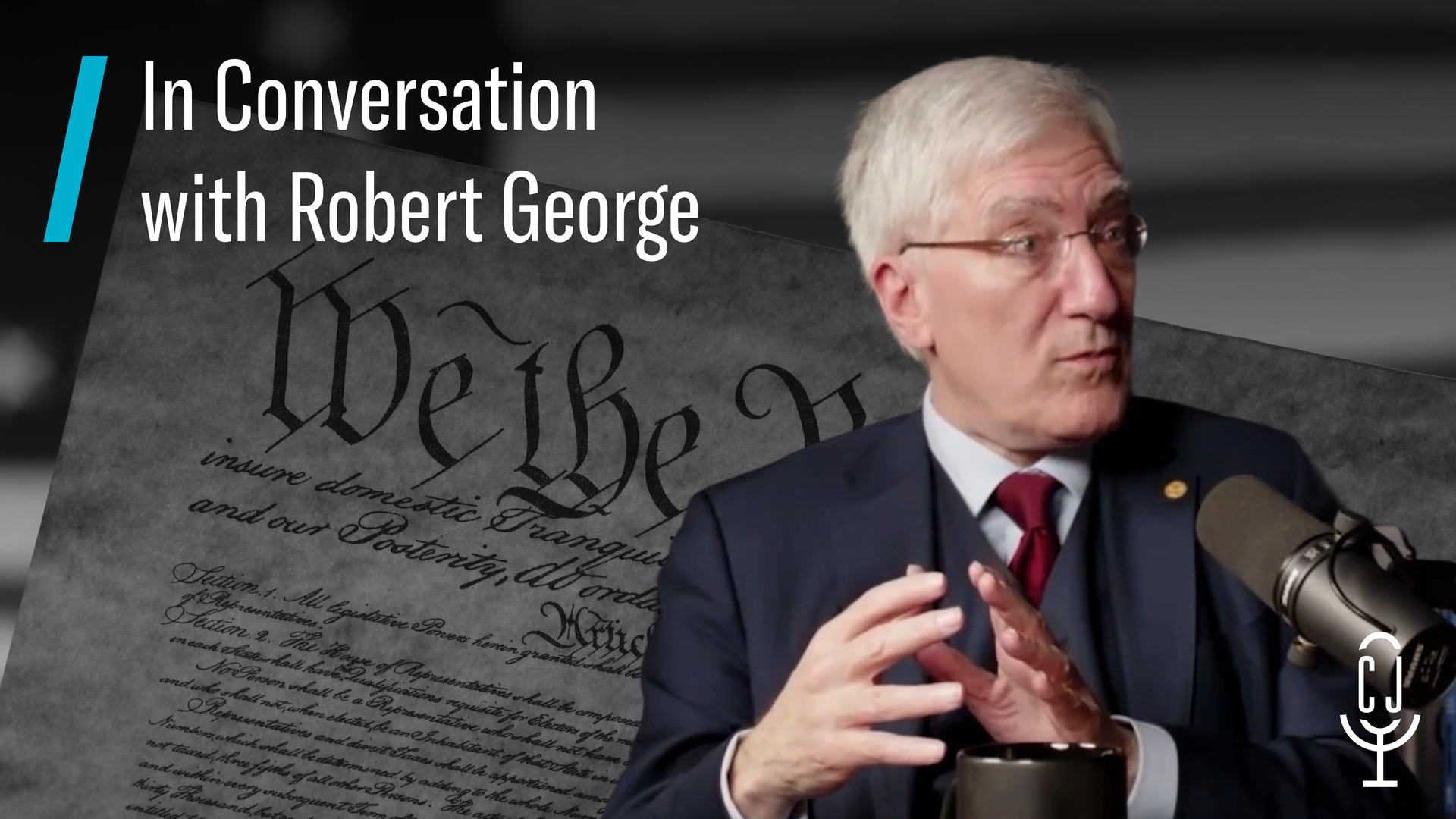
Reclaiming Liberty & Equality: What the Founders Got Right—and What We Forgot By City Journal Professor Robert P. George and Rafael Mangual explore the enduring foundations of American constitutionalism and what they reveal about human nature, power, and freedom.
Drawing on the vision of the Founding Fathers, George explains why structural limits on authority—not just good intentions—are essential to preserving liberty.
The discussion moves beyond theory to the tensions between liberty and equality in modern America. Professor George also reflects on the state of higher education, making a compelling case for viewpoint diversity and intellectual humility on campus. |
|
|
For more information and media requests, please contact
communications@manhattan.institute.
Are you interested in supporting the Manhattan Institute’s public-interest research and journalism? As a 501(c)(3) nonprofit, donations in support of MI and its scholars’ work are fully tax-deductible as provided by law. |
| |
Photo Credits: adamkaz/E+/Getty Images; Noah Berger/AP Photo; Anadolu/Getty Images; Wong Yu Liang/Getty Images; Catherine McQueen/Getty Images; Probal Rashid/LightRocket/Getty Images |
|
|
The Manhattan Institute works to keep America and its great cities prosperous, safe, and free. Manhattan Institute 52 Vanderbilt Ave. 3 floor
New York, New York 10017
Want to change how you receive these emails?
Unsubscribe | Subscription Preferences
Copyright © 2026 Manhattan Institute, All rights reserved. |
|
|
|