After news spread that Ayatollah Ali Khamenei, Iran’s supreme leader who ruled the country for nearly four decades, was killed in Saturday’s joint U.S.-Israeli strikes, Iranian Americans and others rushed to the street while waving American and Iranian Lion and Sun flags. Yael Bar Tur, an Israeli American, was among them. In City Journal, Tur gives an account of how the Ayatollah’s death caused New York City residents to show unity and gratitude.
“I doubt all attendees shared the same opinions on health care, immigration enforcement, or Gaza,” Tur writes. “But at this moment, they showed appreciation for their president, their allies, and their military, all of whom had stood up for them when it mattered most.”
Read her first-person account of the demonstration below.
Elsewhere in this newsletter, senior fellow Roland Fryer responds to the recent backlash against drug legalization in the United States. In the Wall Street Journal, he shares how studying the drug war as an economist changed his perspective on how to contain and limit “the violence, the fractured families, the lives swallowed whole” caused by the market for illegal drugs.
Also in the Wall Street Journal, senior fellow Jason L. Riley notices that many educators and policymakers in charge of K-12 education are more concerned with “making sure that boys can play on girls’ sports teams" rather than "making sure students are acquiring basic academic skills.” He highlights new MI research that shows one of the few bright spots in secondary education, selective-enrollment public high schools, are under attack despite their success in teaching reading, writing, and arithmetic to American teenagers.
Education isn't the only area where many American teens are poorly served. Investigative reporter Christina Buttons flags state and federal legislation that is pushing young people with serious mental-health issues out of residential treatment programs and into juvenile detention simply because there are no beds available. Read her full report in City Journal.
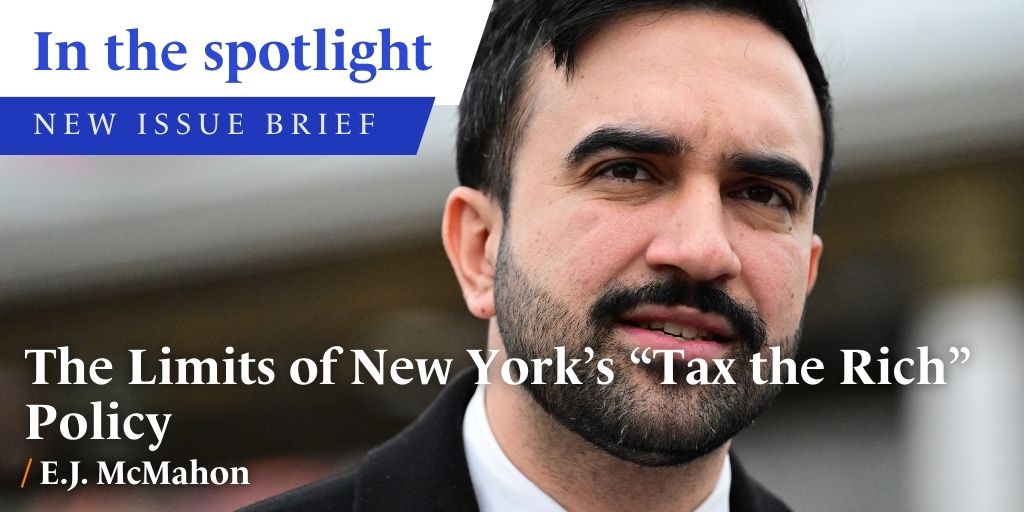
Finally, in a new research paper published this week, adjunct fellow E.J. McMahon shows how the New York State tax base is more reliant than ever on income taxes paid by a tiny number of income millionaires. In New York City, political epicenter of the tax-the-rich movement, resident income millionaires already are hit with the highest tax rates in the country. Doubling down on “tax the rich” policies will only push these New Yorkers out, and further undermine the state’s fiscal future.
Continue reading for all these insights and more.
Kelsey Bloom
Editorial Director