Good morning:
In a column for UnHerd, senior fellow Stephen Eide assess the Great American Vibe Shift against crime and disorder in American cities and finds that—so far, at least—it seems to be holding. From San Francisco to New York City, policymakers even in blue cities are beginning to crack down on conduct like evading subway fares and encamping in public spaces. There is an alternative to squalor and crime, Eide writes, and fixing these problems will continue to be a priority as the midterm elections approach.
Another significant vibe shift is happening on marijuana. Recently, the New York Times editorial board bluntly stated it was wrong about many of its predictions concerning marijuana legalization, that the consequences were much worse than anticipated. In a letter to the editor in response, fellow Charles Fain Lehman welcomes the Times’s change of heart, but warns that regulation is not the balm the editorial board suggests.
Hopefully a similar revelation occurs to NYC Mayor Zohran Mamdani so that his deregulatory instincts, such as they are, extend to industries outside of his interest in street cart food. In City Journal, senior fellow Allison Schrager urges policymakers serious about affordability to “recognize that the problem does not begin and end with small businesses or politically sympathetic sectors.” New York could be more affordable, if businesses of every size are allowed to be nimble.
Also in City Journal, investigative reporter Ryan Thorpe and senior fellow Christopher Rufo do a deep dive into right-wing provocateur and influencer Nick Fuentes. The Fuentes phenomenon, they write, “is not about ideas, or ideology, or power; it is about an angry, broken young man leading other angry, broken young men down a digital trail that ends in ruin.” Read the full investigation below.
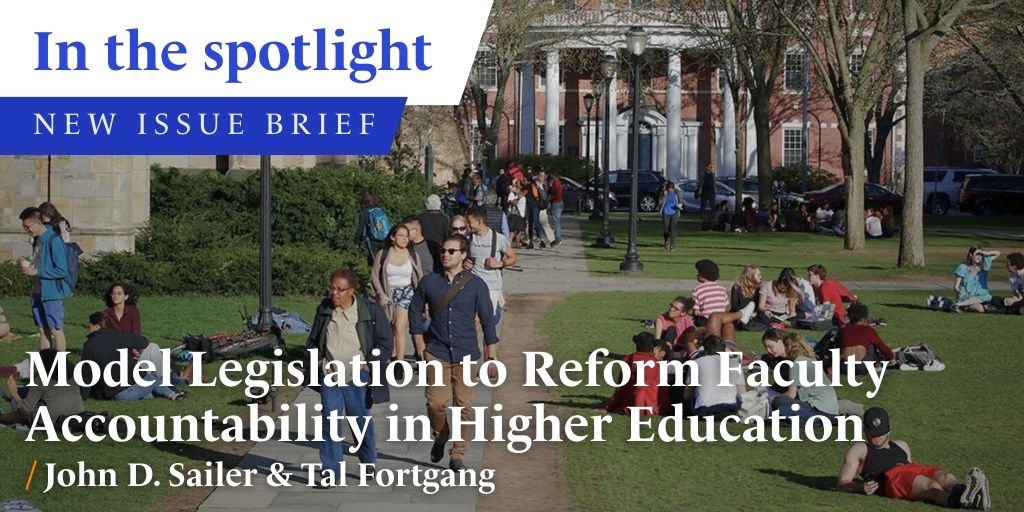
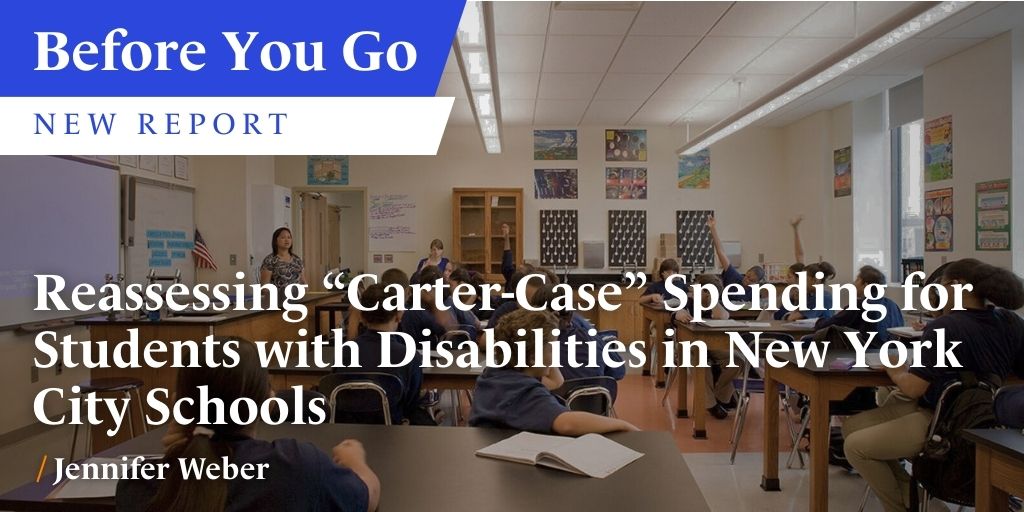
Finally, this week, the Research team published two papers. First, Tal Fortgang and John Sailer pair up on an issue brief and model legislation that expands governing board oversight of academic and personnel decisions in higher education. Second, Jennifer Weber identifies a significant misuse of funds in the NYC public education system—the subsidization of private school tuition for children with special education needs, without ever assessing if the public school system can meet their needs instead.
Continue reading for all these insights and more. Kelsey Bloom Editorial Director |
|
|
Model Legislation to Reform Faculty Accountability in Higher Education
By John D. Sailer & Tal Fortgang | Manhattan Institute
Public universities are chartered by the state, funded by taxpayers, and entrusted with educating students in the public's name. Yet the decisions that shape campus culture most — from curriculum requirements to tenure-track hiring to leadership appointments — are made through opaque internal processes largely insulated from public oversight, often defended as "shared governance."
In a new Manhattan Institute issue brief, John Sailer and Tal Fortgang argue that state legislatures should expand governing board oversight of core academic and personnel decisions. Their accompanying model legislation — the Higher-Education Accountability and Governance Act — would require public review and annual reauthorization of core curricula; board approval of tenure-eligible faculty job postings with 30-day public notice; public vetting and board approval of senior administrators; and explicit limits on faculty senates, restricting them to an advisory role with greater transparency requirements.
With powers clarified by lawmakers and a new mandate to exercise their existing powers, university board members can act as a counterweight to the excesses of university faculty and administrators. These powers would challenge some conventions of shared governance, but the time is ripe for such a challenge. |
|
|
Are Democrats Finally Getting Tough on Crime?
By Stephen Eide | UnHerd
“During the 2010s, homelessness spread far and wide because of lax enforcement. Some encampments swelled to hundreds of inhabitants. The street chaos climaxed during Covid, when dubious public health guidance directed local officials to avoid addressing encampments. Many Democrats have since decided that they’d prefer not to live amid squalor and crime. ...
“Believing that police are unnecessary to address homelessness requires heroic faith in the effectiveness of housing programmes. But ordinary Americans are aware that billions have been devoted towards housing for homelessness, with disappointing results. And — as anyone who has recently shared a New York subway car with someone with visibly untreated psychosis ... will know — homelessness is caused by many factors other than just the rent.
“Conservative Democrats are generally understood to be a dying breed. But any responsible blue-city leader understands the need to prioritise. So far, most seem to be assuming that they need to tilt Rightward on enforcement if they want to avoid jeopardising their more cherished Left-wing aims.” |
|
|
The Best Ways to Regulate Marijuana
By Charles Fain Lehman | The New York Times
“I was cheered to see The Times strike a more cautious note on the legalization of marijuana. The editorial board correctly states that the end of prohibition has brought myriad social problems, including addiction, medical issues and harms to children. Still, I can offer only two cheers for these admissions. ...
“Regulation is not the balm the editorial board suggests. Taxes on addictive products increase prices while doing little to reduce consumption, because demand for them is — to use a term from economics — highly inelastic. A potency cap, similarly, encourages users to smoke more to get the same effective dose.
“The harms of outright prohibition are real. But banning the sale of marijuana without criminalizing its possession — as advocates are pushing to do in Massachusetts — is the most effective way to decouple addiction from the profit motive. If we don’t do that, then the problems will keep getting bigger.” |
|
|
The Freak World of Nicholas J. Fuentes
By Ryan Thorpe & Christopher F. Rufo | City Journal “Whatever else may be said about him, one fact cannot be denied: Nicholas J. Fuentes, the 27-year-old racialist influencer, is on the run of his life.
“That’s a remarkable shift from 2017, when Fuentes was a little-known university freshman who hosted a little-watched political talk show. Over time, he developed a fanatical, cultlike following known as the ‘Groypers.’ His digital following soon crossed over into the real world. ... Attempting to undercut his growing influence, the media and Fuentes’s right-leaning critics both tend to focus on Fuentes’s record of offensive remarks. ... But this line of attack merely plays into Fuentes’s hands. ...
“By contrast, this City Journal investigation—which draws on livestreams, a review of public records, and interviews with key associates—focuses not on Fuentes’s words but on his actions. (Fuentes did not return a detailed request for comment for this article.) It looks beneath the spectacle of outrage and the self-mythology he has curated and reveals a shocking heap of human wreckage that has accumulated within Fuentes’s political universe: betrayal, pedophilia, suicide, murder.”
|
New York’s Regulatory Thicket By Allison Schrager | City Journal “Zohran Mamdani campaigned on, among other things, making halal street meat $8 again—a rare moment when the democratic socialist broke with his own ideology and embraced the truth: New York’s high prices aren’t a law of nature but the product of a city that smothers commerce in permits, mandates, and red tape.
“The same forces that make a $400 vending permit into a $22,000 black-market asset also inflate the cost of everything from rents to haircuts. New Yorkers pay more because doing business here costs more, thanks to a regulatory thicket, heavy taxation, and an enforcement regime that treats entrepreneurs as revenue sources rather than civic partners. Mamdani may understand this when it comes to food carts, but unless he is willing to apply market-friendly reforms across the board, the city’s affordability crisis will only deepen. ...
“The question is whether Mamdani will extend his deregulatory instincts beyond halal carts. He clearly recognizes, in this case, that regulation inflates prices and restricts opportunity. Yet his broader progressive commitments—more employer mandates, stronger unions, a dramatically expanded public sector—push in the opposite direction.” |
|
|
Reassessing “Carter-Case” Spending for Students with Disabilities in New York City Schools By Jennifer Weber | Manhattan Institute
The core promise of the federal Individuals with Disabilities Education Act was that every child will receive a free and appropriate public education in the least restrictive environment possible. When placing children with special-education needs in private schools becomes the default, as it has in New York City, public schools lose the capacity that they need to serve students well.
In a new report, fellow Jennifer Weber calls for reforming the process that provides students with special needs a fair and just education. The billions of dollars that NYC spends on private-school tuition reimbursement each year are not investments in instruction, program development, or long-term capacity building. Redirecting even a portion of that spending toward public school programs would strengthen and support the system for all students. |
|
|
For more information and media requests, please contact
communications@manhattan.institute.
Are you interested in supporting the Manhattan Institute’s public-interest research and journalism? As a 501(c)(3) nonprofit, donations in support of MI and its scholars’ work are fully tax-deductible as provided by law. |
|
|
Photo Credits: adamkaz/E+/Getty Images; Noah Berger/AP Photo; Anadolu/Getty Images; Wong Yu Liang/Getty Images; Catherine McQueen/Getty Images; Probal Rashid/LightRocket/Getty Images |
|
|
The Manhattan Institute works to keep America and its great cities prosperous, safe, and free. Manhattan Institute 52 Vanderbilt Ave. 3 floor New York, New York 10017
Want to change how you receive these emails?
Unsubscribe | Subscription Preferences
Copyright © 2025 Manhattan Institute, All rights reserved. |
|
|
|