New Issue Brief: Why Did the Migrant Crisis Come to New York City?
The city’s unique right to shelter policies created a welfare magnet effect
NEW YORK, NY – The U.S. border crisis in the early 2020s pushed homelessness nationwide to historic highs as migrants entered shelter systems across the country. New York City faced especially intense demand, with the number of migrants in its shelter system peaking at 67,872 in January 2024. The surge prompted Mayor Eric Adams to declare a state of emergency. Given New York City's distance from the southern border, why did it bear such a disproportionate share of the influx?
In a new issue brief, Manhattan Institute senior fellow Stephen Eide finds that common explanations offered at the time, including Republican governors’ busing programs, in-group social networks, employment opportunities, and affordability, are not satisfactory. Instead, he contends that the city’s expansive right to shelter policy created a powerful welfare magnet effect, which encouraged migrants to choose New York over other destinations.
New York City’s right to shelter is uniquely expansive, guaranteeing shelter on demand year-round. After Mayor Adams imposed 60-day shelter limits for migrant families and 30-day limits for single adults, the shelter census began declining almost immediately. Once the benefit was removed, people left and the crisis abated.
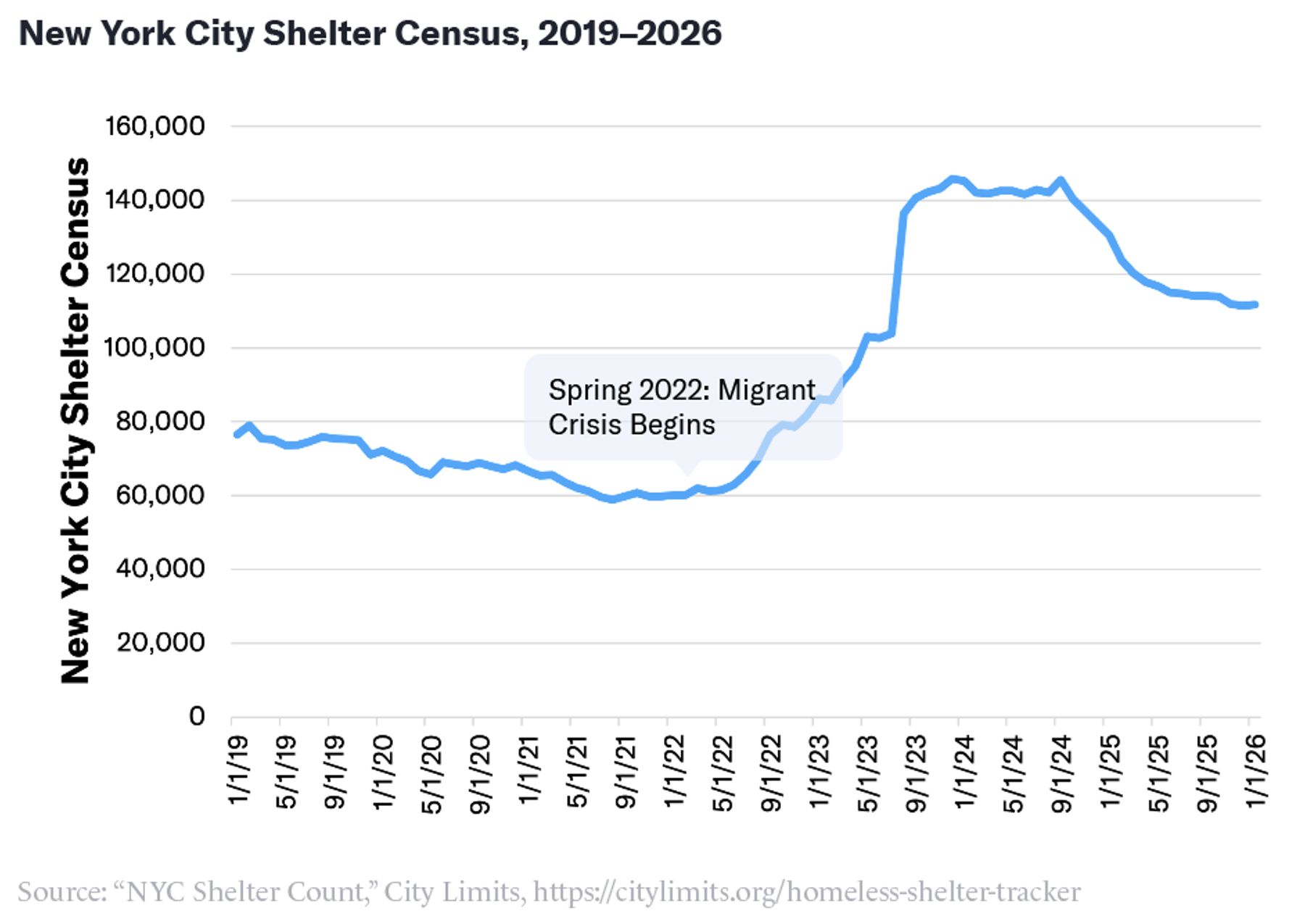
New York City's migrant crisis demonstrates that welfare magnet effects exist: immigrants respond to government benefits and will relocate to areas known for their generous public benefits. Eide’s case study offers policymakers a better understanding of how benefit policies can influence migration decisions.
Click here to read the full issue brief.
Are you interested in supporting the Manhattan Institute’s public-interest research and journalism? As a 501(c)(3) nonprofit, donations in support of MI and its scholars’ work are fully tax-deductible as provided by law (EIN #13-2912529).