New Issue Brief: How States Can Cut Rules and Regulations—and Make it Stick
Idaho's two-step process that other states can copy
NEW YORK, NY – Government agencies add regulations to solve new problems or satisfy new mandates, yet they rarely revisit those regulations once they've been enacted. Across the country, state and federal agencies alike carry the weight of these outdated rules, and officials often treat them as unfortunate but unavoidable. The state of Idaho has spent nearly a decade challenging this orthodoxy by demanding that its agencies justify any provision they'd like to retain, rather than justifying only those they'd like to remove.
In a new Manhattan Institute issue brief, Alex J. Adams and Adam N. Jones, both formerly of Idaho's Division of Financial Management, provide the first full accounting of Idaho's Zero-Based Regulation effort after a complete eight-year cycle. Idaho's administrative code shrank dramatically in the first stage, which eliminated 2,176 pages of outdated regulations in the program's initial 2019 reset. Then a continued review that forced agencies to justify the rules they sought to retain resulted in the elimination of an additional 2,065 pages in the five years that followed.
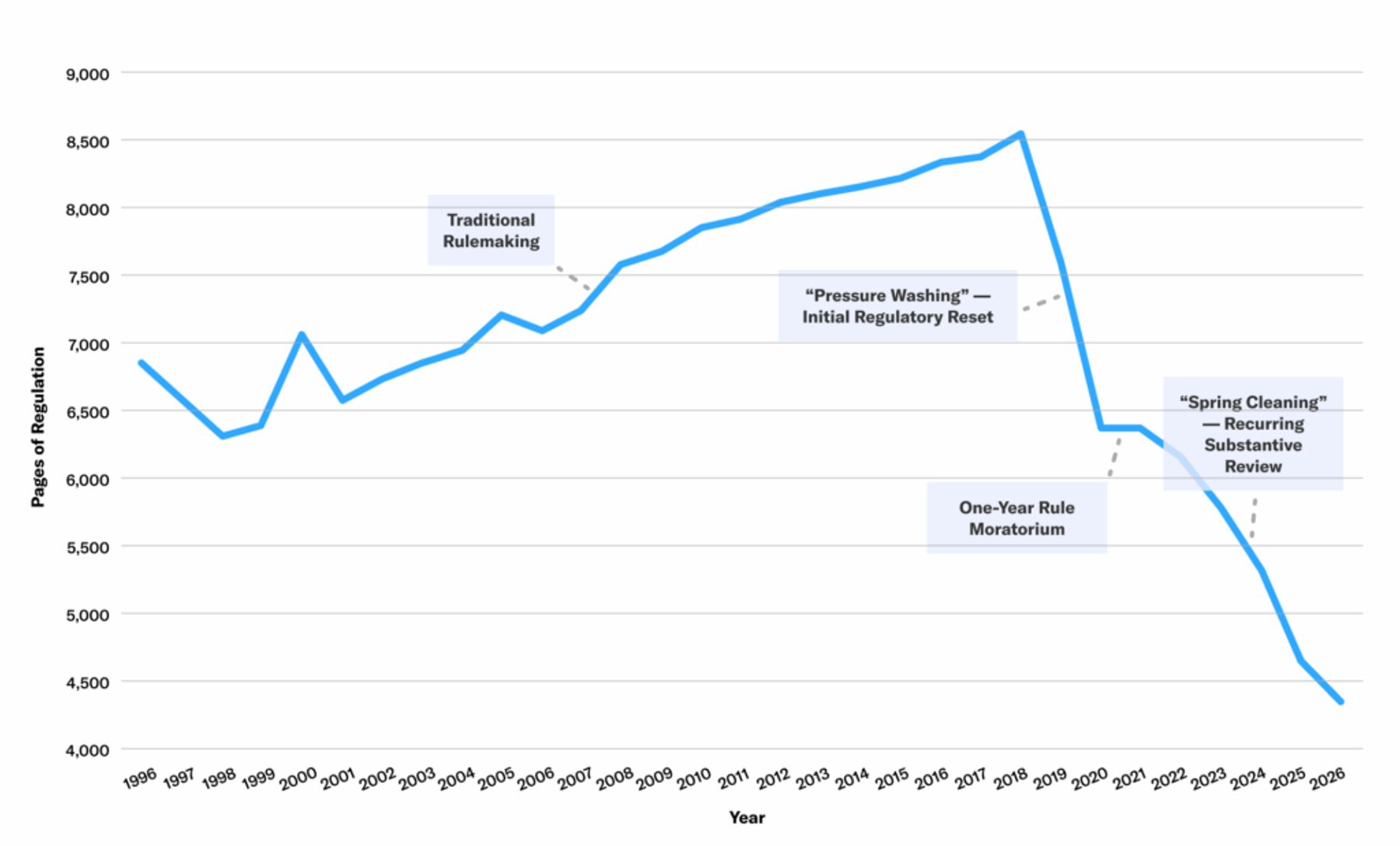
The authors argue that Idaho's two-step process offers other states a proven blueprint for significant, permanent regulatory reform. It also offers citizens a new standard for the relationship between government and those governed, one where states must periodically justify the unintended status quo rather than leaving citizens to justify why that status quo should change to reflect the state's original governing goals.
Click here to read the full issue brief.
Are you interested in supporting the Manhattan Institute’s public-interest research and journalism? As a 501(c)(3) nonprofit, donations in support of MI and its scholars’ work are fully tax-deductible as provided by law (EIN #13-2912529).