Good morning:
The purpose of city government is to competently deliver a set of basic services and amenities, such as housing and transit, and manage the downsides of dense urban living. As John Ketcham wrote for the Winter 2026 issue of City Journal, “managing density inevitably relies on coercive power—whether to break up disruptive behavior, arrest suspected criminals, or require inpatient treatment for the severely mentally ill—and such power properly rests with government. The denser the city, the more capable its government must be to address its disadvantages.”
Today’s newsletter highlights what happens when city governments, or the officials serving in them, fail to demonstrate such competence.
In many parts of New York City, customers cannot swiftly buy toiletries like mouthwash at their local drug store without flagging down a clerk to unlock a glass-covered cabinet. But step outside, and the sidewalk is cluttered with illegal vendors selling stolen wares. In the New York Post, senior fellow Nicole Gelinas corrects a Brooklyn assemblywoman and Democratic Socialist who downplayed mass shoplifting as a crime of poverty. Not so. Criminal rings benefit from lenient enforcement and the supposedly “non-violent” crime of shoplifting can escalate when repeat offenders are challenged.
Writers and social critics on the left repeatedly downplay the deleterious effects of shoplifting and elevate it to an act of political protest against capitalism in particular and the West in general.
Senior fellow James B. Meigs’s column in the Wall Street Journal investigates the origin of the Marxist phrase “late capitalism,” the idea that capitalism is on the verge of collapse and Americans should welcome that event. The American working class, which has in recent elections rejected candidates associated with the Democratic Socialists of America, may not be comfortable with that idea, but it is increasingly popular in the academy and among the most highly educated. Meigs reminds us that “freer markets have lifted 1.5 billion people out of poverty since 1990.” Many of today’s college students leave school taking away the opposite lesson.
This is important because what begins on campus doesn’t stay there. The two newly elected co-chairs of the Young Democratic Socialists of America are planning a nationwide general strike in May 2028, reports investigative analyst Stu Smith for City Journal. As Smith documents, the two new leaders were elected on a more militant labor-organizing platform in preparation for this national action. One of them, James Hernández, has international experience, “attending an antifascist conference in Brazil and being hosted by Mexican socialist organizations.” Smith will continue to report on the international connections to the American far-left.
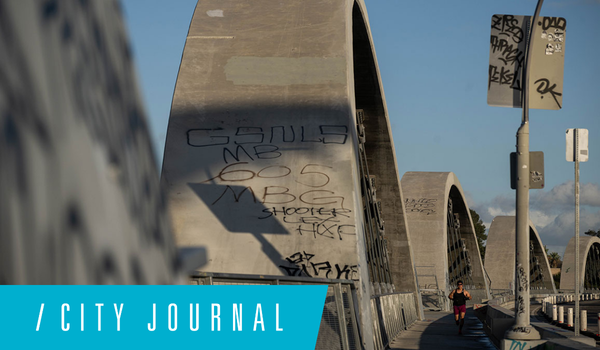
Finally, senior fellow Shawn Regan paints a harrowing picture of the breakdown of basic civil order in Los Angeles for City Journal. The deterioration can be seen in every area of life and every essential function of city government: LAPD answers only 57% of 911 calls within the 15-second statutory requirement. The city has more unsheltered homeless people than any other city in the United States. Drug-overdose deaths in Los Angeles more than doubled over the last decade. Los Angeles has stopped repaving streets in favor of patching small sections.
“Los Angeles retains extraordinary advantages—wealth, beauty, history, and cultural power,” Regan writes. “Few cities are so richly endowed. Yet the City of Angels seems to have lost sight of the ordinary work of governing.”
What makes a city successful and a city government competent? If law-abiding residents cannot go about their daily lives without treading pothole-peppered streets or sidewalks strewn with stolen goods, it’s a sign that government is failing to deliver on its promises.
Continue reading for all these insights and more.
Kelsey Bloom
Editorial Director