Good morning:
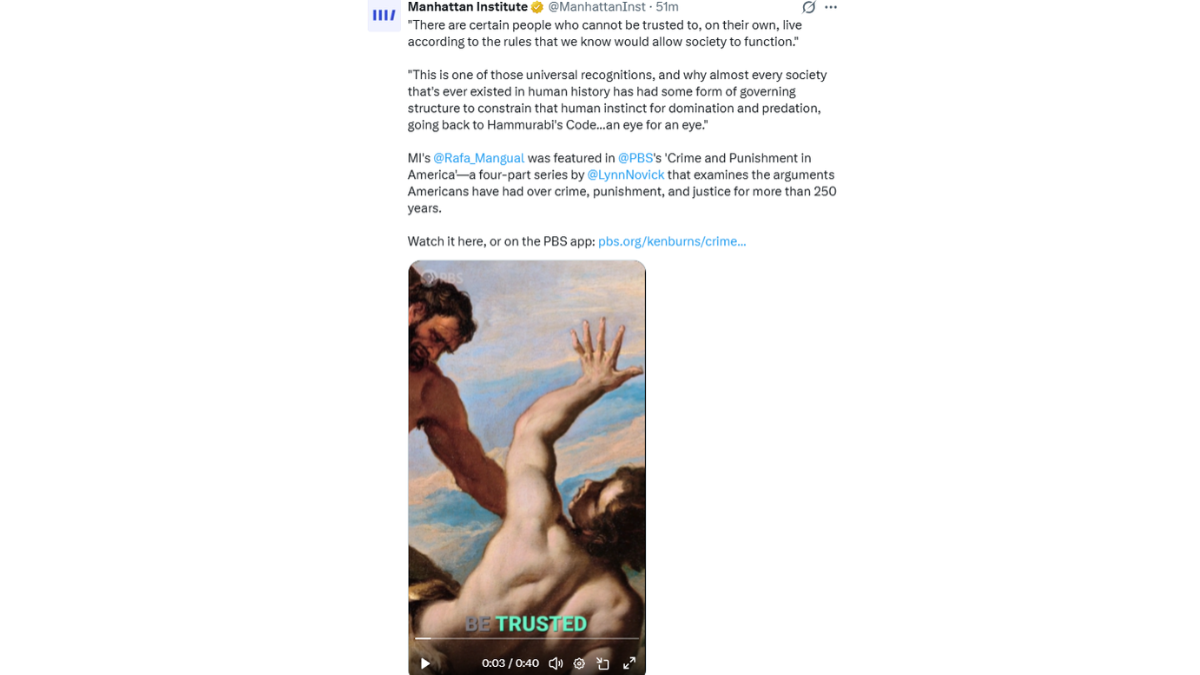
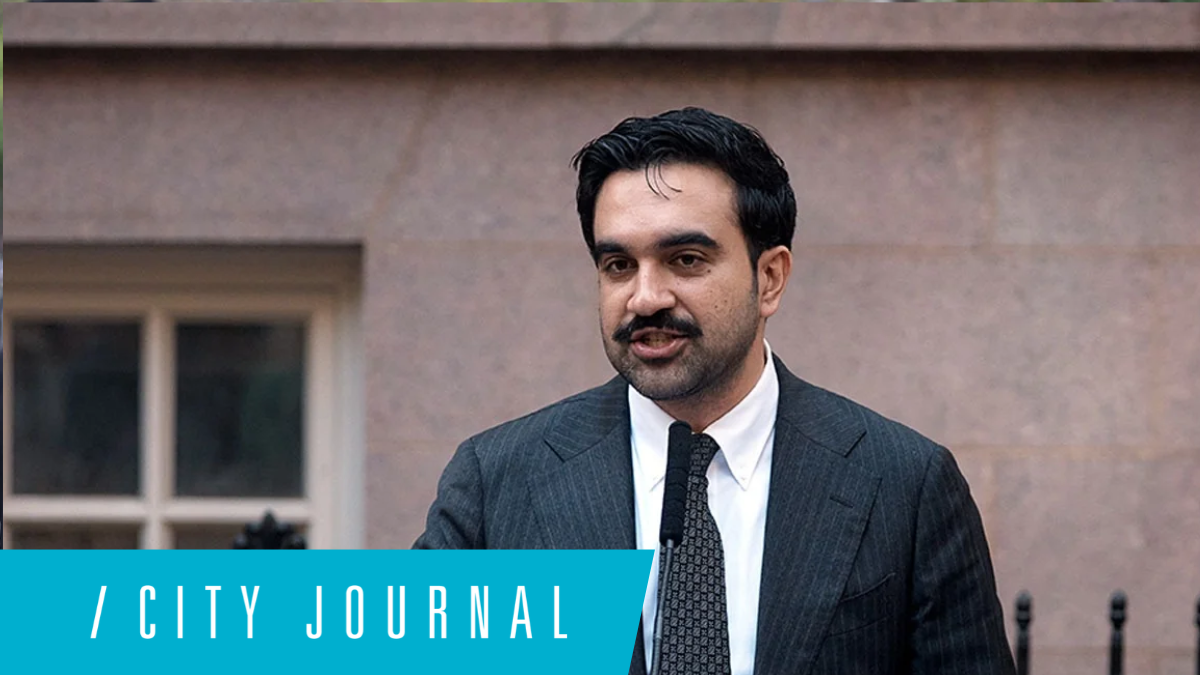
Manhattan Institute’s own Rafael A. Mangual is featured in a new PBS documentary, co-produced by Ken Burns, on the history of “Crime and Punishment in America.” The first installment of the documentary aired this week. Please be sure to check it out and discover why every functional society in the world has had some structure for constraining and punishing men’s natural instinct for domination and destruction. Congratulations, Ralf!
|
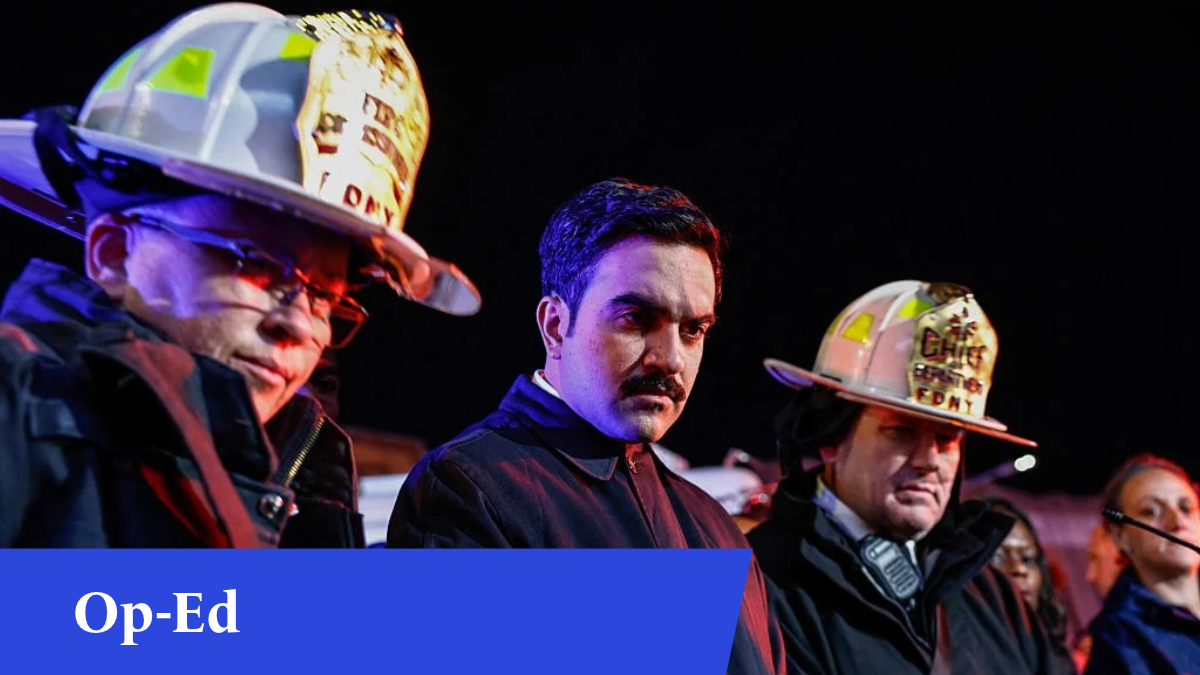
When a Brooklyn building collapse killed eight people last week, Mayor Zohran Mamdani vowed to hold “anyone, or any entity” responsible, if someone is found to bear responsibility. If? A building collapses, and it is possible no one might be held accountable for the death and destruction?
In the New York Post, senior fellow Nicole Gelinas argues that the mayor should hold himself accountable because a culture of corner-cutting and shoddy work permeates the Department of Buildings. Construction deaths in New York have averaged seven a year for the past five years, though they were only five deaths annually from 2009 to 2014. Eight people died in construction catastrophes in the last fiscal year alone. The problem, Gelinas writes, is systemic: the Department of Buildings thinks they serve developers and contractors when their real customers are the victims who need to be kept safe from those developers and contractors.
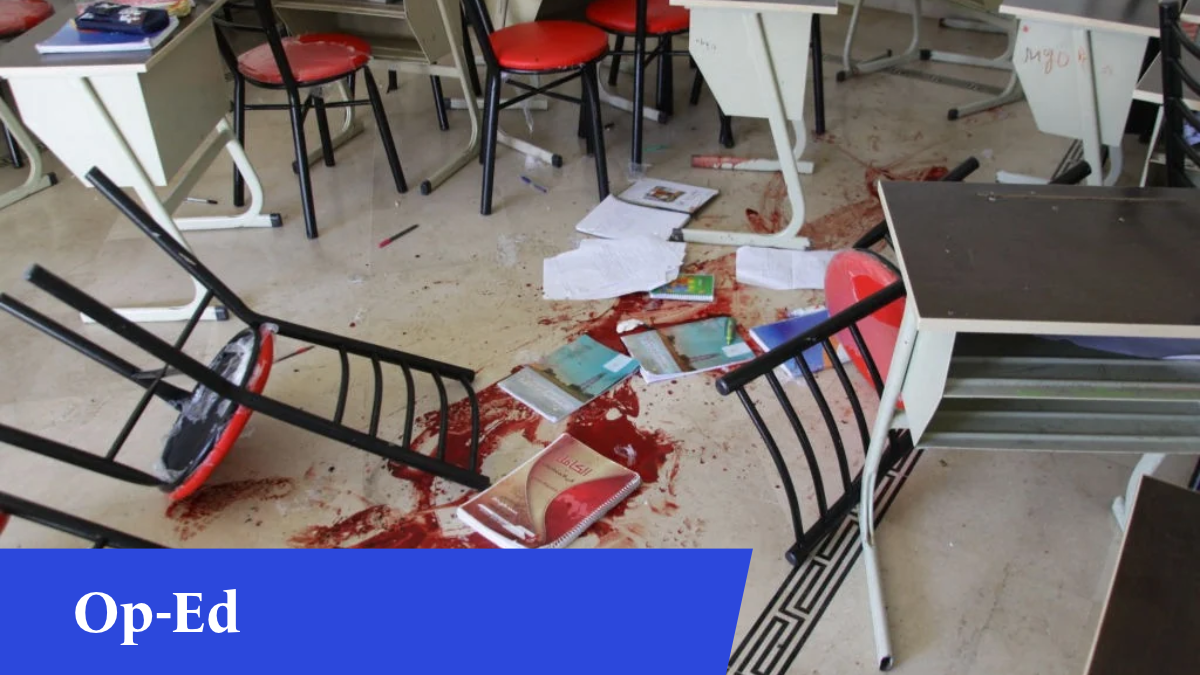
Accountability is also at issue in the city’s schools. Also in the Post, MI’s Jennifer Weber and John Ketcham report that in September and October, 10 adults at Brooklyn’s PS 200 warned about the odd and unsettling behavior of paraprofessional Sayed Mohassib, including blank stares, his wearing a gun charm around his neck, and disturbing social-media posts. School administrators and union officials brushed them off, reportedly telling some to stop being “racist.” Their concerns were well founded. Last week, a Brooklyn grand jury indicted Mohassib for second-degree murder in the random killing of jogger Katie Suarez. Weber and Ketcham ask the question every parent should be asking: if this is who the Department of Education lets sit beside special-needs children all day, who else is in the classroom?
Mamdani also made good on a campaign promise this week by announcing he would disband the NYPD’s Strategic Response Group (SRG). This unit exists for rare, high-stakes events, like the ISIS-inspired pipe-bomb attack outside Gracie Mansion this past March. In City Journal, Nick Ohnell Fellow Rafael Mangual finds that the move is more window dressing than substance. The new protest-response reforms largely codify practices already in effect under a 2023 settlement. The new Patrol Support Division, meanwhile, would perform essentially the same duties as the SRG.
Mangual discusses that, nearly a year in, the mayor has not delivered on his other public-safety promises. The announcement, therefore, will embolden the pro-Mamdani protest coalition and demoralize police officers and those called upon to keep order.
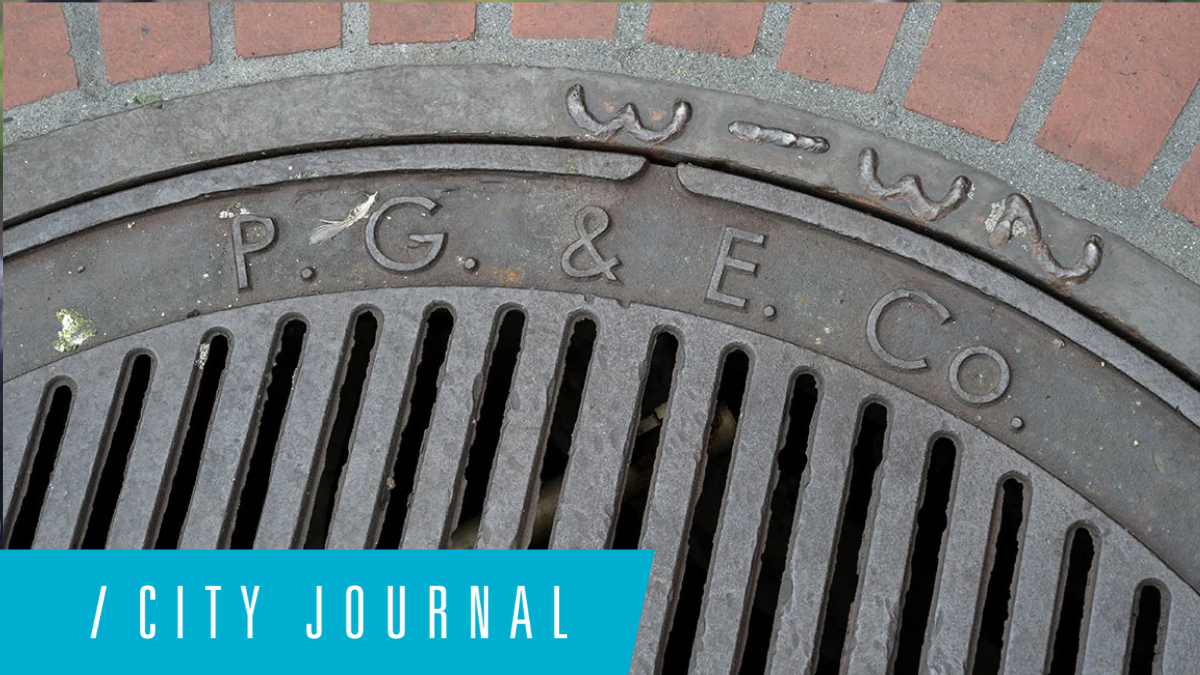
Finally, senior fellow Christopher F. Rufo, RealClearPolitics’s Susan Crabtree, and City Journal investigative reporter Kenneth Schrupp investigate how utilities company Pacific Gas and Electric effectively bought Gavin Newsom. After the 2018 Camp Fire killed 85 people, the utility faced ruin, but the governor signed legislation shielding utilities from future wildfire liability. PG&E began courting Newsom at the beginning of his political career and, over nearly 30 years, it has donated at least $1 million to entities linked to him, his wife, and the issues he supports.
The authors report that internal emails from California’s utilities commission suggest Newsom’s office reviewed and approved the safety certificate PG&E received in 2019. “I knew that they weren’t anywhere even close to being ready,” former commission executive director Alice Stebbins told them. Since then, PG&E has increased ratepayers’ bill by nearly 70 percent, and its equipment has contributed to further fires. Meanwhile, as Newsom prepares to leave office in January, California’s wildfire fund is nearly empty.
Continue reading for all these insights and more. Kelsey Bloom Senior Editor Manhattan Institute |
|
|
|
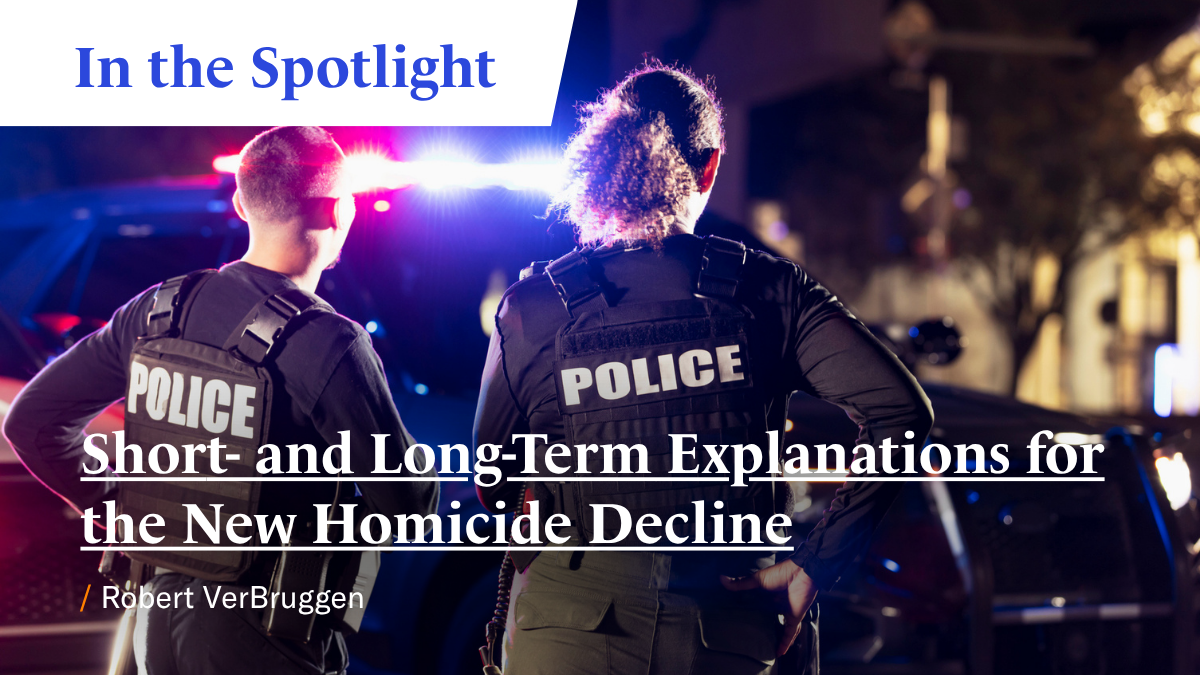
Short- and Long-Term Explanations for the New Homicide Decline
By Robert VerBruggen | Manhattan Institute | Photo by kali9/iStock/Getty Images Plus via Getty Images
What is the cause of the recent decline in deadly homicides nationwide? In a new Manhattan Institute report, senior fellow Robert VerBruggen assess two broad frameworks for analyzing the decline.
One framework focuses on the short term, looking for factors that have improved since the chaos of 2020. The other framework is a longer-term narrative in which structural factors have gradually reduced Americans’ tendency toward violence, but these background factors are sometimes interrupted by waves of killings, such as in 2015 and 2020.
VerBruggen finds that the most promising short-term factors include the post-pandemic rebound in policing activity—coupled with concerted efforts to prevent serious violence, in particular—as well as a return-to-normal for the economy and Americans’ schedules. Long-term structural factors include a decline in youthful rambunctiousness, accompanied by changing technology and an aging population. |
Mamdani’s Damning Silence After Killer Brooklyn Building Collapse Speaks Volumes By Nicole Gelinas | New York Post | Photo by kena betancur / AFP via Getty Images
A day after a Brooklyn building collapse killed eight people, Mayor Zohran Mamdani vowed last week: ‘If there is anyone, or any entity, operating in this city that bears responsibility for what happened, we will hold them fully accountable.’ “If? Mr. Mayor, you are accountable. Construction carnage is a systemic problem, because the system rewards corner-cutting. Fix that. “The mayor should have said: There are no construction accidents, only preventable negligence and recklessness. “Last fiscal year, eight people died in construction catastrophes. Yes, the city made progress after 2008, a year when 25 people died, including in two crane crashes. Deaths fell to an annual average of five between 2009 and 2014. But they spiked into double digits during the first years of Bill de Blasio’s administration, and for the past five years, deaths have averaged seven annually.” |
Lax Checks and Union Apathy Kept the Accused Jogger Killer in NYC Kids’ Classrooms
By Jennifer Weber and John Ketcham | New York Post | Photo by GEORGE OURFALIAN/AFP via Getty Image
“In September and October, 10 adults at Brooklyn’s PS 200 warned about paraprofessional Sayed Mohassib’s erratic behavior. “They flagged his blank stares, the gun charm he wore around his neck and disturbing social-media posts of his chest tattoo naming, among other figures, Allah and the antichrist. “Each time, The Post reported, school administrators and union officials brushed off the complaining colleagues, telling some to stop being “racist.” “On Tuesday, a Brooklyn grand jury indicted Mohassib on a second-degree murder charge in the random killing of jogger Katie Suarez at the Shore Parkway Greenway. “Every parent in the city should be asking: If this is who DOE lets sit beside special-needs kids all day, who else is in the classroom?” |
Disbanding the NYPD’s Strategic Response Group, Mamdani Plays to His Base
By Rafael A. Mangual | City Journal | Photo by Andres Kudacki/Getty Images
This week, “fulfilling a controversial campaign promise, New York City Mayor Zohran Mamdani announced that he would disband the NYPD’s Strategic Response Group. Established in 2015 under former NYPD Commissioner Bill Bratton, the SRG was meant to strengthen the department’s ability to respond to mass-casualty events, control large crowds, assist in citywide mobilizations, and bolster the efforts of the department’s Emergency Service Unit. Mamdani’s announcement will excite his political base—but on closer inspection, the move does not represent the dramatic change the mayor suggests. …
“It seems that Mamdani is claiming victory on policies already in effect and moving responsibilities around rather than forgoing them. Why, then, is the mayor selling this as a radical change in how things are done at NYPD? Part of it is that Mamdani is almost a year into his mayoralty and hasn’t made good on any of his public-safety-related promises.” |
How PG&E Bought Gavin Newsom
By Christopher F. Rufo, Susan Crabtree, and Kenneth Schrupp | City Journal | Photo by Smith Collection/Gado/Getty Images
"Paradise, California was a quiet town in the Sierra Nevada foothills. Seniors flocked there seeking affordable homes. Others came for abundant land and small-town charm. For more than a century, Paradise was an oasis from the hustle of urban California.
“On November 8, 2018, it all came crashing down. A hook, suspended from a tower owned by Pacific Gas and Electric, one of America’s largest utilities, snapped. … The town’s population shrunk by more than half in the five years that followed the infamous Camp Fire. PG&E eventually pleaded guilty to 84 counts of manslaughter….
“In the wake of the disaster, PG&E found itself on the hook for more than $10 billion in damages and insurance claims. Fortunately for the utility, a powerful politician came to its aid: Governor Gavin Newsom. … Why would the governor go to bat for one of the most unpopular companies in California? … “This is how Pacific Gas and Electric bought Gavin Newsom.” |
|
|
Daniel Di Martino visits the campus of Columbia University to ask students about their schools’ susceptibility to foreign influence. |
|
|
For more information and media requests, please contact
communications@manhattan.institute.
Are you interested in supporting the Manhattan Institute’s public-interest research and journalism? As a 501(c)(3) nonprofit, donations in support of MI and its scholars’ work are fully tax-deductible as provided by law. |
|
|
|
The Manhattan Institute works to keep America and its great cities
prosperous, safe, and free. Manhattan Institute
52 Vanderbilt Ave. 3 floor New York, New York 10017
Copyright © 2026 Manhattan Institute, All rights reserved. |
|
|
|
|