Good morning:
Abdul El-Sayed’s razor-thin victory over Haley Stevens in last night’s Michigan Democratic primary reveals growing momentum for the far-left wing of the Democratic Party.
But winning elections is not the same as governing effectively. In places where progressive politicians already hold power, our scholars are documenting how their most ambitious plans threaten to make groceries more expensive, rental housing less secure, and communities less safe.
In Bloomberg, senior fellow Allison Schrager explains why Mayor Zohran Mamdani’s plan to open five city-owned grocery stores selling healthier food at 30% below market prices is an “expensive and inefficient way to provide some benefit to a few at the expense of the many.” The proposal attempts to address a genuine problem: New York grocery stores face high rents, labor costs, and logistical challenges that they pass along to consumers. But the proposed stores are poorly targeted, so they will do little to make groceries more affordable for those most in need. Rather than spending $70 million of taxpayer money to enter the grocery business, the city should relax regulations that make it difficult to open large retail stores and reconsider policies that raise labor costs for existing businesses.
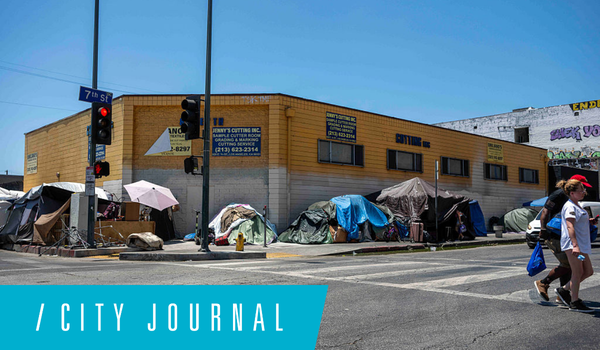
In City Journal, investigative analyst Stu Smith warns that the radical tenant movement is bringing increasingly aggressive anti-landlord tactics into New York City politics. Activists associated with Cea Weaver, Mamdani’s leading tenant-policy adviser, portray rent as coercion and landlords as an exploitative class. Their preferred tactics include rent strikes, nuisance litigation, public shaming, and disruptive protests—including actions targeting landlords in their homes and at family events. Given that these ideas may soon carry greater influence inside city government, Smith argues that lawmakers and courts should recognize the danger this movement poses, particularly to small landlords who lack the resources and insulation of large property-management companies.
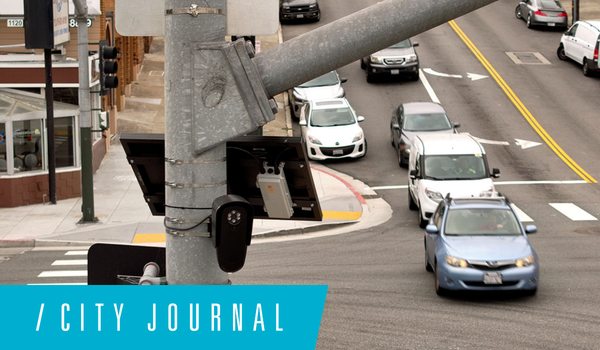
Also in City Journal, Nick Ohnell fellow Rafael Mangual examines the puzzling rise in opposition to automated license plate readers (ALPRs) made by companies such as Flock Safety. These cameras help police quickly locate cars linked to abductions and other serious crimes. Critics overwhelmingly object on privacy grounds, but, as Mangual points out, photographing vehicles in public is neither novel nor unconstitutional. Furthermore, most systems retain data only briefly and restrict how it can be searched. Policymakers should guard the mass use of cameras to enforce minor traffic and code violations, but banning a valuable crime-fighting tool because of speculative harms would be a serious mistake.
In the New York Daily News, fellow Jennifer Weber and director of cities John Ketcham highlight a small bright spot buried in New York City’s latest budget. Through an expansion of NYC Kids RISE—a public-nonprofit collaboration championed by City Council Speaker Julie Menin—the city will provide a $1,000 college savings account for every kindergartener who enrolls in a public or charter school. Like education savings accounts increasingly used in other states, Kids RISE gives families a tangible financial stake in their children’s education, though its funds are reserved for college or vocational training rather than K–12 expenses. The program will not fix the city’s troubled schools, but at a modest cost relative to its enormous education budget, it can encourage saving, cultivate aspiration, and make higher education feel attainable for children who might otherwise never imagine it as a realistic possibility.
Finally, today the Manhattan Institute published a new issue brief by fellow Daniel Di Martino that builds on President Trump’s proposed “gold card” to create an auction-based investor visa system that would grow the economy and reduce the federal deficit. With a key component of the EB-5 investor visa program set to expire next year, Congress has an opportunity to replace the current system with quarterly auctions for the category’s 9,940 annual green cards. Rather than requiring applicants to invest in favored projects and prove compliance with artificial job-creation requirements—features that mainly benefit special-interest intermediaries—the government would award visas to the highest bidders and deposit the proceeds directly in the Treasury. Di Martino also proposes expanding and reforming the E-2 Treaty Investor visa, which allows foreign entrepreneurs to establish businesses in the United States, by broadening country eligibility and loosening ownership, capital, and immigrant-intent rules.
Continue reading for all these insights and more. Nick Saffran Senior Editor |
|
|
|
From Gold Card to Golden Auction: How America Can Supercharge the Economy Through an Improved Investor Visa ProgramSupercharge the Economy Through an Improved Investor Visa Program
By Daniel Di Martino | Manhattan Institute | Matt Mawson/Moment via Getty Images
The U.S. has long offered an immigration pathway for investors, but the system is outdated, inefficient, and structured to benefit intermediaries more than the public. In a new Manhattan Institute issue brief, Daniel Di Martino proposes building on President Trump’s “gold card” idea to create a market-based investor-visa system that would grow the economy and reduce the federal deficit.
Di Martino proposes replacing the EB-5 program—a key component of which expires in 2027—with quarterly auctions for its 9,940 annual green cards. Rather than requiring applicants to invest in favored projects and prove compliance with artificial job-creation requirements, the government would simply award visas to the highest bidders and deposit the proceeds directly in the Treasury. Di Martino estimates that the auctions could generate billions of dollars annually while reducing fraud and processing delays.
Di Martino also proposes expanding the number of countries eligible for the E-2 Treaty Investor visa, which allows foreign entrepreneurs to come to the U.S. to set up businesses. This change, along with looser ownership, capital, and immigrant-intent rules, would make the E-2 an effective startup visa. |
New York Will Regret Going Into the Grocery Business
By Allison Schrager | Bloomberg | Photo by Spencer Platt via Getty Images
“When a market fails, it is tempting for public officials to intervene with a policy to fix it. Sometimes these interventions work. Often they make the problem they are trying to solve worse — or create new ones. New York City Mayor Zohran Mamdani’s plan for government-run grocery stores, five of which are scheduled to open in 2029, falls into the latter category.
“This is the wrong answer to the wrong problem. Food deserts aren’t necessarily a market failure, or even a problem in New York. For one, the planned locations of the stores, such as in East Harlem, already have many options. And compared to other parts of the country, most New Yorkers have access to grocery stores.
“Mamdani’s plan won’t necessarily provide cheaper groceries to the people who need them. That’s in part because it is poorly targeted: Government-run grocery stores make food available to everyone, including people who could resell it at a markup. It would be more justifiable to spend limited taxpayer dollars to help those Americans who struggle to buy food.” |
NYC's College Savings Empowers Kids By John Ketcham and Jennifer Webber| Daily News | Photo by Robert Nickelsberg via Getty Images
“Buried in New York City’s latest budget is a rare initiative that rewards saving: a $1,000 college savings account for every kindergartener who enrolls in public or charter schools. The commitment expands NYC Kids RISE, a public-nonprofit collaboration championed by City Council Speaker Julie Menin, its founding board chair.
“The city spends more than $42,000 per student per year, the highest in the nation — roughly $546,000 over 13 years. The $1,000 seed money will cost an estimated $53 to $64 million annually against a $38 billion operating budget. Unlike spending on bloated operating expenses, students keep and compound these dollars.
“Kids RISE won’t fix the city’s schools, but it offers children and families something of value: a growing stake in their future” |
|
|
They Want to “Abolish Rent” By Any Means Necessary
By Stu Smith | City Journal |Photo by Spencer Platt via Getty Images
“New York City Mayor Zohran Mamdani is clear about the Number One enemy of his administration: landlords.
“The most effective arrow in the tenant-organizing quiver may be directly targeting landlords with disruptive tactics. Those can include camping out on the lawns of property owners, leaving negative reviews for their other businesses, or even disrupting private gatherings. For example, Rosenthal and her allies sought to punish a landlord by crashing his daughter’s wedding, turning a once-in-a-lifetime family celebration into a site of political confrontation and a ‘social sanction.’ “As tenant organizers adopt more confrontational tactics, lawmakers should consider reforms to protect landlords—especially owner-operators, the one class of landlords who live side-by-side with their tenants. . . When disputes escalate into harassment, intimidation, or even physical violence, they have a harder time protecting themselves.
“These are not hypothetical concerns. There have been several high-profile cases of tenants attacking or even killing their landlords in New York City. . . . As tenant activism shifts increasingly to “expropriation and redistribution,” lawmakers and courts need to be acutely aware of the ideology and tactics—including trespass, coercion, harassment, and conspiracy—driving these efforts.”
|
|
|
These Cameras Save Lives. But Some Want Them Banned By Rafael A. Mangual | City Journal | Photo by Justin Sullivan via Getty Images
“Almost every move Americans make is now caught on camera—often one we’re holding ourselves. We photograph and film our proudest and most mundane moments, uploading them to the cloud without a second thought. That’s what makes the growing opposition to automated license plate readers (ALPRs) so perplexing. “Why reject a technology that helps police quickly locate vehicles reportedly used in serious crimes? Foes of ALPRs are largely united around a single objection: privacy.
“For starters, there is no right not to be photographed in public—whether by private citizens or by the government. . . . ALPR opponents like Dunmoyer suggest that government photographing your vehicle in public violates some vaguely defined right to privacy, and that such ‘privacy is a fundamental prerequisite to being free.’ But by that standard, every A-list celebrity in America is a slave, and every traffic-enforcement camera is a constitutional violation. “If every instance of modest speeding or rolling through a stop sign results in a ticket arriving in the mail, a backlash is inevitable—one that could undermine public support for ALPRs and prevent the technology from realizing its crime-fighting potential. That would be a real disaster.” |
|
|
For more information and media requests, please contact
communications@manhattan.institute.
Are you interested in supporting the Manhattan Institute’s public-interest research and journalism? As a 501(c)(3) nonprofit, donations in support of MI and its scholars’ work are fully tax-deductible as provided by law. |
|
|
|
Copyright © 2026 Manhattan Institute, All rights reserved. |
|
|
|
|