The next MI Weekly newsletter will go out on January 8, 2026. Thank you for reading, and happy holidays. |
|
|
Good morning:
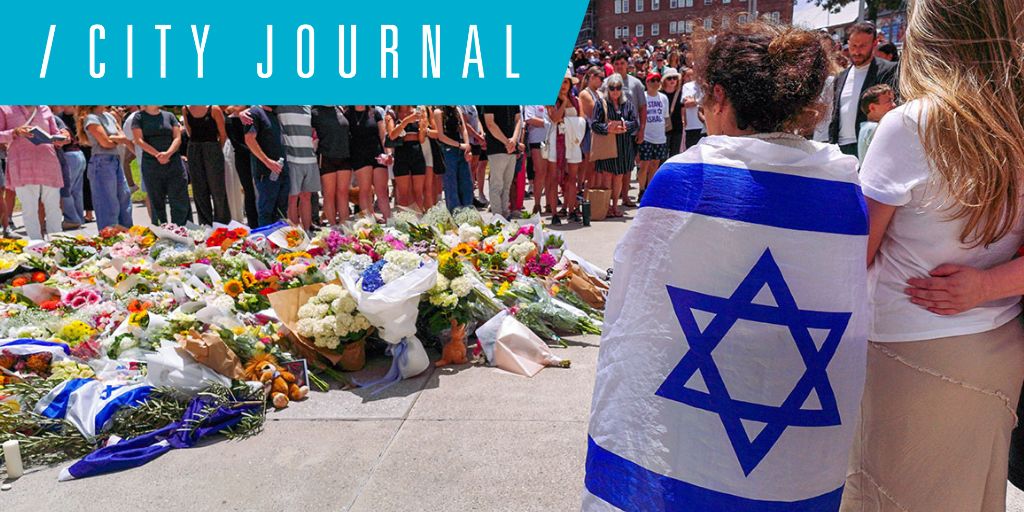
On the first night of Hanukkah, the Jewish festival of light, a father-and-son pair allegedly orchestrated a terrorist attack resulting in the death of at least 15 people and the hospitalization of dozens more.
Australia was once a haven for Jews. But, in City Journal, senior fellow Douglas Murray explains how Australian lawmakers allowed this dark act to occur through their repeated pandering to Muslim immigrants, their acceptance of anti-Semitic mayhem, and their suppression of those who raised the alarm. Over the last few years, especially after Hamas attacked Israel on October 7, 2023, calls to “Globalize the Intifada” and “Gas the Jews,” have been tolerated and gone unpunished.
Sydney’s Jewish community is small, Misha Saul writes in City Journal, and most Jewish families will know one of the victims. Saul’s parents immigrated to Australia, and he was always optimistic about the prospects for safety, security, and success in the country. How optimistic should he be now, he wonders?
The Jewish community is also on edge in New York City, especially after incoming mayor Zohran Mamdani’s remarks in response to recent synagogue protests. They offer a wink and a nod to intimidation tactics against Jews, writes legal policy fellow Tal Fortgang in The Dispatch. “Accumulated gestures of understanding,” from NYC leaders to would-be revolutionaries, “slowly shift what seems acceptable,” he warns.
In other news, senior fellow Eric Kober appears in a new video describing where Mamdani can make positive, pragmatic moves in housing policy without alienating his progressive base.
In the Wall Street Journal, director of legal policy James R. Copland discusses President Trump’s new executive order, which intends to depoliticize investment decisions made in company boardrooms. It is a major and necessary shake-up to how publicly traded corporations in America are governed.
Finally, Paulson policy analyst Neetu Arnold released a new issue brief today on reforming general education curricula so that these requirements align with the core academic and civic missions of universities. A well-designed, focused general education curriculum can equip students to navigate life after college, both in the workplace and in fulfilling their obligations as citizens. This will be our final MI Weekly newsletter for the next couple of weeks, as we celebrate the Christmas and Hanukkah season. I look forward to sharing more from Manhattan Institute scholars after the new year.
In the meantime, continue reading for all these insights and more. Kelsey Bloom
Editorial Director |
|
|
Correcting the Core: University General Education Requirements Need State Oversight By Neetu Arnold | Manhattan Institute
American colleges and universities have drifted away from their core academic purpose and toward ideological activism—particularly in general education requirements. General education classes are designed to provide all students with a common, interdisciplinary foundation in their education. But many general education programs are bloated, unfocused, and increasingly shaped by identity-based or activist frameworks, even in states that have formally banned DEI initiatives. Using Florida as a case study, Paulson policy fellow Neetu Arnold shows how stronger state oversight—through course reviews and clearer standards—can dramatically reduce the number of general education courses and curtailed activist offerings, while preserving academically rigorous subjects. Faculty-driven governance has often failed to prevent mission drift among universities. States, as stewards of taxpayer-funded institutions, have a legitimate role in setting guardrails. Arnold recommends ending mandatory diversity requirements, tightening standards for general education courses, instituting regular state reviews, and capping departmental offerings to restore rigor, neutrality, and confidence in higher education.
|
|
|
The Man-Children of the Revolution
By Tal Fortgang | The Dispatch
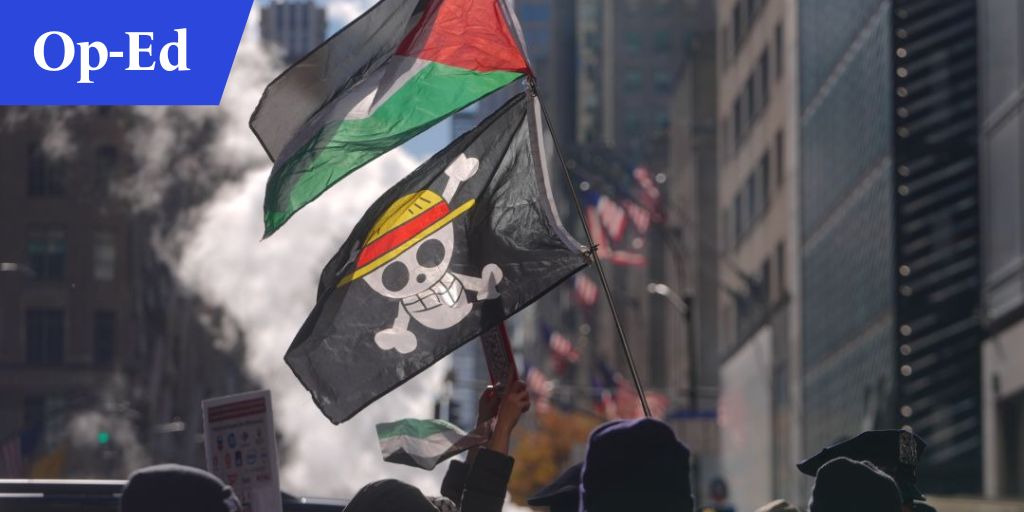
“After an extremist organization called Al-Awda gathered outside Manhattan’s Park East Synagogue explicitly to intimidate Jews interested in moving to Israel, ... Zohran Mamdani said exactly what he was supposed to. ‘Every New Yorker should be free to enter a house of worship without intimidation,’ he said through a spokeswoman. ...
“But then the spokeswoman continued. ‘These sacred spaces,’ she said, ‘should not be used to promote activities in violation of international law.’ The synagogue was hosting an event with an organization that helps Jews make aliyah, or move to Israel. ... The organization in question includes the contested West Bank in its definition of Israel, and it’s ostensibly this inclusion that drew the protesters—and Mamdani’s addendum. “Indeed, his spokeswoman later clarified that the statement only referred to Jews moving to disputed territories. But this, and the arguments around Mamdani’s comments, glossed over Mamdani’s wink-and-nod approach to intimidation. ...
“We got something more sinister (than other politicians) from Mamdani: a small act of recontextualization that adds caveats to prohibitions we once thought absolute.” | |
|
Why Trump Is Targeting Proxy Advisers
By James R. Copland | Wall Street Journal
“President Trump issued a major executive order last Thursday that will help investors by kicking politics out of company boardrooms. It targets the proxy adviser industry, which advises pension funds, mutual funds and hedge funds on how to vote on corporate ballot items. This industry is long overdue for the ‘accountability, transparency, and competition’ the order calls for. “Two firms, ISS and Glass Lewis, control roughly 90% of the proxy advisory market. Each is foreign-owned. ... Although they only advise rather than direct voting for institutional investors, ISS and Glass Lewis exert a huge influence over a large swath of the American stock market. ... [And they] have long been the driving force behind left-leaning adventurism in corporate boardrooms. ... The “executive order is ... welcome news for those who would prefer companies to focus on making money, not political causes—including investors and pensioners who rely on their stock portfolios for their retirements.” |
The Manhattan Institute is proud to serve as the Principal Institutional Partner for the Sun Valley Policy Forum’s 2026 Winter Summit in the iconic resort town of Sun Valley, Idaho on February 11, 2026. We are thrilled to join Joe Lonsdale and MI senior fellow Christopher F. Rufo for an evening on principled leadership and the future of American institutions in an AI-driven era.
Please click here to learn more about the Sun Valley Policy Forum and our partnership and to purchase tickets at a discounted rate for friends of the Manhattan Institute. |
|
|
The Massacre at Bondi Beach Was Inevitable
By Douglas Murray | City Journal
“There will be plenty said in the coming days about why the two perpetrators (father and son) were allowed to own guns, despite their connections with individuals jailed for plotting terror attacks. ... There will be questions about why a Jewish event celebrating Hannukah on the beach was not better protected. ... And there will be official expressions of mourning for the 15 victims counted so far, ranging from a ten-year-old girl to an elderly Holocaust survivor who died sheltering his wife.
“But the main question is why the Australian authorities did not take the concerns of Jewish Australians seriously, and why indeed they spent the last two years pandering to the ever-growing contingent of Muslim immigrants and others who have clearly been on the path to radicalization. ... “If anyone thinks that this is an edge case, they ... merely have to ask a question many of us have asked for the past two years: What other group would expect to be treated like this?” |
The Bondi Beach Massacre Was a Choice
By Misha Sau| | City Journal
“Ghouls will blame Israel. Did Sydney’s Jews attack Sydney’s Arabs following the October 7 massacre? Did we prowl their neighborhoods? No. It would be unthinkable. Preposterous. This has nothing to do with Israel, and nothing to do with general intolerance in Australia.
“My parents came to this country with two young boys and a suitcase. Australia gave us every opportunity. It did not have to admit us, but it did, and for that I’ll always be grateful. ... We have one of the world’s largest foreign-born populations. But we can be more selective. ...
“It would be catastrophic for Australia, and out of keeping with its pragmatism, if these attacks were to become the background noise of everyday life, as they already are in parts of Europe. French politicians make eloquent speeches in parliament as Parisian Jews live behind barbed wire and pray in synagogues behind army barricades. This is no way to live—not just for Jews but for all Australians.” |
|
|
A Constructive Land-Use, Housing, and Economic Development Agenda for Mayor Mamdani
By Eric Kober | Manhattan Institute
“Now that [Zohran Mamdani has] won, it’s important to consider pragmatic policies that might benefit the city without contradicting his democratic socialism. ... He can deregulate where his political base likely wouldn’t object. An example: He can finally do away with parking requirement for new buildings, putting housing and jobs first.” |
|
|
For more information and media requests, please contact
communications@manhattan.institute.
Are you interested in supporting the Manhattan Institute’s public-interest research and journalism? As a 501(c)(3) nonprofit, donations in support of MI and its scholars’ work are fully tax-deductible as provided by law. |
|
|
Photo Credits: adamkaz/E+/Getty Images; Noah Berger/AP Photo; Anadolu/Getty Images; Wong Yu Liang/Getty Images; Catherine McQueen/Getty Images; Probal Rashid/LightRocket/Getty Images |
|
|
The Manhattan Institute works to keep America and its great cities prosperous, safe, and free. Manhattan Institute 52 Vanderbilt Ave. 3 floor New York, New York 10017
Want to change how you receive these emails?
Unsubscribe | Subscription Preferences
Copyright © 2025 Manhattan Institute, All rights reserved. |
|
|
|